We Help Entrepreneurs Build
Highly Profitable LIVES
We'll teach you everything you need to know about living a profitable life as a 21st century lifestyle Entrepreneur. Curious how?
We Help Entrepreneurs Build Highly Profitable Lives.
We'll teach you everything you need to know about living a profitable life as a 21st century lifestyle Entrepreneur. Curious how?
Future Publications & Features




Future Publications & Features
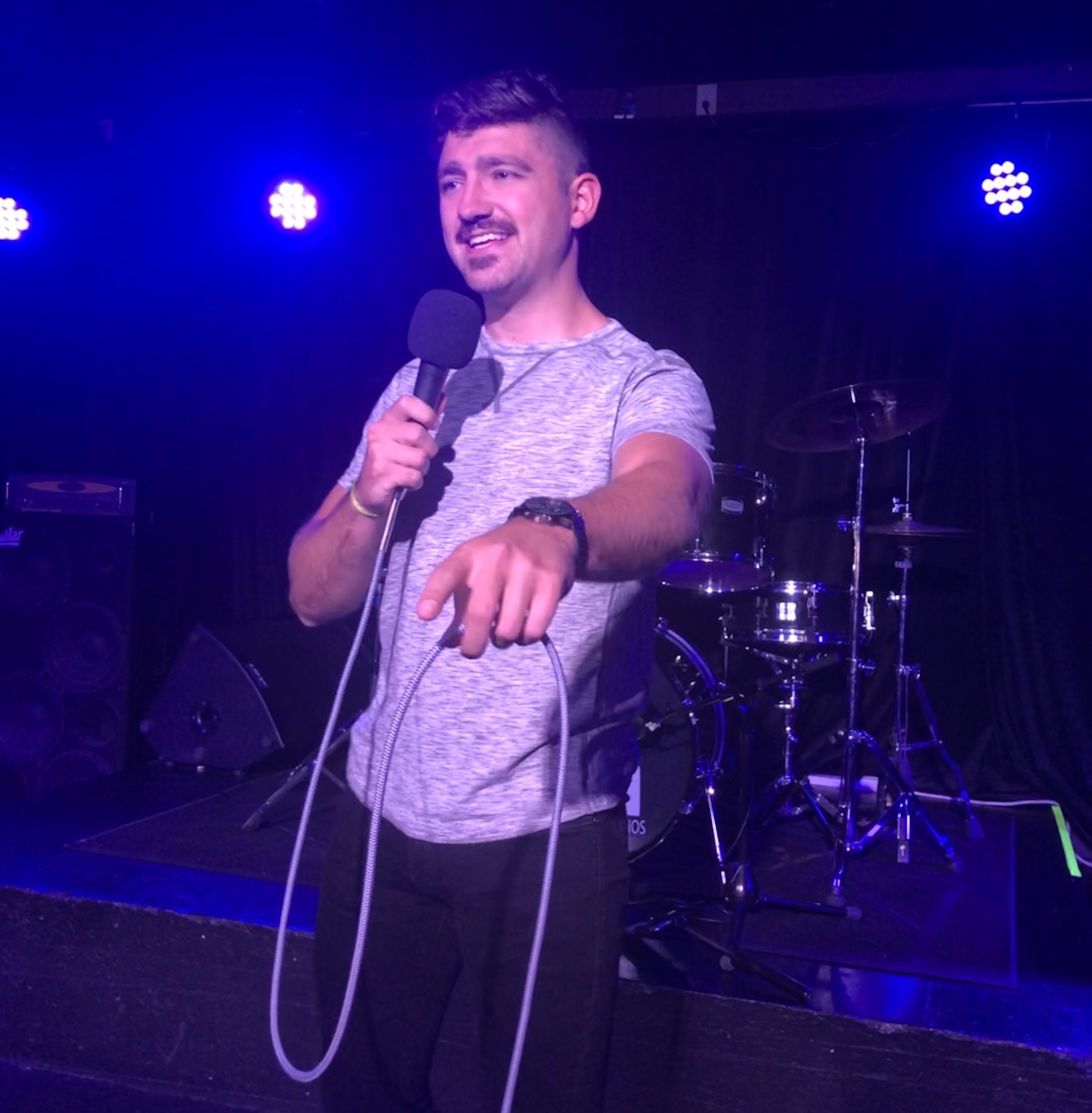
Who Is Wayne Veldsman?
Wayne Veldsman, owner of Vel.Consulting and Journey To Legacy, began his career by building several digital businesses out of his college dorm room....
Wayne is an accomplished business growth strategist, success coach, and entrepreneur. He specializes in helping entrepreneurial minded individuals to grow both their mindsets and their income.
After starting his first business in 2014, Wayne successfully launched and scaled a digital marketing agency to a 7-figure valuation before deciding to exit in 2019 to move to Denver, Colorado and start chasing his passion of coaching and public speaking.
Wayne actively works with entrepreneurs and businesses who are looking to take massive action and create drastic changes in their lives.
Not Sure How To Make The Drastic Change Necessary To Live The Life Of Freedom That Comes With Being A Lifestyle Entrepreneur?
Discover the stupid simple method to growing businesses digitally on autopilot, so that you can get back to your life.
Our students and clients aren't just satisfied, they're building life-changing businesses, doing what they want when they want, and living their lives chasing passion, not just profits.
Media Spotlights...






The 3-Step Strategy To Growing Businesses Digitally
Are you an Agency Owner, Service Provider, or Entrepreneur who sells online and want your pipeline filled with 300+ appointments with your idea client every single month? Are your SERIOUS about growing your business and want to work with Wayne 1-on-1?
Launch Into Digital Entrepreneurship is a course and coaching program specifically designed to take agency owners and online service providers from manual prospecting and wondering if this is ever going to work out, to having a very specific system in place which is going to allow you to generate 20 to 30 booked appointments every single day!
You're going to get a step by step process to building out your prospecting, sales and fulfilment system, and building your sales team so that you can close clients while stepping away from your sales process.
Price - $1,997 $97 (Limited Time Offer!)
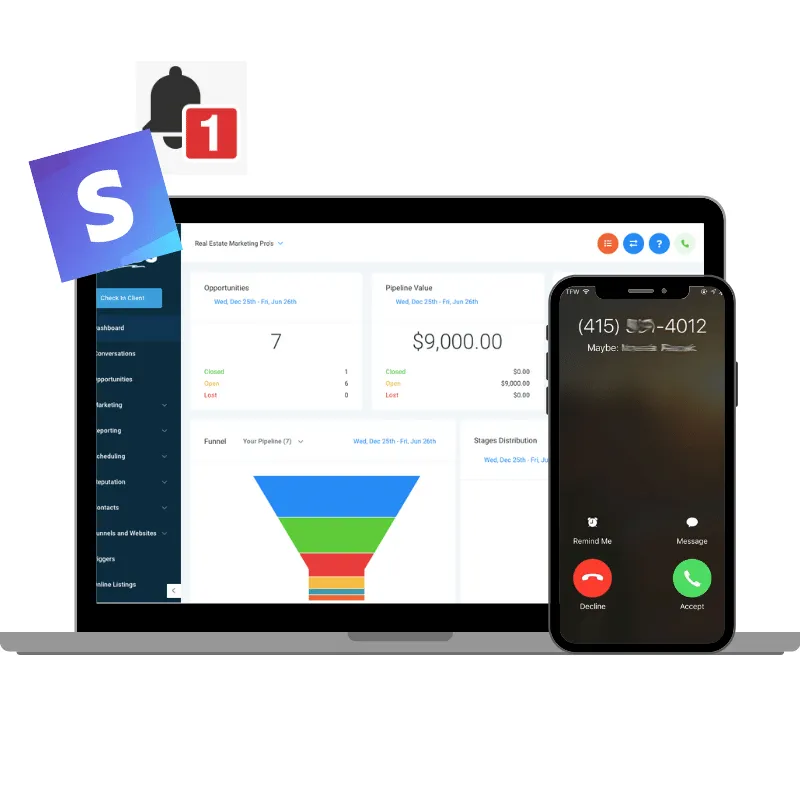
Every time we generate you a new lead interested in your marketing services, your dashboard will automatically add the new lead into your CRM, and send the new lead an SMS, email, and even automatically call you to connect you right away!

Become More Focused, Be More Productive, Burn Out Less
Price - FREE training
From The Desk Of Wayne Veldsman (blogs)
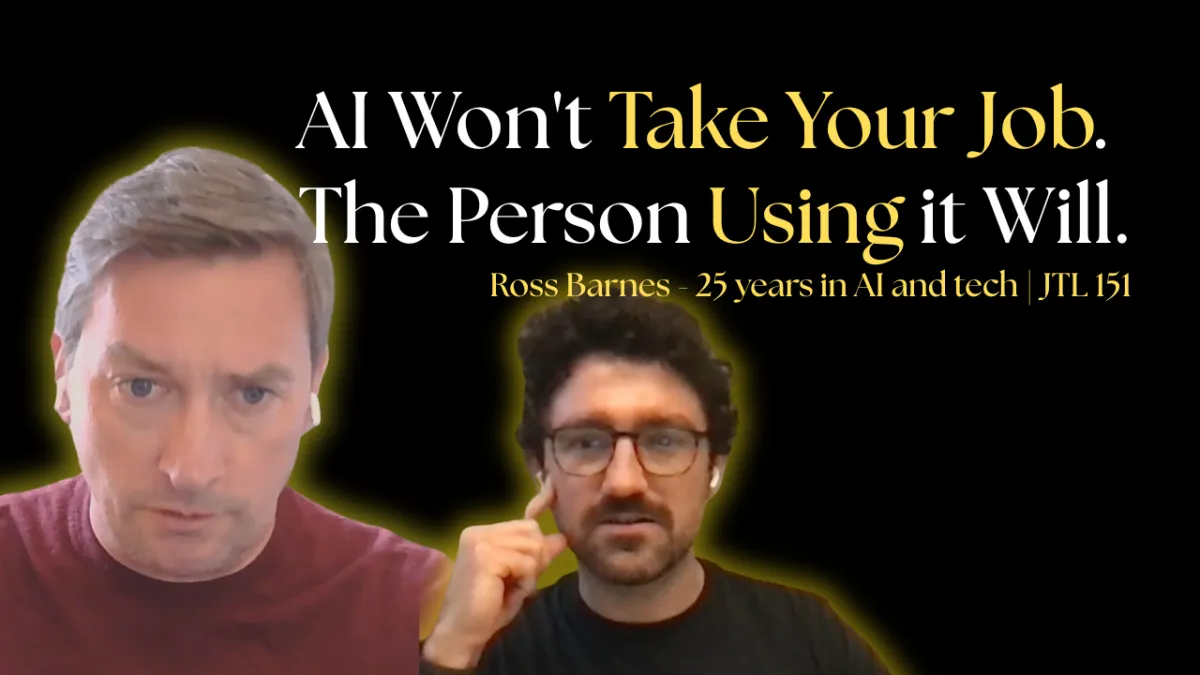
The 4 Things AI Should Never Do (According to an Ex-WPP CTO)
Want to hear the full conversation? Listen to the Journey To Legacy podcast Episode 151 with Ross Barnes for even more insights and stories from his remarkable entrepreneurial journey.
The 4 Things AI Should Never Do (According to an Ex-WPP CTO)
"Everyone's asking what AI could do. We should be asking what AI should do."
It came from Ross Barnes, a guy who spent 25 years inside the corporate machine as a Global CTO at WPP, scaled an agency from 10 people to 1,500, and now spends his days helping some of the biggest companies in the world figure out how to actually use AI through his company, The Galahad Group.
So when a guy like that tells me to pump the brakes on the "AI can do everything" hype, I tend to pay attention.
Most Businesses Are Using AI for the Wrong Things
Here's what Ross has noticed: the businesses moving fastest with AI are often the ones doing the most damage to themselves. Not because they're not adopting it. Because they're automating the wrong things.
Think about it like this.
Imagine you hired an incredible new assistant. Sharp. Capable. Could probably run circles around you on a spreadsheet. And then, instead of handing them your inbox and your expenses, you sat them down at your daughter's birthday party and asked them to give the toast. Meanwhile you stayed at the office doing the receipts yourself.
They'd technically pull it off. Words would come out. Cake would get eaten.
But you'd have wasted the one part of your life that actually needed you, and given away the part that didn't.
That's what most people are doing with AI right now. They're trying to automate the human stuff (the relationships, the leadership moments, the difficult conversations, the gut calls) and then white-knuckling through the boring admin themselves. They've got it completely backwards.
The 4 H's: A Simple Framework for What AI Should Never Do
So Ross built a simple framework to fix it. He calls it the 4 H's - four things that make us human, that AI can't replicate, and that you should never try to automate:
Heart - empathy, sympathy, real emotional understanding. Here - presence. Showing up. Being with someone. Hunch - intuition built from years of lived experience. Hunger - resilience. The willingness to push through when things get hard.
When all four of those are in play, Ross says that's pure humanity. That's the part that's actually irreplaceable. That's where AI doesn't belong.
Where AI Actually Belongs in Your Work
Everywhere else? Let it run.
The reporting nobody enjoys. The meeting notes. The first draft of the proposal. The data cleanup. The hours of admin sitting between you and the work that actually matters. That's what AI was built for.
And that's the trade most people aren't making yet.
How to Audit Your Own Work With the 4 H's
Here's the self-audit Ross left me with that I'd like to pass on to you:
Pick the one task that drained you most this week. Then run it through the 4 H's.
Did it need your heart? Your presence? Your intuition? Your hunger?
If the answer is no to all four, that's not a task you should be doing anymore. That's a task AI can take off your plate, so you can go spend that reclaimed time on the parts only you can do.
The Real Future of AI Belongs to the People Who Know When Not to Use It
Because the future doesn't belong to the people who use AI for everything.
It belongs to the people who know exactly when not to.
If this one resonated, you'll probably enjoy more conversations like it over on the Journey to Legacy podcast - or if you want to know more about Journey to Legacy, go visit our website.
Transcript
WAYNE: Okay, wonderful. Thanks for being here. I mean, Global CTO turned AI founder — I'm really excited to learn from you today. Why don't you kick us off? Tell everybody just a little bit about who you are.
ROSS: Thanks, Wayne. Delighted to be here. Thank you so much for having me. As you said, I worked in the corporate world in advertising and marketing for 25 years in technology, digital and data. I was CTO at an agency within the WPP group, and I saw the advent of artificial intelligence as both a threat and an opportunity to those kinds of companies. Additionally, during my time there, I was diagnosed with ADHD and autism, and that really changed the way that I wanted to think about my professional and personal life. So I left the agency with a lot of sadness, but with a clear idea on what I wanted to do — and it was to use AI to make life better for people in their professional and personal environments. That's why I've built the Galahad Group, and we can also talk about Pull Focus later.
WAYNE: Really exciting, man. After 25 years in corporate and global tech, making this big shift — did I hear you say that you saw AI coming in as a threat to corporations?
ROSS: I think a threat and an opportunity. There is a lot of truth to the phrase: AI is not going to steal your job — people using AI is going to steal your job. There are lots of organisations who are only piecemeal adopting AI, and often their employees are more proficient than the business itself. I do a lot of training of AI for large corporations — AI enablement — and what I see most is, it's fight or flight. There are people who haven't adopted it because they're scared, and there are people who've hyper-adopted it. I don't think I've ever, in my 25 years of tech, seen a technology that has such a disparate knowledge spectrum. When I do my training, the feedback I get is almost universally either "that was too basic" or "that was much, much too complex." There's nothing in between. And that in itself is happening in businesses. Businesses that aren't adopting AI are going to be left behind. Because it is very clear, even when you're talking to your friends down the pub, who is using AI and who isn't — and who is making their lives easier and more effective.
WAYNE: Yeah, absolutely. So where can we tell people to start? Let's go in two different directions. Companies and corporations — how do they need to begin to adopt the technology? And then I love how you've also started to mention the personal side — how can AI tech actually help us on our personal side? So for people who are still afraid, still seeing AI as a threat, how does a company begin to adopt this?
ROSS: It's a great question. The problem with a lot of artificial intelligence is it's really innovation theatre. It shows you the art of the possible. Really, you need to be thinking about the industrialisation of it — what it can actually do for you as a business. Start examining the workflows. Start examining the processes in your company, and start seeing what can be improved and augmented by using AI. But importantly, do that human-first. You're looking to make your staff more effective. We've built a tool on the Galahad Group website called Ikigai. If you go there and upload a workflow, or some of your tasks, or even your job description, it will help you decide what is purely human — the things you should be doing or your company should be doing — and what are the things that could be augmented by AI. So if you put your job description in, it will spit out an AI-augmented job description, with agents that can surround you and make you better and more effective. That's something I love doing with CEOs of large companies — showing them how they can be better, not just their company.
WAYNE: Love that. So, sorry — go ahead.
ROSS: I was going to say, on the personal side — there's a Japanese or Chinese proverb: the best time to plant a tree was 20 years ago, the second best time is now. Just get going. Just get started. You cannot do anything wrong. There is no real risk of you using ChatGPT incorrectly, unless you blindly trust it. But start using it. Start thinking about things. We use it to play and plan games and quizzes with the kids over dinner. It can do so much for you. Just go and play.
WAYNE: Just start playing with it. Yeah. Ikigai, right? It's a Japanese proverb — that's where it comes from?
ROSS: Yeah, exactly. It's about finding the perfect balance of what you can get paid for, what you love to do, what brings value to society, and what you are good at. But the Ikigai we have built, or Iki-AI as we call it, is around humanity. And the four values of humanity that AI cannot replicate, and that is: Heart — where you require empathy or sympathy or understanding of emotion. Here — where you need to be present, where you need to be with someone, where you need to present to someone. Hunch — where you need intuition, where you need to have experienced something before. And lastly, and what I think is often forgotten, Hunger — it's resilience. It's the ambition to do more. It's the willingness to push through barriers. When you get all four of those, that is where pure humanity exists, and that is where you do not want AI. You want AI to do the things that don't have those H's. That's how it works.
WAYNE: Four values of humanity. Heart, Here, Hunch, and Hunger. So what I'm hearing you say is — first off, we'll go check out this tool, Ikigai, and it'll help you to think through this and see the processes in your life and in your business. But everything to do with these four pieces of the puzzle is what we should be focusing on more. Then should we be steering into having AI us in almost every other thing?
ROSS: Yeah, absolutely. Maybe not almost every other, but when thinking of things, that shouldn't be a limit. We often think about the things AI could do, but rather we should be thinking about what AI should do. Those four H's are the enjoyable things of life. They are the things that bring light. That is what AI is going to enable us to spend more time doing, if we use it correctly.
WAYNE: "What AI could do" versus "what AI should do." It sounds like you're coming across instances where people are — companies are trying to automate the wrong things, or trying to plug AI into human situations?
ROSS: Yes. When I first started this journey on the platform at the Galahad Group, some of the conversations I was having — I had to learn that when people said "can it do this?", I would say "yes, it can do that." But I had to learn to say, "it shouldn't do that. You shouldn't be automating that. You shouldn't be using AI to do that. You should be using it to do this." Starting to tell people no. And if you use our framework, our diagnostic framework, it will tell you that we will not build artificial intelligence — our platform will not do that for you. We turn down business for that, because there are better things it can be doing, and there are better things that you can be doing.
WAYNE: Absolutely. I want to take a couple of steps back here. I know that a little bit earlier in your career, you helped to scale an organisation dramatically. Am I right that you helped to scale from about 15 employees to over 1,500 people?
ROSS: Yeah, that's right. And it certainly wasn't just me — I had some very, very accomplished and storied colleagues. But we grew from — I joined as employee number 10 in London, and we then scaled to 1,500 across the globe. That journey was the most intense period of my life over 13 years. I learned a lot about business. I learned a lot about scale, effectiveness and automation. But I also learned a lot about myself and what was important to me.
WAYNE: I'm sure you learned so much about scale, business, automation yourself. The reason I bring it up is because, I mean, I'm sure there was a huge human element in this as well, right? So now when we're talking about how AI shouldn't be replacing these four qualities, these values of humanity — that's what I'm relating to, like your experience of helping to scale an organisation to such a huge volume. What are some of your takeaways on the human side, the human element of scaling an organisation to such proportion, so many people?
ROSS: The one that I think was the most important — well, they were all important — but hunger. And the ability to take risk. When you're scaling an organisation, you have no legacy, which means you can build the organisation you want to build. To do that correctly, you need to deviate from the norm. So you need to take risks. I very much had a saying at my old company, which was: ask forgiveness, not permission. Because good things get done when good people are allowed to do them. And if we have not hired good people, then that's our fault. We just need to give them the ability to do the things they think are right, and trust them and back them. I think that was really important. But also, the human element — they say a business feels like a family, but when you are small, it does. And as you grow, trying to keep that culture intact is a big challenge. One that can only be accomplished by showing up, by being here, and showing heart and humanity to people. Because that's how you grow culture.
WAYNE: This is — I'm delighted. Big smile on my face. Because it's interesting to hear, tech guy that we're basing a conversation around AI, we're talking so much about humanity, human nature, connection, and values of how to scale a company. Even this "ask for forgiveness, not permission" value.
ROSS: Let me try to break that down without getting too into therapy speak. I think as a late-diagnosed autistic person, I have incredible interest in technology and things and making things work and breaking things — that's what I'm good at. But I've also had to work really hard to understand and put together and fix people, because I don't quite understand them as well naturally. So I've had to build an internal language about how I build relationships, how I work with people, how I'm very intentional with my language. Hopefully that has led to me really valuing that as a skill that I've built, because it's not inherent in the way my brain works. That's why it's so important to me.
WAYNE: Wow. And so do you think — I'm excited here to shift directions a little bit. You mentioned it early on, you mentioned it now again — the fact that you're focused so heavily on understanding people and how to connect with people through your late diagnosis as neurodivergent, as having ADHD and autism. So let's pivot. Tell us a little bit about your organisation, your company, and how you're helping to coach neurodivergent leaders. What's going on there?
ROSS: So, I'm a qualified ADHD coach. I help leaders and individuals build frameworks to make their lives easier. I have a platform called Pull Focus, which uses AI — in a similar way to Galahad — to build agents and what I call cognitive scaffolding. The things that allow you, either as an individual or as a neurodivergent individual, to do the things you are best at, and helps you with the things that cause you mental anguish. So I build frameworks catered to individuals to help them remember to perform tasks, or to outsource tasks, or to find ways to communicate with their partners and colleagues in ways that articulate how they're feeling, and build better communication frameworks. And the best thing about it is, when I'm talking to someone who is neurodivergent and offering them advice, it's almost like offering myself advice. Because one thing about neurodiversity — and again, this is just for me, everyone is different — is there's a lot of negative self-talk with ADHD and autism. You don't talk to yourself very kindly because you feel different. The world doesn't speak to you kindly. But speaking to someone else kindly can feel good internally. So I love doing it. And my daughter is neurodivergent as well, so it's great to be able to help her too.
WAYNE: Wow, that's wonderful. You know, I've heard a saying or theory that often the best way to help yourself, whether it's to be happier or to reach success, is through helping others. It's kind of what I'm hearing here also.
ROSS: Completely. And that's a professional thing and a personal thing. If my platform or my tools can make your professional day better — that's good, I feel great about that. And if it can make your personal day better, I feel great about that. Because if you are a better person, you are going to be better for everyone around you. To me, it's a truism, Wayne. It's an absolute truism.
WAYNE: Yeah. It's fortunate, I think, that in 2026, more and more people are becoming aware of what it means to be neurodivergent — that it doesn't mean at all there's anything wrong with you, it's just that you're thinking differently. Where can people start to look inwards to see, okay, maybe they are this type of classification? And then what can they do differently from what normal society sort of preaches and teaches?
ROSS: It's interesting. I've got some self-diagnostic tools on the Pull Focus website that they can use. They're not official, but they can give you an idea and some help and some coaching. I think when you realise — especially if you're late diagnosed — that you were different all along, you go through what's called ADHD grief, where you start to see the things that either went wrong or didn't happen or failed because you were different. It's a really hard part of getting diagnosed. But you know, it's interesting when you said "what should people do differently?" What I want to build is where people don't have to do anything differently. People can be who they are and what they are. But it's not an excuse. People have to understand that. A neurodiverse person has to understand they can't just be openly defiant to society, because everybody is adapting to society. They just have to do it a bit more, or a lot more, sorry. But getting to know yourself is the most powerful thing you can do.
WAYNE: Wow. "Getting to know yourself is the most powerful thing you can do." I love that. And the way you state it is that there isn't anything different that we should do. It's realising who we are, how we perceive the world, and then doing what's best for ourselves, while also, as you say, not being totally defiant to society.
ROSS: Exactly.
WAYNE: If you don't mind, walk me through a little bit of this moment when you got diagnosed. What led up to it? I'm curious — how is your life even different from before officially being diagnosed to now? Because it sounds like you went through a transition period and you may be different afterwards.
ROSS: You are absolutely right. I was working very hard, travelling a lot, away from my family a lot, and I was getting very ill. I'm asthmatic, and since I've been diagnosed I have not had an asthma attack. I don't know why that is, but before, I used to get very stressed and have asthma attacks. Before Christmas in 2022, I think, I landed up in hospital — very bad. Then I started to have therapy, and my therapist said, "have you ever considered getting diagnosed with ADHD?" And I did. It's a very hard period. What I want to do with Pull Focus is catch people then. Because what happens is you then unmask. You stop being the person that society has seen of you for 45 years, and you start becoming almost naked — no mask anymore. That can be quite traumatic for people who know you, people who work with you. What I want to do is catch people and make sure that doesn't happen. But that led, you know, to my mission to make people's lives easier and better. I'm happier and healthier than I've ever been. My relationships are stronger, more bidirectional, and more fulfilling. Because — without getting too preachy — I go in with an open heart and really want to understand the other person.
WAYNE: Do you think — you said going in with an open heart and wanting to understand the person — it sounds to me almost like previously you were withdrawn, or judging yourself, the situation, other people more, versus now that you're understanding yourself even better?
ROSS: Yeah, I think that's right. At the top of a corporate organisation, you naturally think you have all the answers. Which means some conversations, you don't go in with an open heart. You go in and you think, "yes, I know the answer to this." But interestingly, in the age of AI, I think leaders don't need to have answers. They need to have questions. They need to be prompting not only their AI, but their colleagues. It's not about us telling our colleagues what is right. It's about finding out what the right question is to ask your organisation. AI enables us to do that. And that's what we do at Galahad.
WAYNE: Wow. Urging leaders, especially now in the age of AI, to focus more on asking questions. What are some steps maybe that leaders listening can take to start to ask better questions, the correct questions? Because it sounds like they're needing to change their entire communication styles.
ROSS: That's a really interesting question. It's almost like Undercover Boss — you've got to understand what your colleagues are doing. You don't have to be a craft expert, but you have to understand what is going on in the boiler room. I'm a craft technical expert. That's where I've come from — very techy, very geeky developer. Often I saw talented colleagues who knew everything about the business either get over-promoted and crash out because they weren't managers, or not get promoted, not progress, because they were too geeky or they spoke too technically or they made things too complicated. And it's like — well, some things are complicated. Just because you don't want to understand, that's not — sometimes we need to get complicated. So it's about understanding that the complex can be made much easier by judicious use of artificial intelligence. For training, for example, there is no excuse for not understanding. And that, I think, is something leaders need to adopt.
WAYNE: Yeah. There's not an excuse for not understanding. All endless knowledge is at our fingertips. We just have to be willing to take the time. And with that comes failing, right? Falling down on your face, like, but picking yourself up, wiping yourself down, and continuing to move forward and keep learning, keep moving forward.
ROSS: It's the best quote from any film — Rocky Balboa. All you can do when you get hit is stand up and keep moving forward. I butchered the quote, but that's it. And that is hunger. That is the H of hunger. Curiosity. Questing. Because, as you said, all knowledge exists now. We are not a knowledge-based society anymore. We are a Hunger, Here, Heart, and Hunch society.
WAYNE: Yeah, wow, I love that. Hunger, Here, Heart, and Hunch. You know, Ross, you mentioned curiosity also. I've asked a handful of individuals that I've interviewed here — what took them from a corporate career to an entrepreneur in a totally different industry? Curiosity is the theme that sparks it over and over and over again. And it's, I'm finding, some of the most successful — multiple facets of life, I'm not just talking financial or business success — are really boiling it down to be more curious.
ROSS: Completely. My curiosity — I think now it comes from a very good place. But before, it came from a very unhealthy place. Before I was diagnosed, I hated not knowing anything. If I was in a meeting room and someone said something I didn't know, I hated it, and it would eat me up. So at school, I would go home and read a book about it. Later on, I would Google it. More recently, I'd go on Claude and learn about it. Because that fear of being left behind — while not engine, um, is something that does drive me. But it now comes from a place of wanting to understand. I find myself now much more just listening and trying to understand things I don't understand by, yeah, just listening. Often I'll be the quietest person in the room. But I often think, when I'm in a room, that's probably the person I want to hear from.
WAYNE: Was there a shift that happened? And how did you learn to listen more, learn to listen better — that's now where you can gain knowledge from, versus having to, I guess, aggressively go out and search and read?
ROSS: How did I learn? I think when I progressed from a craft expert to a higher, political rung of the corporate ladder, I noticed a shift. Lots of people spoke because they wanted to say something, and it wasn't to add value. It wasn't necessarily even to show expertise or to drive a project forward. It was so people knew that they were in the room. I just noticed that as a behaviour that I didn't see any value in. So I listened. And I had an incredible boss, my mentor, who would always at the end of every meeting say, "okay, now I'd like to hear what Ross has got to say," and would give me space to talk. Because I would generally stay back. Previously, I'm much more comfortable with that now. Earlier in my career, people thought I was aloof and withdrawn. But now I'm very open, saying, "look, I'll probably contribute where necessary. If I'm not contributing, it's because everything's going well." I think being open about how I operate allows other people to be open about how they operate as well.
WAYNE: Being open about expressing "this is how I operate" then allows others to also be more open, to operate what's best for them.
ROSS: Exactly. And that's what we all want. In any room we're in, whether it's social or professional, we want everyone to be able to show up as the best of them — because that's who we want in the room. But yet we create conditions that don't allow that to happen. Which is madness. It's absolutely madness.
WAYNE: You know, a piece I noted down earlier that I just want to mention again — the company ethos you created was around "ask for forgiveness instead of permission." I think that's only doable if you're allowing people, supporting people, to be their best selves, right? Steer into who they are. We're hiring and training properly, and then letting go — do what you do best. Better to ask for forgiveness and not for permission.
ROSS: Right. And my hiring strategy always used to be about hiring spiky people — people that were really good at certain things. Look for excellence. Not "good," but having excellence. It's like Dungeons and Dragons — we've only got a certain amount of attribute points to spend. When you have excellence in some things, you sometimes have drawbacks. But what you do is you partner people with people who fill in their drawbacks. You don't want a team full of fives. You want tens in the areas where it's important. So complementing styles and knowledge and strategies is something I've always liked to do. I've worked with some incredibly amazing people who would be amazing in meetings and strategy, but would probably be wearing odd socks. They're not very organised. But that doesn't matter — we can find a way to help them be organised.
WAYNE: Yeah. It sounds like you were almost talking about Clifton Strengths, or StrengthsFinder. Are you familiar with that, Ross?
ROSS: You know, I'm not actually, Wayne. Please tell me about it.
WAYNE: So it's pretty much the concept. It's a whole test you can go through, similar to almost like a personality test, that's going to outline what your greatest strengths are. First, it gives you your top three, and then you can expand a little bit more to your top five or top ten. It urges individuals to double down on their strengths instead of thinking, "oh, I'm not that great at organisational skills, I need to get better at that." Or, "I'm not the best public speaker, I should improve there." Why? Instead, let's find out what you're naturally good at, what you're passionate about. What are your strengths? Double down. And then we'll bring in other people whose strengths are your weaknesses.
ROSS: Right. And that ties into everything we've been talking about around AI. You should do the same approach with AI. Get AI to support you on the things you are not good at. And the things you are naturally good at, you'll probably find are things you really like doing. So it's easier to double down. It causes you less distress, and the impacts are better. It sounds like I need to build the Clifton Strengths into my Ikigai model.
WAYNE: Yeah, I think that'd probably be a good idea. Well, Ross — Galahad, right? Tell us what's next. A little bit more, what you guys are currently doing, and where's the company headed?
ROSS: So, we've got a number of different arms of Galahad. We're the Galahad Group. We've got the Ikigai diagnostic that I talked about earlier — that's on our website, where you can put in your job description and tasks. But then what we do for you after you've done that diagnostic is we start building you agents and AI and workflow. We start what we call AI enablement, which is where one of our consultants will come into your business. Rather than being a consultant that leaves you with a 70-page deck that does nothing, they will actually sit down with your practitioners and start to build and help them use AI. Which is what I think really helps move the needle on processes. We've also got a number of different platforms we're building around automation and marketing, and helping companies protect their unique IP in a shadow-AI world — which is quite a lot of fun.
WAYNE: Yeah, I'm sure. So the majority is — you have standalone tools that individuals can go and use. But a big piece of this puzzle is going into organisations, finding out what systems of theirs can be improved, can be better with AI. And then not just telling them about it, but then walking them through the enablement and training process. I saw a quote of yours, I believe, online, that said along the lines of — "technology doesn't solve problems. Adoption does."
ROSS: Right, exactly. And that is the biggest failure of most technology products, not just AI — people don't use them. People don't use them in the way that would benefit them. So we build and adapt platforms to make sure that people do use them. We do lots of studies on how it helps. One of the first things for artificial intelligence, properly, is — we are not trying to replace you. This is not what it's about. This is about making you better, doubling down on your Clifton Strengths, and making your work just much more fulfilling and fun. When you approach AI in that way, people really do get on board.
WAYNE: Yeah, that's wonderful. Galahad Group. And then when it comes to Pull Focus — you're coaching with neurodivergent leaders. What does the future look like for Pull Focus?
ROSS: The future for Pull Focus is about helping people build, as I said, that cognitive scaffolding. The world has been built around bureaucracy and making things difficult, especially for neurodiverse people. What I want Pull Focus to do is to make the world easier for neurodiverse people. But ultimately easier for everyone. So there are guides and tools on the website that can help you navigate certain government bureaucratic processes with ease. That can help you with the things you are supposed to say, aren't supposed to say. And just helps you build artificial intelligence that can support you in your day-to-day.
WAYNE: Holding artificial intelligence to support you. That's much more on that personal side, the human side, also. Amazing. Yeah. Ross, well, thank you so much for everything that you do. It's really appreciated. It seems like you're so mission-driven actually. And so along your theme of the show — I always just like to end with asking people around legacy. So for you, Ross — what does legacy even mean, and what's the legacy you're trying to leave in this world?
ROSS: The legacy I want to leave is that I want neurodivergent individuals to be able to succeed in life and in business. To have systems that can help everybody in the way they need to be helped. And the true thing about that is, my daughter — to be able to be successful. What I'm building, in terms of the Galahad professional side and the Pull Focus personal side, will enable a 15-years, a 10-year-old — ultimately my daughter — to enter her personal and professional world without fear, shame, or judgement.
WAYNE: Wonderful. Ross, thank you so much for what you're doing — for everybody, for what you're doing for this world. It's greatly appreciated. And thank you for coming on and sharing with us today.
ROSS: Thank you, Wayne. Really enjoyed it.
The 3-Step Strategy To Growing Businesses Digitally
Are you an Agency Owner, Service Provider, or Entrepreneur who sells online and want your pipeline filled with 300+ appointments with your idea client every single month? Are your SERIOUS about growing your business and want to work with Wayne 1-on-1?
Launch Into Digital Entrepreneurship is a course and coaching program specifically designed to take agency owners and online service providers from manual prospecting and wondering if this is ever going to work out, to having a very specific system in place which is going to allow you to generate 20 to 30 booked appointments every single day!
You're going to get a step by step process to building out your prospecting, sales and fulfilment system, and building your sales team so that you can close clients while stepping away from your sales process.
Price - $1,997 $97 (Limited Time Offer!)
Every time we generate you a new lead interested in your marketing services, your dashboard will automatically add the new lead into your CRM, and send the new lead an SMS, email, and even automatically call you to connect you right away!
Become More Focused, Be More Productive, Burn Out Less
Price - FREE Training
From The Desk Of Wayne Veldsman (blogs)
The 4 Things AI Should Never Do (According to an Ex-WPP CTO)
Want to hear the full conversation? Listen to the Journey To Legacy podcast Episode 151 with Ross Barnes for even more insights and stories from his remarkable entrepreneurial journey.
The 4 Things AI Should Never Do (According to an Ex-WPP CTO)
"Everyone's asking what AI could do. We should be asking what AI should do."
It came from Ross Barnes, a guy who spent 25 years inside the corporate machine as a Global CTO at WPP, scaled an agency from 10 people to 1,500, and now spends his days helping some of the biggest companies in the world figure out how to actually use AI through his company, The Galahad Group.
So when a guy like that tells me to pump the brakes on the "AI can do everything" hype, I tend to pay attention.
Most Businesses Are Using AI for the Wrong Things
Here's what Ross has noticed: the businesses moving fastest with AI are often the ones doing the most damage to themselves. Not because they're not adopting it. Because they're automating the wrong things.
Think about it like this.
Imagine you hired an incredible new assistant. Sharp. Capable. Could probably run circles around you on a spreadsheet. And then, instead of handing them your inbox and your expenses, you sat them down at your daughter's birthday party and asked them to give the toast. Meanwhile you stayed at the office doing the receipts yourself.
They'd technically pull it off. Words would come out. Cake would get eaten.
But you'd have wasted the one part of your life that actually needed you, and given away the part that didn't.
That's what most people are doing with AI right now. They're trying to automate the human stuff (the relationships, the leadership moments, the difficult conversations, the gut calls) and then white-knuckling through the boring admin themselves. They've got it completely backwards.
The 4 H's: A Simple Framework for What AI Should Never Do
So Ross built a simple framework to fix it. He calls it the 4 H's - four things that make us human, that AI can't replicate, and that you should never try to automate:
Heart - empathy, sympathy, real emotional understanding. Here - presence. Showing up. Being with someone. Hunch - intuition built from years of lived experience. Hunger - resilience. The willingness to push through when things get hard.
When all four of those are in play, Ross says that's pure humanity. That's the part that's actually irreplaceable. That's where AI doesn't belong.
Where AI Actually Belongs in Your Work
Everywhere else? Let it run.
The reporting nobody enjoys. The meeting notes. The first draft of the proposal. The data cleanup. The hours of admin sitting between you and the work that actually matters. That's what AI was built for.
And that's the trade most people aren't making yet.
How to Audit Your Own Work With the 4 H's
Here's the self-audit Ross left me with that I'd like to pass on to you:
Pick the one task that drained you most this week. Then run it through the 4 H's.
Did it need your heart? Your presence? Your intuition? Your hunger?
If the answer is no to all four, that's not a task you should be doing anymore. That's a task AI can take off your plate, so you can go spend that reclaimed time on the parts only you can do.
The Real Future of AI Belongs to the People Who Know When Not to Use It
Because the future doesn't belong to the people who use AI for everything.
It belongs to the people who know exactly when not to.
If this one resonated, you'll probably enjoy more conversations like it over on the Journey to Legacy podcast - or if you want to know more about Journey to Legacy, go visit our website.
Transcript
WAYNE: Okay, wonderful. Thanks for being here. I mean, Global CTO turned AI founder — I'm really excited to learn from you today. Why don't you kick us off? Tell everybody just a little bit about who you are.
ROSS: Thanks, Wayne. Delighted to be here. Thank you so much for having me. As you said, I worked in the corporate world in advertising and marketing for 25 years in technology, digital and data. I was CTO at an agency within the WPP group, and I saw the advent of artificial intelligence as both a threat and an opportunity to those kinds of companies. Additionally, during my time there, I was diagnosed with ADHD and autism, and that really changed the way that I wanted to think about my professional and personal life. So I left the agency with a lot of sadness, but with a clear idea on what I wanted to do — and it was to use AI to make life better for people in their professional and personal environments. That's why I've built the Galahad Group, and we can also talk about Pull Focus later.
WAYNE: Really exciting, man. After 25 years in corporate and global tech, making this big shift — did I hear you say that you saw AI coming in as a threat to corporations?
ROSS: I think a threat and an opportunity. There is a lot of truth to the phrase: AI is not going to steal your job — people using AI is going to steal your job. There are lots of organisations who are only piecemeal adopting AI, and often their employees are more proficient than the business itself. I do a lot of training of AI for large corporations — AI enablement — and what I see most is, it's fight or flight. There are people who haven't adopted it because they're scared, and there are people who've hyper-adopted it. I don't think I've ever, in my 25 years of tech, seen a technology that has such a disparate knowledge spectrum. When I do my training, the feedback I get is almost universally either "that was too basic" or "that was much, much too complex." There's nothing in between. And that in itself is happening in businesses. Businesses that aren't adopting AI are going to be left behind. Because it is very clear, even when you're talking to your friends down the pub, who is using AI and who isn't — and who is making their lives easier and more effective.
WAYNE: Yeah, absolutely. So where can we tell people to start? Let's go in two different directions. Companies and corporations — how do they need to begin to adopt the technology? And then I love how you've also started to mention the personal side — how can AI tech actually help us on our personal side? So for people who are still afraid, still seeing AI as a threat, how does a company begin to adopt this?
ROSS: It's a great question. The problem with a lot of artificial intelligence is it's really innovation theatre. It shows you the art of the possible. Really, you need to be thinking about the industrialisation of it — what it can actually do for you as a business. Start examining the workflows. Start examining the processes in your company, and start seeing what can be improved and augmented by using AI. But importantly, do that human-first. You're looking to make your staff more effective. We've built a tool on the Galahad Group website called Ikigai. If you go there and upload a workflow, or some of your tasks, or even your job description, it will help you decide what is purely human — the things you should be doing or your company should be doing — and what are the things that could be augmented by AI. So if you put your job description in, it will spit out an AI-augmented job description, with agents that can surround you and make you better and more effective. That's something I love doing with CEOs of large companies — showing them how they can be better, not just their company.
WAYNE: Love that. So, sorry — go ahead.
ROSS: I was going to say, on the personal side — there's a Japanese or Chinese proverb: the best time to plant a tree was 20 years ago, the second best time is now. Just get going. Just get started. You cannot do anything wrong. There is no real risk of you using ChatGPT incorrectly, unless you blindly trust it. But start using it. Start thinking about things. We use it to play and plan games and quizzes with the kids over dinner. It can do so much for you. Just go and play.
WAYNE: Just start playing with it. Yeah. Ikigai, right? It's a Japanese proverb — that's where it comes from?
ROSS: Yeah, exactly. It's about finding the perfect balance of what you can get paid for, what you love to do, what brings value to society, and what you are good at. But the Ikigai we have built, or Iki-AI as we call it, is around humanity. And the four values of humanity that AI cannot replicate, and that is: Heart — where you require empathy or sympathy or understanding of emotion. Here — where you need to be present, where you need to be with someone, where you need to present to someone. Hunch — where you need intuition, where you need to have experienced something before. And lastly, and what I think is often forgotten, Hunger — it's resilience. It's the ambition to do more. It's the willingness to push through barriers. When you get all four of those, that is where pure humanity exists, and that is where you do not want AI. You want AI to do the things that don't have those H's. That's how it works.
WAYNE: Four values of humanity. Heart, Here, Hunch, and Hunger. So what I'm hearing you say is — first off, we'll go check out this tool, Ikigai, and it'll help you to think through this and see the processes in your life and in your business. But everything to do with these four pieces of the puzzle is what we should be focusing on more. Then should we be steering into having AI us in almost every other thing?
ROSS: Yeah, absolutely. Maybe not almost every other, but when thinking of things, that shouldn't be a limit. We often think about the things AI could do, but rather we should be thinking about what AI should do. Those four H's are the enjoyable things of life. They are the things that bring light. That is what AI is going to enable us to spend more time doing, if we use it correctly.
WAYNE: "What AI could do" versus "what AI should do." It sounds like you're coming across instances where people are — companies are trying to automate the wrong things, or trying to plug AI into human situations?
ROSS: Yes. When I first started this journey on the platform at the Galahad Group, some of the conversations I was having — I had to learn that when people said "can it do this?", I would say "yes, it can do that." But I had to learn to say, "it shouldn't do that. You shouldn't be automating that. You shouldn't be using AI to do that. You should be using it to do this." Starting to tell people no. And if you use our framework, our diagnostic framework, it will tell you that we will not build artificial intelligence — our platform will not do that for you. We turn down business for that, because there are better things it can be doing, and there are better things that you can be doing.
WAYNE: Absolutely. I want to take a couple of steps back here. I know that a little bit earlier in your career, you helped to scale an organisation dramatically. Am I right that you helped to scale from about 15 employees to over 1,500 people?
ROSS: Yeah, that's right. And it certainly wasn't just me — I had some very, very accomplished and storied colleagues. But we grew from — I joined as employee number 10 in London, and we then scaled to 1,500 across the globe. That journey was the most intense period of my life over 13 years. I learned a lot about business. I learned a lot about scale, effectiveness and automation. But I also learned a lot about myself and what was important to me.
WAYNE: I'm sure you learned so much about scale, business, automation yourself. The reason I bring it up is because, I mean, I'm sure there was a huge human element in this as well, right? So now when we're talking about how AI shouldn't be replacing these four qualities, these values of humanity — that's what I'm relating to, like your experience of helping to scale an organisation to such a huge volume. What are some of your takeaways on the human side, the human element of scaling an organisation to such proportion, so many people?
ROSS: The one that I think was the most important — well, they were all important — but hunger. And the ability to take risk. When you're scaling an organisation, you have no legacy, which means you can build the organisation you want to build. To do that correctly, you need to deviate from the norm. So you need to take risks. I very much had a saying at my old company, which was: ask forgiveness, not permission. Because good things get done when good people are allowed to do them. And if we have not hired good people, then that's our fault. We just need to give them the ability to do the things they think are right, and trust them and back them. I think that was really important. But also, the human element — they say a business feels like a family, but when you are small, it does. And as you grow, trying to keep that culture intact is a big challenge. One that can only be accomplished by showing up, by being here, and showing heart and humanity to people. Because that's how you grow culture.
WAYNE: This is — I'm delighted. Big smile on my face. Because it's interesting to hear, tech guy that we're basing a conversation around AI, we're talking so much about humanity, human nature, connection, and values of how to scale a company. Even this "ask for forgiveness, not permission" value.
ROSS: Let me try to break that down without getting too into therapy speak. I think as a late-diagnosed autistic person, I have incredible interest in technology and things and making things work and breaking things — that's what I'm good at. But I've also had to work really hard to understand and put together and fix people, because I don't quite understand them as well naturally. So I've had to build an internal language about how I build relationships, how I work with people, how I'm very intentional with my language. Hopefully that has led to me really valuing that as a skill that I've built, because it's not inherent in the way my brain works. That's why it's so important to me.
WAYNE: Wow. And so do you think — I'm excited here to shift directions a little bit. You mentioned it early on, you mentioned it now again — the fact that you're focused so heavily on understanding people and how to connect with people through your late diagnosis as neurodivergent, as having ADHD and autism. So let's pivot. Tell us a little bit about your organisation, your company, and how you're helping to coach neurodivergent leaders. What's going on there?
ROSS: So, I'm a qualified ADHD coach. I help leaders and individuals build frameworks to make their lives easier. I have a platform called Pull Focus, which uses AI — in a similar way to Galahad — to build agents and what I call cognitive scaffolding. The things that allow you, either as an individual or as a neurodivergent individual, to do the things you are best at, and helps you with the things that cause you mental anguish. So I build frameworks catered to individuals to help them remember to perform tasks, or to outsource tasks, or to find ways to communicate with their partners and colleagues in ways that articulate how they're feeling, and build better communication frameworks. And the best thing about it is, when I'm talking to someone who is neurodivergent and offering them advice, it's almost like offering myself advice. Because one thing about neurodiversity — and again, this is just for me, everyone is different — is there's a lot of negative self-talk with ADHD and autism. You don't talk to yourself very kindly because you feel different. The world doesn't speak to you kindly. But speaking to someone else kindly can feel good internally. So I love doing it. And my daughter is neurodivergent as well, so it's great to be able to help her too.
WAYNE: Wow, that's wonderful. You know, I've heard a saying or theory that often the best way to help yourself, whether it's to be happier or to reach success, is through helping others. It's kind of what I'm hearing here also.
ROSS: Completely. And that's a professional thing and a personal thing. If my platform or my tools can make your professional day better — that's good, I feel great about that. And if it can make your personal day better, I feel great about that. Because if you are a better person, you are going to be better for everyone around you. To me, it's a truism, Wayne. It's an absolute truism.
WAYNE: Yeah. It's fortunate, I think, that in 2026, more and more people are becoming aware of what it means to be neurodivergent — that it doesn't mean at all there's anything wrong with you, it's just that you're thinking differently. Where can people start to look inwards to see, okay, maybe they are this type of classification? And then what can they do differently from what normal society sort of preaches and teaches?
ROSS: It's interesting. I've got some self-diagnostic tools on the Pull Focus website that they can use. They're not official, but they can give you an idea and some help and some coaching. I think when you realise — especially if you're late diagnosed — that you were different all along, you go through what's called ADHD grief, where you start to see the things that either went wrong or didn't happen or failed because you were different. It's a really hard part of getting diagnosed. But you know, it's interesting when you said "what should people do differently?" What I want to build is where people don't have to do anything differently. People can be who they are and what they are. But it's not an excuse. People have to understand that. A neurodiverse person has to understand they can't just be openly defiant to society, because everybody is adapting to society. They just have to do it a bit more, or a lot more, sorry. But getting to know yourself is the most powerful thing you can do.
WAYNE: Wow. "Getting to know yourself is the most powerful thing you can do." I love that. And the way you state it is that there isn't anything different that we should do. It's realising who we are, how we perceive the world, and then doing what's best for ourselves, while also, as you say, not being totally defiant to society.
ROSS: Exactly.
WAYNE: If you don't mind, walk me through a little bit of this moment when you got diagnosed. What led up to it? I'm curious — how is your life even different from before officially being diagnosed to now? Because it sounds like you went through a transition period and you may be different afterwards.
ROSS: You are absolutely right. I was working very hard, travelling a lot, away from my family a lot, and I was getting very ill. I'm asthmatic, and since I've been diagnosed I have not had an asthma attack. I don't know why that is, but before, I used to get very stressed and have asthma attacks. Before Christmas in 2022, I think, I landed up in hospital — very bad. Then I started to have therapy, and my therapist said, "have you ever considered getting diagnosed with ADHD?" And I did. It's a very hard period. What I want to do with Pull Focus is catch people then. Because what happens is you then unmask. You stop being the person that society has seen of you for 45 years, and you start becoming almost naked — no mask anymore. That can be quite traumatic for people who know you, people who work with you. What I want to do is catch people and make sure that doesn't happen. But that led, you know, to my mission to make people's lives easier and better. I'm happier and healthier than I've ever been. My relationships are stronger, more bidirectional, and more fulfilling. Because — without getting too preachy — I go in with an open heart and really want to understand the other person.
WAYNE: Do you think — you said going in with an open heart and wanting to understand the person — it sounds to me almost like previously you were withdrawn, or judging yourself, the situation, other people more, versus now that you're understanding yourself even better?
ROSS: Yeah, I think that's right. At the top of a corporate organisation, you naturally think you have all the answers. Which means some conversations, you don't go in with an open heart. You go in and you think, "yes, I know the answer to this." But interestingly, in the age of AI, I think leaders don't need to have answers. They need to have questions. They need to be prompting not only their AI, but their colleagues. It's not about us telling our colleagues what is right. It's about finding out what the right question is to ask your organisation. AI enables us to do that. And that's what we do at Galahad.
WAYNE: Wow. Urging leaders, especially now in the age of AI, to focus more on asking questions. What are some steps maybe that leaders listening can take to start to ask better questions, the correct questions? Because it sounds like they're needing to change their entire communication styles.
ROSS: That's a really interesting question. It's almost like Undercover Boss — you've got to understand what your colleagues are doing. You don't have to be a craft expert, but you have to understand what is going on in the boiler room. I'm a craft technical expert. That's where I've come from — very techy, very geeky developer. Often I saw talented colleagues who knew everything about the business either get over-promoted and crash out because they weren't managers, or not get promoted, not progress, because they were too geeky or they spoke too technically or they made things too complicated. And it's like — well, some things are complicated. Just because you don't want to understand, that's not — sometimes we need to get complicated. So it's about understanding that the complex can be made much easier by judicious use of artificial intelligence. For training, for example, there is no excuse for not understanding. And that, I think, is something leaders need to adopt.
WAYNE: Yeah. There's not an excuse for not understanding. All endless knowledge is at our fingertips. We just have to be willing to take the time. And with that comes failing, right? Falling down on your face, like, but picking yourself up, wiping yourself down, and continuing to move forward and keep learning, keep moving forward.
ROSS: It's the best quote from any film — Rocky Balboa. All you can do when you get hit is stand up and keep moving forward. I butchered the quote, but that's it. And that is hunger. That is the H of hunger. Curiosity. Questing. Because, as you said, all knowledge exists now. We are not a knowledge-based society anymore. We are a Hunger, Here, Heart, and Hunch society.
WAYNE: Yeah, wow, I love that. Hunger, Here, Heart, and Hunch. You know, Ross, you mentioned curiosity also. I've asked a handful of individuals that I've interviewed here — what took them from a corporate career to an entrepreneur in a totally different industry? Curiosity is the theme that sparks it over and over and over again. And it's, I'm finding, some of the most successful — multiple facets of life, I'm not just talking financial or business success — are really boiling it down to be more curious.
ROSS: Completely. My curiosity — I think now it comes from a very good place. But before, it came from a very unhealthy place. Before I was diagnosed, I hated not knowing anything. If I was in a meeting room and someone said something I didn't know, I hated it, and it would eat me up. So at school, I would go home and read a book about it. Later on, I would Google it. More recently, I'd go on Claude and learn about it. Because that fear of being left behind — while not engine, um, is something that does drive me. But it now comes from a place of wanting to understand. I find myself now much more just listening and trying to understand things I don't understand by, yeah, just listening. Often I'll be the quietest person in the room. But I often think, when I'm in a room, that's probably the person I want to hear from.
WAYNE: Was there a shift that happened? And how did you learn to listen more, learn to listen better — that's now where you can gain knowledge from, versus having to, I guess, aggressively go out and search and read?
ROSS: How did I learn? I think when I progressed from a craft expert to a higher, political rung of the corporate ladder, I noticed a shift. Lots of people spoke because they wanted to say something, and it wasn't to add value. It wasn't necessarily even to show expertise or to drive a project forward. It was so people knew that they were in the room. I just noticed that as a behaviour that I didn't see any value in. So I listened. And I had an incredible boss, my mentor, who would always at the end of every meeting say, "okay, now I'd like to hear what Ross has got to say," and would give me space to talk. Because I would generally stay back. Previously, I'm much more comfortable with that now. Earlier in my career, people thought I was aloof and withdrawn. But now I'm very open, saying, "look, I'll probably contribute where necessary. If I'm not contributing, it's because everything's going well." I think being open about how I operate allows other people to be open about how they operate as well.
WAYNE: Being open about expressing "this is how I operate" then allows others to also be more open, to operate what's best for them.
ROSS: Exactly. And that's what we all want. In any room we're in, whether it's social or professional, we want everyone to be able to show up as the best of them — because that's who we want in the room. But yet we create conditions that don't allow that to happen. Which is madness. It's absolutely madness.
WAYNE: You know, a piece I noted down earlier that I just want to mention again — the company ethos you created was around "ask for forgiveness instead of permission." I think that's only doable if you're allowing people, supporting people, to be their best selves, right? Steer into who they are. We're hiring and training properly, and then letting go — do what you do best. Better to ask for forgiveness and not for permission.
ROSS: Right. And my hiring strategy always used to be about hiring spiky people — people that were really good at certain things. Look for excellence. Not "good," but having excellence. It's like Dungeons and Dragons — we've only got a certain amount of attribute points to spend. When you have excellence in some things, you sometimes have drawbacks. But what you do is you partner people with people who fill in their drawbacks. You don't want a team full of fives. You want tens in the areas where it's important. So complementing styles and knowledge and strategies is something I've always liked to do. I've worked with some incredibly amazing people who would be amazing in meetings and strategy, but would probably be wearing odd socks. They're not very organised. But that doesn't matter — we can find a way to help them be organised.
WAYNE: Yeah. It sounds like you were almost talking about Clifton Strengths, or StrengthsFinder. Are you familiar with that, Ross?
ROSS: You know, I'm not actually, Wayne. Please tell me about it.
WAYNE: So it's pretty much the concept. It's a whole test you can go through, similar to almost like a personality test, that's going to outline what your greatest strengths are. First, it gives you your top three, and then you can expand a little bit more to your top five or top ten. It urges individuals to double down on their strengths instead of thinking, "oh, I'm not that great at organisational skills, I need to get better at that." Or, "I'm not the best public speaker, I should improve there." Why? Instead, let's find out what you're naturally good at, what you're passionate about. What are your strengths? Double down. And then we'll bring in other people whose strengths are your weaknesses.
ROSS: Right. And that ties into everything we've been talking about around AI. You should do the same approach with AI. Get AI to support you on the things you are not good at. And the things you are naturally good at, you'll probably find are things you really like doing. So it's easier to double down. It causes you less distress, and the impacts are better. It sounds like I need to build the Clifton Strengths into my Ikigai model.
WAYNE: Yeah, I think that'd probably be a good idea. Well, Ross — Galahad, right? Tell us what's next. A little bit more, what you guys are currently doing, and where's the company headed?
ROSS: So, we've got a number of different arms of Galahad. We're the Galahad Group. We've got the Ikigai diagnostic that I talked about earlier — that's on our website, where you can put in your job description and tasks. But then what we do for you after you've done that diagnostic is we start building you agents and AI and workflow. We start what we call AI enablement, which is where one of our consultants will come into your business. Rather than being a consultant that leaves you with a 70-page deck that does nothing, they will actually sit down with your practitioners and start to build and help them use AI. Which is what I think really helps move the needle on processes. We've also got a number of different platforms we're building around automation and marketing, and helping companies protect their unique IP in a shadow-AI world — which is quite a lot of fun.
WAYNE: Yeah, I'm sure. So the majority is — you have standalone tools that individuals can go and use. But a big piece of this puzzle is going into organisations, finding out what systems of theirs can be improved, can be better with AI. And then not just telling them about it, but then walking them through the enablement and training process. I saw a quote of yours, I believe, online, that said along the lines of — "technology doesn't solve problems. Adoption does."
ROSS: Right, exactly. And that is the biggest failure of most technology products, not just AI — people don't use them. People don't use them in the way that would benefit them. So we build and adapt platforms to make sure that people do use them. We do lots of studies on how it helps. One of the first things for artificial intelligence, properly, is — we are not trying to replace you. This is not what it's about. This is about making you better, doubling down on your Clifton Strengths, and making your work just much more fulfilling and fun. When you approach AI in that way, people really do get on board.
WAYNE: Yeah, that's wonderful. Galahad Group. And then when it comes to Pull Focus — you're coaching with neurodivergent leaders. What does the future look like for Pull Focus?
ROSS: The future for Pull Focus is about helping people build, as I said, that cognitive scaffolding. The world has been built around bureaucracy and making things difficult, especially for neurodiverse people. What I want Pull Focus to do is to make the world easier for neurodiverse people. But ultimately easier for everyone. So there are guides and tools on the website that can help you navigate certain government bureaucratic processes with ease. That can help you with the things you are supposed to say, aren't supposed to say. And just helps you build artificial intelligence that can support you in your day-to-day.
WAYNE: Holding artificial intelligence to support you. That's much more on that personal side, the human side, also. Amazing. Yeah. Ross, well, thank you so much for everything that you do. It's really appreciated. It seems like you're so mission-driven actually. And so along your theme of the show — I always just like to end with asking people around legacy. So for you, Ross — what does legacy even mean, and what's the legacy you're trying to leave in this world?
ROSS: The legacy I want to leave is that I want neurodivergent individuals to be able to succeed in life and in business. To have systems that can help everybody in the way they need to be helped. And the true thing about that is, my daughter — to be able to be successful. What I'm building, in terms of the Galahad professional side and the Pull Focus personal side, will enable a 15-years, a 10-year-old — ultimately my daughter — to enter her personal and professional world without fear, shame, or judgement.
WAYNE: Wonderful. Ross, thank you so much for what you're doing — for everybody, for what you're doing for this world. It's greatly appreciated. And thank you for coming on and sharing with us today.
ROSS: Thank you, Wayne. Really enjoyed it.





Copyright 2021 © Wayne Veldsman
Need help? Email our support team at: wayne@vel.consulting