We Help Entrepreneurs Build
Highly Profitable LIVES
We'll teach you everything you need to know about living a profitable life as a 21st century lifestyle Entrepreneur. Curious how?
We Help Entrepreneurs Build Highly Profitable Lives.
We'll teach you everything you need to know about living a profitable life as a 21st century lifestyle Entrepreneur. Curious how?
Future Publications & Features




Future Publications & Features


Who Is Wayne Veldsman?
Wayne Veldsman, owner of Vel.Consulting and Journey To Legacy, began his career by building several digital businesses out of his college dorm room....
Wayne is an accomplished business growth strategist, success coach, and entrepreneur. He specializes in helping entrepreneurial minded individuals to grow both their mindsets and their income.
After starting his first business in 2014, Wayne successfully launched and scaled a digital marketing agency to a 7-figure valuation before deciding to exit in 2019 to move to Denver, Colorado and start chasing his passion of coaching and public speaking.
Wayne actively works with entrepreneurs and businesses who are looking to take massive action and create drastic changes in their lives.
Not Sure How To Make The Drastic Change Necessary To Live The Life Of Freedom That Comes With Being A Lifestyle Entrepreneur?
Discover the stupid simple method to growing businesses digitally on autopilot, so that you can get back to your life.
Our students and clients aren't just satisfied, they're building life-changing businesses, doing what they want when they want, and living their lives chasing passion, not just profits.
Media Spotlights...









The 3-Step Strategy To Growing Businesses Digitally
Are you an Agency Owner, Service Provider, or Entrepreneur who sells online and want your pipeline filled with 300+ appointments with your idea client every single month? Are your SERIOUS about growing your business and want to work with Wayne 1-on-1?
Launch Into Digital Entrepreneurship is a course and coaching program specifically designed to take agency owners and online service providers from manual prospecting and wondering if this is ever going to work out, to having a very specific system in place which is going to allow you to generate 20 to 30 booked appointments every single day!
You're going to get a step by step process to building out your prospecting, sales and fulfilment system, and building your sales team so that you can close clients while stepping away from your sales process.
Price - $1,997 $97 (Limited Time Offer!)
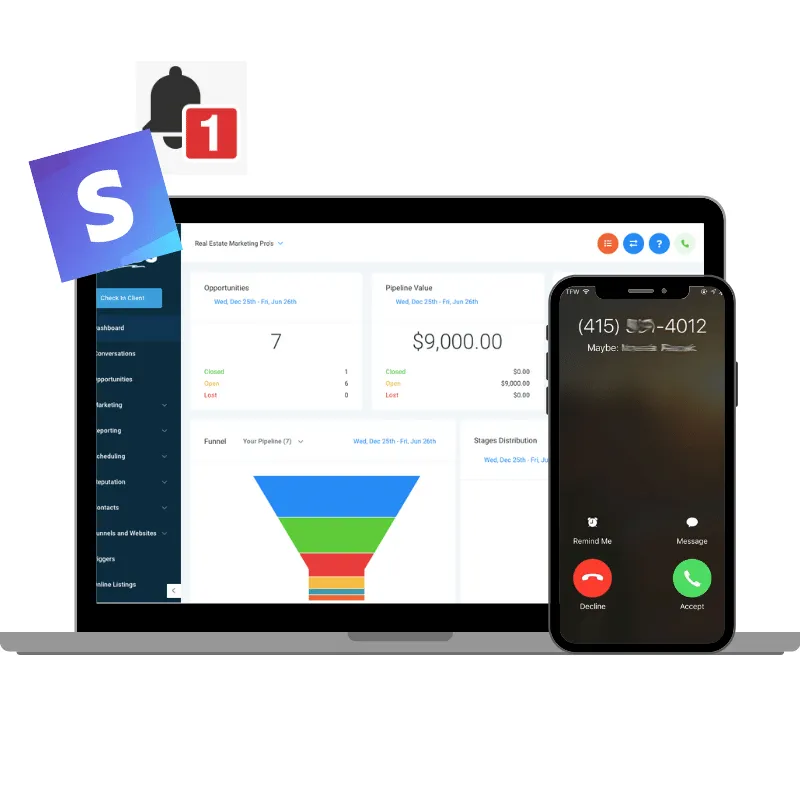
Every time we generate you a new lead interested in your marketing services, your dashboard will automatically add the new lead into your CRM, and send the new lead an SMS, email, and even automatically call you to connect you right away!
Become More Focused, Be More Productive, Burn Out Less
Price - FREE training
From The Desk Of Wayne Veldsman (blogs)
Women Live Longer Than Men: What Happens to Your Finances When Your Husband Dies
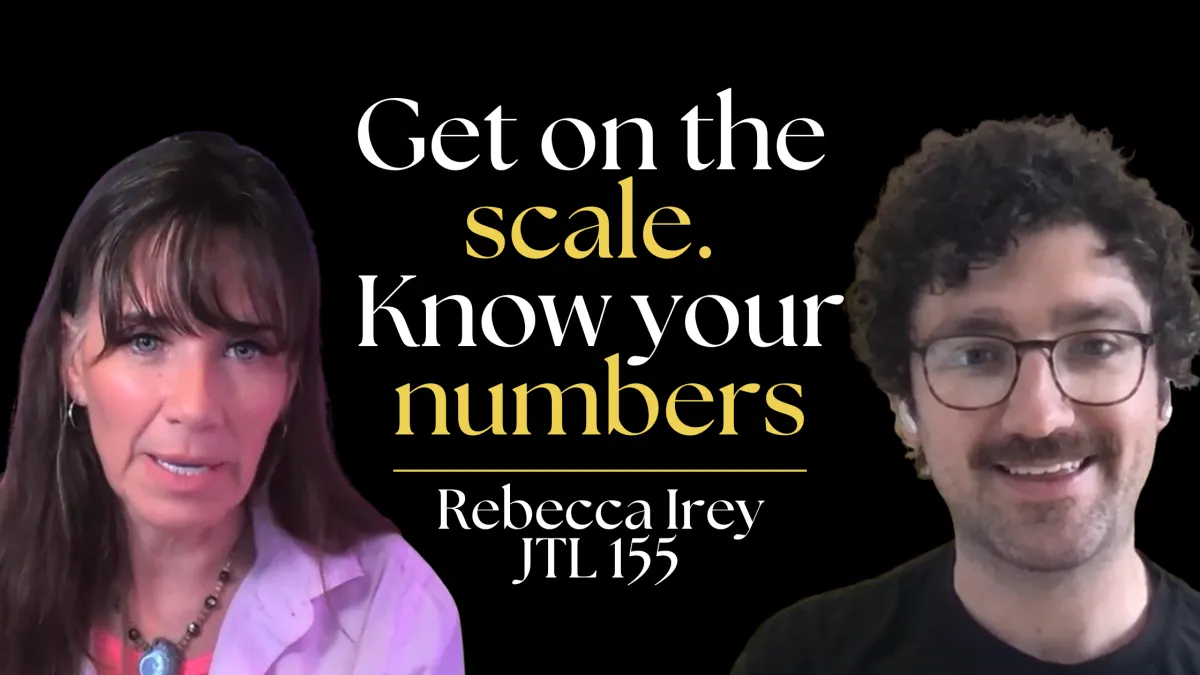
Want to hear the full conversation? Listen to the Journey To Legacy podcast Episode 155 with Rebecca Irey for even more insights and stories from his remarkable entrepreneurial journey.
Women Live Longer Than Men: What Happens to Your Finances When Your Husband Dies
Short answer: Women outlive men by around five to six years, so most married women will eventually manage the money alone. A 2024 survey of 422 US widows found 41% had never had a financial conversation with their spouse beforehand, only 29% had made a will together, and 51% ended up living paycheck to paycheck or struggling with bills.
Women live longer. What does that actually cost?
Enjoy the longevity stat for a second, then follow it to the end.
Those extra years are not the ones spent travelling together. They are the ones spent alone, running a household on money you may never have looked at properly. Women live roughly five to six years longer than men in the US. LIMRA's Retirement Income Institute counted around 11.7 million widows in the US in June 2026, many of whom take on full financial responsibility for the first time.
Why do so many women end up unprepared?
Not through choice. It builds quietly across twenty years of dividing the labour, and the numbers on what that produces are hard to argue with.
Thrivent surveyed 422 widowed women across the US in May 2024. 41% said they'd had no financial conversations or plans in place before their spouse died. 60% said the death was unexpected, yet only 29% had made a will together. Just 6% had met with a financial advisor as a couple and 5% had a written financial strategy. ThinkadvisorInvestmentNews
Read those last two again. Six percent and five percent.
Only 48% felt prepared to manage their finances afterwards.
So the question was never whether you'd need to know. It's whether you learn it on an ordinary Tuesday, or in the fortnight after a funeral.
What actually happens afterwards?
51% of the widows surveyed ended up living paycheck to paycheck or struggling to manage their bills.
Debt is where it bites hardest. 39% were carrying more than $25,000 in debt immediately after losing their spouse, and 10% were carrying more than $100,000. 71% said the loss made paying that debt down harder.
Then the retreat starts. 68% made immediate changes to their finances: 35% cut or stopped non-essential spending, 14% pulled money out of retirement savings to cover expenses, and 11% reduced or stopped contributing to savings altogether.
That last one compounds. Money taken out of retirement in a crisis year is money that never earns anything again, and the decision gets made in the worst month of your life. LIMRA's 2026 report notes that grief impairs cognition and decision-making, and warns specifically against major financial decisions in the early stages.
You're asked to choose permanently, using information you're seeing for the first time, at the exact point you're least able to judge it.
What are the three Ds?
Rebecca Irey, founder of Blue Skye Financial and a guest on Journey to Legacy, plans around three events. These are the ones that hand a woman the money alone.
Death. A partner or a parent. Probate, the legal process of settling an estate, does not wait for you to feel ready.
Divorce. Increasingly later in life, with fewer working years left to rebuild what gets split.
Desperation. Illness, injury, a business that ends. Rebecca knows this one directly. She had spent over 25 years in finance and still wasn't prepared when a doctor told her that her husband and business partner would never work again. Seven children at home. Professional knowledge didn't protect her. Distance from her own accounts did the damage anyway.
What does being involved actually look like?
Nobody is asking you to become an accountant. Four things.
Know where the accounts are. Every institution, every login, written down somewhere findable.
Know what is owed and on what terms. Not just the balance. The rate, whether it's fixed or variable, and what happens if the income stops.
Know who to call, by name. The advisor, the accountant, the attorney. A phone number is not a relationship.
Be in the room for every planning conversation. Including the boring ones. Especially those.
The stereotype of the woman who has no idea what her household is worth isn't a personality trait. It's what happens when a reasonable-looking arrangement runs unchecked for two decades. It's avoidable, and starting takes one afternoon.
Ask this week, while it's still just a conversation.
Frequently asked questions
How many widows had a financial plan before their spouse died?
Very few. In Thrivent's 2024 survey of 422 US widows, only 5% had a written financial strategy and 6% had met with a financial advisor as a couple.
How much debt do widows carry after losing a spouse?
39% were carrying over $25,000 immediately afterwards, including 10% with more than $100,000, and 71% said the loss made repaying it harder.
What do widows struggle most with?
Becoming the sole financial decision-maker and paying monthly bills on time. 51% ended up living paycheck to paycheck or struggling with bills.
How much wealth will women inherit from spouses?
Around $54 trillion is projected to transfer between spouses through 2048, with more than 95% going to women.
What should I do first if I've never been involved in our finances?
List every account, policy and debt you can name from memory. The gaps in that list are the conversation to have.
TRANSCRIPTS:
WAYNE: What if the one thing everyone told you would keep you safe, working hard and saving diligently, was actually the reason you're falling behind?
My guest today is Rebecca Irey, founder of Blue Skye Financial, a mother of seven, and a woman who learned the hard way the financial system isn't broken. It's working exactly as designed, just not for you.
Rebecca grew up on a farm in South Dakota, watched her family lose a three thousand-acre, four-generation ranch because nobody taught them the rules to the money game they were playing. Years later, when her husband's sudden health crisis ripped the future she'd been planning right out from under her, she didn't collapse. She reverse-engineered the entire system.
Today, Rebecca helps entrepreneurs, families, and especially women stop playing a financial game nobody ever explained and start building with strategy, not just hope. This conversation is raw, it's kind of funny, and it might make you uncomfortable in the very best way.
Let's do it.
Rebecca, thanks so much for your time. Why don't you kick us off, tell everybody a little bit about yourself, and maybe why should people listen to you today?
REBECCA: Oh, wow. Why should people listen to me? Obviously, I'm a woman, I'm a Texan, I have opinions about every dang thing. Of course you should listen to me. Everything will be better for you if you will just... I'm telling my seven children this all the time. "If you would just listen to me, your life would be better."
So I guess it would apply globally, right? Just listen to me.
No, I've been in the financial industry, first started in 1991. Have seven children, six grandchildren, and my biggest qualification is I have stepped in it financially in every possible way. So I know how to guide people around that.
I know how to make a lemonade empire from lemons being thrown at me. Those are skills. And I think when you get to a certain age, Wayne, and maybe you're not there yet, you realise that you are suddenly living a story that you didn't think you were writing. I thought I was writing a completely different book, and somehow it switched on me.
So you gotta pivot.
WAYNE: Learning from experiences is really some of the top education and expertise that we can get. I totally agree. Take me back a little bit. What do you mean by you were writing a totally different story, and then changes happened? Where did this whole story start?
REBECCA: Well, I started in finance in 1991, met my husband there. We're both very entrepreneurial. I started my first business when I was 12.
My dad was a rancher. This is going to date me a little. I'm very... I look fantastic for my age. But when I was a kid, we had a county newspaper in South Dakota, and in the back of the county newspaper were all these little ads.
So I saw a little ad that said, "Send me a dollar and I will teach you how to make money." So I did. I sent my dollar, and I got a package that taught me how to put ads in little county newspapers to have my friends and neighbours send me their dollars, so I could send them the package.
So my dad, single father of a 12-year-old girl, poor guy, comes home one day and the mailbox is full of envelopes for Wolf Incorporated. Wolf was my maiden name. And he's like, "What is this? What have you done?"
So I told him the whole story. I'm like, "It's a business, and people are going to send me a dollar, and then I'm going to do this thing." He's like, "Those are our neighbours. You have to give all your dollars back." I'm like, "No. You cannot take my dollars."
So that was my first business.
I met my husband, we were both in finance, and he wanted to start a medical company. So while I was doing my thing, he was doing his thing, and the goal was that we could be home with our kids. We already had one, and we wanted to be home with kids.
This is the kind of entrepreneurs that we were. I don't know if this resonates with anyone, but we were walking through Target one night, and we were doing it all out of our townhouse that we rented. And I said to him, "Look, if we're really serious about this thing, what we should do is give up the bedroom. I'll sleep in one walk-in closet, you sleep in another walk-in closet. We'll get two blow-up mattresses, and we'll make the bedroom an office, and we'll hire our neighbours."
And we did. He said, "That's a great idea." So we hired our neighbour, who still works for us today, I'm very proud to say. And a year later, we had a million-dollar business.
But we had to give it up. We both slept on blow-up mattresses in walk-in closets separately for like 18 months before we could buy our first home.
Here's a cool story. When we bought our first home, we were like 22. So we walked in. These people were retiring. They're like, "Do you have any questions?" I'm like, "Well, we've never had a pool before. This is our first house." It was like 5,000 square feet in Minnetonka, Minnesota. If you know, you know. And they're like, "This is your first house?" I'm like, "Yeah, it's so fun."
So that's the beginning.
WAYNE: Let's pause there for a second, because I'm super... At 12 years old, started this first business. Where did that interest come from? I'm always really curious, because there are people that ask me, "Well, maybe I'm just not meant to be an entrepreneur. I'm not meant to start a business. My parents didn't. I was never taught it." Where do you think that came from for you?
REBECCA: My dad was a rancher, but he was an entrepreneur at heart. He was a trader. He traded commodities. He had a computer like this big with a dot matrix printer. So when I was like nine, 10, I would come home from school on the bus, and I would have to manually type in the numbers from the charts so he could print them out on the dot matrix printer and graph them, so he would know what to trade the next day. We had a big old antenna just for his trading.
So he was oriented that way, and I think I kind of picked that up.
Also, he was a farmer, and when you have a single father... He was a pretty amazing man. Can you imagine in the '70s being a single father of a daughter? Come on. He was pretty stunning. But I was always very protective of him, so I never wanted to ask him for stuff.
I always wanted to make money. I didn't want to do any farming stuff, because ew. I went, "Farm is lame." I think it's pretty amazing now. But yeah, I always wanted to do something, and I guess I must have caught it from my dad.
WAYNE: Interesting, and he exposed you to money early, right? Allowing you to see the inside of what he was doing by having you type out what's going on in the charts so that he can be prepped and planned for tomorrow.
Do you think that without that experience, would it have been possible for you to become an entrepreneur? Can anybody become an entrepreneur?
REBECCA: No. I don't know if that's the answer you were expecting.
Have you heard that quote about starting your own business? There are a couple of good memes about it. One is that it's like chewing glass and seeing how long you can keep it down before you find success. I can't remember exactly how it goes. Or the one that I really love is that Instagram meme right now of the little boy with the air pistol, and he shoots himself in the crotch. He's like, "What have I done? What have I done?"
It is like that before you find your rhythm. So no, some people cannot handle it. You have to have a certain... It is a certain stripe of crazy, I think, to be an entrepreneur. It really is.
Think about that at 22, to be walking through Target with your toddler going, "You know what we really should do is sleep on blow-up mattresses for the next 18 months separately." That'd be fun. But it was the logical decision for us.
Not everybody is oriented that way. Some people are more safety-oriented, and I think that's fantastic. It takes both. The two ladies that still work for me in my husband's medical company, I fired him a long time ago, but that's another story for you. They're still with me, but they're oriented for support. They love it. They love what they do. They own what they do. They manage the whole thing, but they couldn't have done that bit. Like, I'm going to bet the farm. Some people are not people that bet the farm.
WAYNE: It's a lot of that initial risk-taking and thinking differently than the average person. So it sounds like that's the piece that you think everybody doesn't have. That's a piece that's maybe born into you?
REBECCA: I think, well, call it astrology, call it energy, call it personality. I don't know. I am a person that if you tell me no, I will say, "How dare you? I will find a way. I will have my way, gosh dang it."
But my girls who've been with me now for 25 years, if I tell them no, they're like, "Well, okay, she said no."
They're awesome when it comes to customer support. They don't get frustrated. It's a medical business. We have to deal with doctors. You know the difference between God and a doctor? God doesn't think he's a doctor. It's not easy to work with doctors.
And they are just brilliant at it. They're so good and so patient. I'd be like, "Look, your white coat and degree means absolutely squat diddly nothing to me." So we wouldn't have a company if I were in customer service. They're brilliant at it, but air mattress, that's me.
WAYNE: I'm enjoying the direction that we're going here with these stories, and we'll backtrack again in a second. But just for a moment, fill everybody in a little bit about what you're working on today. What's your primary business, or what are you primarily trying to grow right now?
REBECCA: So Blue Skye Financial is my firm. I founded it in 2020, and I'll tell you why.
My husband was my primary business partner my whole life, since before we could drink. But he was the kind of guy that didn't like to go to doctors. When you work for doctors, you don't like to see them socially. No thank you.
We had seven children, six of whom I was homeschooling. I was in my early 40s, and he hadn't been feeling well. So I made him get in the car. I'm like, "Look, you haven't been feeling well. This is not good. Get in the car."
After being in the emergency room for an hour, the doctor pulled me out and looked at me and said, "Mrs. Irey, I don't know what your life is, but you better figure it out, because your husband will never work again."
And life got really real for me, really fast. My business partner could no longer be my business partner. My person. My story was different. This is not the story that I was writing. I thought I had time. Tell the universe your plans, right?
So we founded Blue Skye in 2020, and we're really focused on women and what happens when life gets real for us.
Because here's the facts. Women, we live longer. We make less. We can talk about the political reasons that that is, but it is true. We do make less. There are reasons for that, but we do. We save less.
And women over fifty have dealt with one of the three Ds of financial planning. One is death. We have potentially either lost a parent and we're dealing with that, or we've lost a partner and we're dealing with that.
The second D is divorce. Divorce rates over the age of fifty are forty percent, and usually it's women. And we don't have as much saved. It's important.
And third is the one that I dealt with. It's desperation. All of a sudden, the world is different.
And even though finance was my background, the patriarchy is the water that we swim in, and he had always handled our personal finances. I didn't know. I wasn't prepared.
So whether it's death, divorce or desperation, women need to be prepared. That's why we really focus on women and their wealth, women entrepreneurs, single women, widowed women, divorced women. Because we need someone to come alongside us to say, "You got this. You can get there from here."
We have, to a certain extent, abdicated our financial responsibility, because that's the water we swim in. That's what we do. And many of us were blessed with really good partners who didn't do us wrong, but something happened. The book changed. Surprise ending. Oh, crap.
So it's really important to me to make sure, even when I deal with couples, that the woman is involved. She at least has some cognisance of what we're doing, so that when the day comes, because it will probably come for her, she's ready. As ready as she can be.
That is my current project, and it has been for a while.
WAYNE: That's super powerful, and great that you're focused primarily on this target audience around women. These three Ds of financial planning that happen to them. Death, divorce, desperation, and then they're left having to be self-sufficient and aware, especially when it comes to finances.
So through Blue Skye Financial, give me a little bit more specifics. Are you mostly just providing education? Are you helping with investments? What does that look like?
REBECCA: We're a full-service holistic financial firm. We're independent, so we do everything from brokerage work to, for our business clients, SEP IRAs and 401(k)s. We do financial retirement income planning. We have the capacity to do estate planning and Medicare planning, Social Security optimisation. We can look at your whole financial picture.
What we find is that your finances are like a wheel, but most people handle them in silos. Your accountant tells you how much you owe. Your broker tells you how much you made. Your insurance person says, "This is how much you've got to pay to protect what you have." But none of those people talk to each other.
So when we lose coordination, we lose control.
And this is what I can tell you about most women. I'm not going to say all. Always never say never. But most women, there are a couple of things we need. Men need these things too, but it's a different perspective.
We need to be safe. We need to know that we know that we know that no matter what genius is in the Oval Office, regardless of what the government does, regardless of what the markets do, I'm good. I'm safe.
But the second thing that we need is control. I need control. And when we lose coordination, we lose control.
So coming alongside a woman holistically and saying, "Let's coordinate what you have. Let's determine where you want to go." Because we can get there. Wherever you want to go, you may not have a yacht, you may not have gold doorknobs, you may not travel the world, but we can get where you want to go if we can just coordinate what you have and put some guardrails around what you're doing. So you know that you're safe.
Because sometimes the world is like an AFV video or something. Woo, and then she's gone. What happened? It's funny after a while, but it ain't funny in the moment. It's horrifying. You need someone to come alongside you.
I named the company Blue Skye because it wasn't for my husband, it was for my daughter. I have one daughter. She's been in trouble since the day she was born. You ever known somebody like that? She came out feisty. She's just rebellious. I don't know where she got that.
Anyway, she moved out early, and as a homeschool kid, that doesn't happen very often. I said to her when she moved out, "Julia," that's her name, "Julia, what colour is the sky?"
And she said, "Blue."
And I said, "Yeah, but in a thunderstorm, what colour is the sky?"
And she's like, "Black."
And I said, "But behind the clouds?"
"Blue."
And I asked her a few more questions and she's like, "Mother, it's blue. I know."
And I went, "Okay, fair. So what you need to know, baby, is that I'm your blue sky. You're going to kick some dust up, and you're going to have some storm clouds, and I am always there. I got you. I'm your blue sky, and I'll always be there. Behind everything, I will be there."
And when we founded Blue Skye, that's the reason. Because that's what we need. We need a team of people to say, "I'm always here. I know your name. I got you. Together, we got this." That's what we do.
WAYNE: That's really amazing, Rebecca. I absolutely love that. Making sure that people are aware that you're always there for them, especially in this financial services realm. But no matter what hardships you go through when your story changes, you're writing one story, and then a big drastic pivot's going to happen you weren't expecting. You're setting up to always be there for them, to help them so that they can always be prepared for whatever happens.
So take me back a little bit here, because this intersection of you working in the medical industry with your financial services background is causing a little bit of a grey area and confusion for me. Help give us a little bit of clarity about what was going on.
REBECCA: Here's the thing about entrepreneurs, Wayne. Most people don't ask me that question. They just hear, "You started in finance in 1991. Whoosh. Clearly, all you did was have babies and work in finance."
Oh no. Entrepreneurs do not do that.
My husband and I were always entrepreneurial-minded. Always. So I was a raw vegan chef for seven years. We'd had the medical company. We had a record company for a while. We've done a lot of things, but the foundation for us was always finance and medical. We always had those two streams.
My kids would say it's a little ADHD. Squirrel, there's a business. Let's try that. Squirrel, there's another thing. Let's try... Well, I'm a raw vegan now, so let's make a business out of that, because why wouldn't you? How hard could it be?
Real hard. For those entrepreneurs out there getting into food, dang. That's death by a thousand paper cuts on that one. That's hard.
So we've done a lot, with some foundation. Which comes back to financial planning, because once you have a solid financial foundation, what can you not do?
I think somebody that I met recently said you could probably go to Africa and Hawaii and somewhere else and somewhere else, and a bunch of other places that I've already forgotten, if you just have a solid foundation.
WAYNE: For everybody listening, Rebecca was referring to me, by the way. I'm on a little bit of a tour at the moment, and so we're lucky that we have a really solid foundation.
Rebecca, I agree with you. Entrepreneurs often aren't walking the straight path. Even at the beginning of the interview, you mentioned that they're thinking differently than the typical path. They're more okay with risk, trying things.
But now you mentioned that it's way easier to do that when you have the financial groundwork put together. Because now you're okay to have more risk. You can try something else, and if it fails, you're still okay.
So where should people be starting? Because the idea of, oh, now I'm vegan, let me try a business over there. It's like, oh, actually I'm super into running, okay, let me start a running community or some new shoe company. We can't just be doing everything at once. So where's the best place for us to start to make sure we're setting ourselves up for future success?
REBECCA: Here's the thing that I'm going to say. As entrepreneurs, as much as I love them, as much as I am one, we absolutely suck when it comes to planning for our own futures.
Because we're rainmakers. We make money. This is what we do. So why do I need a 401(k)? I'm just going to make everything I make and plow it into my business, either this business or the other business or all the businesses. I do not need to save for a rainy day, because guess what, honey, I make money. That's what I do.
Except you don't know when life is going to change, or when you're going to change. If the health crisis had been mine, then what? Then what do we do?
So I always encourage entrepreneurs to look at their savings and their retirement as part of their cost of doing business. This is my cost of goods sold.
Know your numbers. If you don't know your metrics, if you don't know your numbers, you have a really expensive hobby. You do not have a business. Sorry. You don't. You need to know your metrics, know your numbers. They are not good or bad, they just are.
This is what I say to my female entrepreneurs. "Fat girl, get on the scale. Get on the scale, know your numbers."
When I was pregnant with my fifth child, I wouldn't get on the scale, because I had gained like twenty pounds with each child, and it just never left, because I kept getting pregnant. I don't know. I'm a slow learner. I don't know how that happened, but it did. My husband would tell you it's because we lived in Minnesota, it was cold, and you've got to do something. So merry Christmas, Rebecca's pregnant again.
Anyway, I went to my doctor and I said, "I'm not going to step on the scale. I'll step on it backwards, because I don't want to know."
And he looked at me and basically what he said is, "Fat girl, get on the scale." But what he actually said is, "The number's not bad. It just is what it is. It's what you do with the number that is good or bad. Are you going to go get a pint of ice cream? Are you going to take a walk in the park? Because one of those is good for you and one of them is not."
But I didn't want to know.
And I think as entrepreneurs, when we're in that growing season, we're just plowing everything in. All of our time, all of our tears, everything that comes in. And do you want to balance your chequebook in that moment? No. Do you want to look at the eighteen marketing things you tried that didn't work and realise how much money you spent on that that didn't work out? No, you do not.
Fat girl, get on the scale. You've got to know your numbers. You've got to know your metrics, and you have to plan for yourself. Otherwise, you have a very expensive hobby.
Your retirement, your SEP IRA, your Solo 401(k), it is a cost of doing business. Because life changes when you least expect it.
WAYNE: This is really great advice, a good way to look at it. That your savings and your retirement are costs of doing business.
This concept that a lot of entrepreneurs believe of, "No, I don't need to put money into retirement, because I'm never going to retire." Or, "I don't need a 401(k). I don't even know if that's something I can have, because I'm an entrepreneur. It doesn't matter. I'm just going to put more money into my business and grow it, and that'll sustain me forever."
It's like, great. Well, now start to look at it: when you put money back into your business, savings and a retirement fund is part of your business. To set yourself up for success, to make sure that you have that safety that you mentioned earlier, before you go trying tons of new things. I think I'm following you correctly.
REBECCA: Yeah, absolutely. Because you don't know. There's no way for us as entrepreneurs to determine.
As an example, my husband's medical business. He was in medical documentation, otherwise known as transcription. So chugging along, everything's great. We have like 200 people working for him. It's fantastic.
What we couldn't have known was that in 2008, President Obama was going to change healthcare forever and effectively eliminate our entire industry. You couldn't have predicted that that was going to happen, but it did.
So whether it's something like that or something else, there are only certain things you can control. You can't control the government or the genius that's running it. I live in Texas, but I'm equally suspicious of every party. I don't care what your letter is. I think you're suspicious. Doesn't matter to me.
You don't control that. You don't control the markets. You don't even control your own industry. You're just trying to capitalise on the energy and the opportunity that you see.
So if you don't plan for yourself... Everybody gets old, baby. Everybody does. You're going to be tired one day. Or the universe is so tricky. She's tricky. She's going to go, "Heh, gotcha. Let's see what you do with that."
Okay. How are you going to deal with that? We all operate on this, "Everything's going to be okay because I can work real hard." Okay, that's just having a demanding job. That's not having a business.
So do you want a really demanding job where you don't have any retirement? Do you want an expensive hobby? Or do you want an actual business where you can leave a legacy to your kids and your people, your churches, your charities? Those are the choices, for real.
WAYNE: Absolutely. You just said the words, somebody thinks they can just work really hard. I know for a fact you have a saying or a concept that you learned, that hard work doesn't actually guarantee getting ahead. Where does that come from, and what is that belief? Because for most people it's like, what do you mean? No, hard work is how you get ahead. No?
REBECCA: So my family were ranchers. Four generations of my family, 3,000 acres in South Dakota. Brilliant. And if you've never been to South Dakota, you need to go. It's holy country. You feel it as soon as you land. You land at the airport in Rapid City, and there are cows across from the landing strip, still now.
My dad knew crops and cattle. He knew commodities. Why was he good at commodities? Because he traded cows and wheat and things that he knew.
When Farm Aid happened and the family farm was really under attack, he didn't know the rules. He knew to take a big loan from the bank to buy crops and cattle and hopefully sell them off at the end of the year to pay the bank off. But when that didn't happen, he didn't know the rules to the game. And you can't win a game if you don't know the rules.
So in that period, I spent the summer I turned 12 cleaning out my grandma's house so that my neighbours could come and bid on our stuff, because we lost the farm. 3,000 acres, four generations of my family, and now we're not a farm family. We're not, because we didn't know the rules, so we couldn't win.
Working hard, everybody works hard. But we still have Grandma and Grandpa greeting at Walmart. Do you think they didn't work hard? They did, and they're still greeting at Walmart. And not because they're lonely, because they need the money.
Just working hard isn't going to get you there. It takes strategy. It takes appropriate guardrails and planning for not just your clients, not just your customers, but for yourself as an owner. Otherwise you just have a really demanding job with no benefits. Why?
WAYNE: Tell me a little, what does that strategy look like? Because you're so right. You gave such a tangible example there. Thank you for that. Your dad and generations worked extremely hard on this farm, but still, that did not guarantee getting ahead.
Grandma and Grandpa that are greeters now at Walmart, they're not there because they're lonely and they just want to talk to people. They need the money. But I guarantee you, they have been working nine-to-five jobs really hard their entire life.
So if hard work isn't going to get us ahead, what do we need to do differently?
REBECCA: I think you know your strengths. Know your strengths, know your weaknesses.
I'm an entrepreneur. My girls, they're like 60-year-old women now. They're still my girls, whatever. They're made for support. So know what you're good at, and plan for yourself. You have to.
If you're an entrepreneur... I was the kind of entrepreneur as a young person, and Wayne, I'm sure you know people like this, where it's, "I don't need a business plan. It's genius. You don't understand how good this idea is. Business plan, shmusiness plan. I don't need anything. This is such a good idea. It's brilliant."
And you look at ideal numbers. "If I can just sell eight of these a week." Okay, but you don't know how hard it's going to be to sell eight of those a week until you're deep in it.
Have some respect for what it is to be a business owner. Know that knowing your metrics, planning appropriately, making sure you have deep enough pockets to bootstrap yourself, it is not all about hard work. Because if you can't pay for the marketing, if you can't pay to get your message out there, if you can't pay for the training to do right by your eventual client or customer, you don't have a business.
Most people don't make it, and they all work hard. Most people fail.
WAYNE: That's true. They absolutely do.
So knowing your strengths. Is that a way that we then don't need to focus on just hard work, but we're more strategic from the get-go? Is it almost thinking farther ahead first, to be more strategic? I'm just trying to tangibly figure out what we need to do differently. Because everybody believes hard work is the answer. So what is the other side of the coin?
REBECCA: I don't think hard work is the answer. I think that there needs to be a balance.
And I am an extreme person, obviously. Seven children. I was a raw vegan, and now I've been keto for the last 10 years. So I'm extreme on everything I do. Everything. However, if you know anything about Enneagram, I'm an Enneagram 8, which is the scariest one. So yeah, that's me, obviously, if you couldn't tell. But I have a 7 wing, which means I'm super fun.
There's a balance, and finding that is really hard for me, because I get frustrated with strategy. I get frustrated with, "Oh God, can't we just do something already? Please, let's just do something."
But there's a balance between... Some people get analysis paralysis, where we're going to strategise and plan and organise and do all the things until we're just like, "I'm tired of this idea already. I haven't even done anything."
And I'm just going to go bull in a china shop and go, "Rah, let's go," and I'm just going to work myself into success. No, you're not, because you don't know what you're doing.
So there's a balance there between strategy and action, and you have to have both. Like, you have to have air and water. I was going to say vegetables, but I was a vegan for too long. I don't like vegetables anymore, so I'm not going to say that. You have to have both strategy and action.
And there is, just like flying a plane, you're going to have a little too much action. You're going to have to come back to strategy. You're going to have too much, "Okay, we've done strategy for too dang long. Let's implement something."
All of entrepreneurship is this monitoring and working, and you have to be able to juggle, keep all those plates spinning until you can bring support people in to say, "Here we go. Let's do the thing."
WAYNE: And if you know from the get-go that you are going to have to keep all these plates spinning by yourself until, at an undefined point, you will get support to help you, well, you better take a moment to be very strategic about how you need to go about this. Because if you just start spinning plates, you are going to be running around like a chicken with its head cut off, and it will ultimately all come crashing down. So it's that combination. You need both strategy and action.
Rebecca, to pull us back a little bit here into the financial planning space. I read a profile of yours online where you said that most people are playing a financial game that they were never taught the rules to. Tell us a little bit about what this game is and what are the actual rules that the majority of people aren't aware of?
REBECCA: Sure. So what are we taught about finance?
For my generation and my parents' generation, we're taught to get a good job, save as much as you can, don't touch it, everything will be fine. That is financial education in America.
You want to start a business? Okay, what do you want to do? Great. Do it. What? What did you say?
Financial education in America is nonexistent, especially for entrepreneurs. And people who work W2 jobs, that's what they get. "Save as much as you can. Don't ever touch it. It's going to be fine."
Okay. Is it though? Because in 2000, the S&P was 1,469. In January 2013, the S&P was 1,469. Thirteen years just to get flat. If you retired in 2000, well, welcome to Walmart, I hope you look good in blue.
And that happened. That happened.
We're really blessed to be in the age that we are, because we have AI all around us. Although, if I could just offer an AI caution: don't ask ChatGPT to build you a business plan, because ChatGPT is the biggest brown-noser on the planet. That is not real business strategy. It's just, "You're so awesome."
Even if you say, "Don't be so nice to me, be a little harder," they're like, "Well, you're really so super wise to ask me that." No, no, no. There's really good AI out there. ChatGPT for that, not great. If you want your astrology chart read, ChatGPT is really good at that, so for whatever that's worth. Probably nothing.
But we're in an age where crowdsourcing knowledge is a thing. It's not the Dewey Decimal System and checking out Entrepreneurship For Dummies anymore. Thank God we don't have to go down to the local SBA centre and have some well-meaning schmuck try to walk us through it. That's not what we have. Thank God we live in this age.
But we still have to take the step of not just creating the plan but having some kind of organised execution. Otherwise you will fail.
You are not Jeff Bezos. You are not Elon Musk. You are you, and you need a plan. If you fail to plan, you plan to fail. Not to be trite, but have some respect for everything you're about to pour into this venture. Respect yourself enough to have a plan and execute the plan, instead of going, "Squirrel, let's try that."
As somebody who loves squirrels, I squirrel all the time.
WAYNE: As you mentioned, the school system sort of failed us. It's, okay, get an education, go to college and get a ton of debt, get a job, cross your fingers, save as much as you can, and you'll probably be fine. You'll totally be okay.
So that's the system that we were taught, that is as false as it could possibly be. What does the reverse side of that look like? Of course, we should be strategic, have a plan. Where do we start? Where do you recommend everybody go right after they listen to this podcast?
REBECCA: I'm going to say take a deep dive right here. Start here.
If you're an entrepreneur, wherever you are on the entrepreneurial journey, assess where you are. If you're just starting, let's do a basic business plan. AI is a thing. Get a start.
If you're in business, know your metrics. What are your actual metrics?
One thing that I did at the beginning of this year, and it was more powerful than I thought it would be, is I promised my staff that we would have one strategy at the beginning of the year and I would not squirrel. Not one squirrel for all of 2026.
Super powerful, because we just committed. This is it. This is what we're doing. We're going to do it all year and then we'll reassess in the fourth quarter and decide what we're going to do. And the growth that we have had this year has been exponential.
But it took spending all of last December really getting real. What have we spent? What have we tried? What are our actual metrics? What do we want to do now? And sticking to it, executing, and bringing in people.
And sometimes it's worth... Don't go to a... I love CPAs, but they're backwards-looking people. They look at what you've done in the past. They're not forward-looking people. So find somebody who specialises in tax advisory. If you don't know one, I'll connect you. Go to blueskyefinancial.com. I know you're going to get to that, but really, I'll connect you to tax advisory. Whoever you need, wherever your weak spot is, wherever ChatGPT is like, "You're so awesome." No, that's where you need help, right there.
Know your numbers. Decide where you want to go. Once you know where you are and where you want to go, now we can reverse engineer that. Now you can set up your Solo 401(k) or your SEP IRA, and I don't care if you put $25 a month into the dang thing, you're putting something away. Start somewhere. You will be grateful someday.
Reverse engineer what you want. This is just logic. But you have to settle yourself.
So I would challenge you. What is it, Wednesday today?
WAYNE: Yeah, July 8th.
REBECCA: Before the weekend is over, sit down and strategically write down, "This is where I am. These are my metrics. These are my numbers. These are my costs. This is where I want to go."
And make it ridiculous. Make it in ten years. Especially if you're just starting, ten years is forever. But then reverse engineer it. So if I want this in ten years, then I have to have this in five years, and I have to have this in one.
Because we overestimate what we can accomplish in a day. We underestimate what we can do in ten years. You get the point.
And then on Monday, take action. Don't get lost in it. Set aside some dedicated time, maybe two hours, because otherwise you'll just be exhausted. Take action on what you discover, on Monday.
And then you do that again and again and again, and that's entrepreneurship.
WAYNE: Well said. Take the actual time to put that plan together, a farther out plan, then take action on it.
Rebecca, I'm enjoying this so much, and I think there are so many other stories that we haven't even uncovered, but we're already running out of time, so I'd love to invite you back already.
As we start to wrap up, the show is typically about legacy. In financial planning circles, legacy often is the money that you leave behind to your loved ones. But for you, what does the concept of legacy even mean? What is the legacy you're working to leave on this world?
REBECCA: Money is a legacy, but it's the smallest part of your legacy. Because the difference between a wealthy family and a poor family is three generations. So it's part of it, but it's not it.
I'm going to tell you that the legacy that you leave is here. It's your memories. It's Wolf Incorporated, filling the mailbox with dollars. It is teaching my kids how to be an entrepreneur. It is the time I ditched my mother-in-law on the Massachusetts Turnpike accidentally. I swear to God it was an accident.
All of those stories, that's my legacy. My children will be telling those stories. When I'm dead and gone, they'll still tell the stories.
And I'm going to tell you this, and this is from the mother of many. One of the things that I started doing when my kids were little, and you can do this with your person, is I started a notebook. Every day we would write down, everybody had to come up with one thing. What's the one thing that you're grateful for?
We called them woo-hoos. It was woo-hoo for whatever it was. And then we had a family live with us, and they were like, "Woo-hoo, we didn't die yesterday." I'm like, "You're missing the point. That's not it."
But I did this for decades. Just notebooks of one woo-hoo from every kid. And now I look back, and that is a legacy. Because I can look back and I can say, "Noah, who is 24 this year, woo-hoo, Noah's potty-trained." Woo-hoo, we went to Boston. Woo-hoo.
Your values and your memories and your stories, that's your legacy.
WAYNE: Wonderful. Woo-hoo. What a tangible thing that everybody can do and take away.
Rebecca, thank you so much for sharing. I'm positive everybody wants to learn more from you, more about Blue Skye Financial. Where's the best place for them to go to do that?
REBECCA: Website is Blue Skye Financial, Skye with an E. Had to be special. I'm on LinkedIn, Facebook, Instagram, YouTube. I do not TikTok. Just too old. I don't know how to TikTok. But all the other places I am. I'll tell you straight. Let's connect.
WAYNE: I'm super excited to be connected with you, and I'm sure everybody else is as well. Rebecca, thank you again so much.
REBECCA: Thank you for having me, Wayne. Appreciate it.
WAYNE: And that's a wrap.
If this conversation lit something up in you, please share this episode with one person who needs to hear it. Especially that entrepreneur in your life who's been grinding without a plan, or that woman who's been told everything will just work out.
Here's what I'm taking away from Rebecca today.
One, hard work alone will never be enough. Everybody works hard, but strategy is what separates the people who build wealth from the people who end up greeting at Walmart because they have to.
Two, if you're an entrepreneur, your savings and retirement aren't optional extras. See them as a cost of doing business. Respect yourself enough to plan for your own future, not just your clients' futures.
And three, legacy isn't the money you leave behind. It's the stories, the values, the memories you create right now. That's what lives on.
Rebecca, thank you so much, my friend, for being here today. Everybody go check her out at blueskyefinancial.com. That's Skye, S-K-Y-E.
And until next time, you've been listening to the Journey to Legacy podcast.
The 3-Step Strategy To Growing Businesses Digitally
Are you an Agency Owner, Service Provider, or Entrepreneur who sells online and want your pipeline filled with 300+ appointments with your idea client every single month? Are your SERIOUS about growing your business and want to work with Wayne 1-on-1?
Launch Into Digital Entrepreneurship is a course and coaching program specifically designed to take agency owners and online service providers from manual prospecting and wondering if this is ever going to work out, to having a very specific system in place which is going to allow you to generate 20 to 30 booked appointments every single day!
You're going to get a step by step process to building out your prospecting, sales and fulfilment system, and building your sales team so that you can close clients while stepping away from your sales process.
Price - $1,997 $97 (Limited Time Offer!)
Every time we generate you a new lead interested in your marketing services, your dashboard will automatically add the new lead into your CRM, and send the new lead an SMS, email, and even automatically call you to connect you right away!
Become More Focused, Be More Productive, Burn Out Less
Price - FREE Training
From The Desk Of Wayne Veldsman (blogs)
Women Live Longer Than Men: What Happens to Your Finances When Your Husband Dies
Want to hear the full conversation? Listen to the Journey To Legacy podcast Episode 155 with Rebecca Irey for even more insights and stories from his remarkable entrepreneurial journey.
Women Live Longer Than Men: What Happens to Your Finances When Your Husband Dies
Short answer: Women outlive men by around five to six years, so most married women will eventually manage the money alone. A 2024 survey of 422 US widows found 41% had never had a financial conversation with their spouse beforehand, only 29% had made a will together, and 51% ended up living paycheck to paycheck or struggling with bills.
Women live longer. What does that actually cost?
Enjoy the longevity stat for a second, then follow it to the end.
Those extra years are not the ones spent travelling together. They are the ones spent alone, running a household on money you may never have looked at properly. Women live roughly five to six years longer than men in the US. LIMRA's Retirement Income Institute counted around 11.7 million widows in the US in June 2026, many of whom take on full financial responsibility for the first time.
Why do so many women end up unprepared?
Not through choice. It builds quietly across twenty years of dividing the labour, and the numbers on what that produces are hard to argue with.
Thrivent surveyed 422 widowed women across the US in May 2024. 41% said they'd had no financial conversations or plans in place before their spouse died. 60% said the death was unexpected, yet only 29% had made a will together. Just 6% had met with a financial advisor as a couple and 5% had a written financial strategy. ThinkadvisorInvestmentNews
Read those last two again. Six percent and five percent.
Only 48% felt prepared to manage their finances afterwards.
So the question was never whether you'd need to know. It's whether you learn it on an ordinary Tuesday, or in the fortnight after a funeral.
What actually happens afterwards?
51% of the widows surveyed ended up living paycheck to paycheck or struggling to manage their bills.
Debt is where it bites hardest. 39% were carrying more than $25,000 in debt immediately after losing their spouse, and 10% were carrying more than $100,000. 71% said the loss made paying that debt down harder.
Then the retreat starts. 68% made immediate changes to their finances: 35% cut or stopped non-essential spending, 14% pulled money out of retirement savings to cover expenses, and 11% reduced or stopped contributing to savings altogether.
That last one compounds. Money taken out of retirement in a crisis year is money that never earns anything again, and the decision gets made in the worst month of your life. LIMRA's 2026 report notes that grief impairs cognition and decision-making, and warns specifically against major financial decisions in the early stages.
You're asked to choose permanently, using information you're seeing for the first time, at the exact point you're least able to judge it.
What are the three Ds?
Rebecca Irey, founder of Blue Skye Financial and a guest on Journey to Legacy, plans around three events. These are the ones that hand a woman the money alone.
Death. A partner or a parent. Probate, the legal process of settling an estate, does not wait for you to feel ready.
Divorce. Increasingly later in life, with fewer working years left to rebuild what gets split.
Desperation. Illness, injury, a business that ends. Rebecca knows this one directly. She had spent over 25 years in finance and still wasn't prepared when a doctor told her that her husband and business partner would never work again. Seven children at home. Professional knowledge didn't protect her. Distance from her own accounts did the damage anyway.
What does being involved actually look like?
Nobody is asking you to become an accountant. Four things.
Know where the accounts are. Every institution, every login, written down somewhere findable.
Know what is owed and on what terms. Not just the balance. The rate, whether it's fixed or variable, and what happens if the income stops.
Know who to call, by name. The advisor, the accountant, the attorney. A phone number is not a relationship.
Be in the room for every planning conversation. Including the boring ones. Especially those.
The stereotype of the woman who has no idea what her household is worth isn't a personality trait. It's what happens when a reasonable-looking arrangement runs unchecked for two decades. It's avoidable, and starting takes one afternoon.
Ask this week, while it's still just a conversation.
Frequently asked questions
How many widows had a financial plan before their spouse died?
Very few. In Thrivent's 2024 survey of 422 US widows, only 5% had a written financial strategy and 6% had met with a financial advisor as a couple.
How much debt do widows carry after losing a spouse?
39% were carrying over $25,000 immediately afterwards, including 10% with more than $100,000, and 71% said the loss made repaying it harder.
What do widows struggle most with?
Becoming the sole financial decision-maker and paying monthly bills on time. 51% ended up living paycheck to paycheck or struggling with bills.
How much wealth will women inherit from spouses?
Around $54 trillion is projected to transfer between spouses through 2048, with more than 95% going to women.
What should I do first if I've never been involved in our finances?
List every account, policy and debt you can name from memory. The gaps in that list are the conversation to have.
TRANSCRIPTS:
WAYNE: What if the one thing everyone told you would keep you safe, working hard and saving diligently, was actually the reason you're falling behind?
My guest today is Rebecca Irey, founder of Blue Skye Financial, a mother of seven, and a woman who learned the hard way the financial system isn't broken. It's working exactly as designed, just not for you.
Rebecca grew up on a farm in South Dakota, watched her family lose a three thousand-acre, four-generation ranch because nobody taught them the rules to the money game they were playing. Years later, when her husband's sudden health crisis ripped the future she'd been planning right out from under her, she didn't collapse. She reverse-engineered the entire system.
Today, Rebecca helps entrepreneurs, families, and especially women stop playing a financial game nobody ever explained and start building with strategy, not just hope. This conversation is raw, it's kind of funny, and it might make you uncomfortable in the very best way.
Let's do it.
Rebecca, thanks so much for your time. Why don't you kick us off, tell everybody a little bit about yourself, and maybe why should people listen to you today?
REBECCA: Oh, wow. Why should people listen to me? Obviously, I'm a woman, I'm a Texan, I have opinions about every dang thing. Of course you should listen to me. Everything will be better for you if you will just... I'm telling my seven children this all the time. "If you would just listen to me, your life would be better."
So I guess it would apply globally, right? Just listen to me.
No, I've been in the financial industry, first started in 1991. Have seven children, six grandchildren, and my biggest qualification is I have stepped in it financially in every possible way. So I know how to guide people around that.
I know how to make a lemonade empire from lemons being thrown at me. Those are skills. And I think when you get to a certain age, Wayne, and maybe you're not there yet, you realise that you are suddenly living a story that you didn't think you were writing. I thought I was writing a completely different book, and somehow it switched on me.
So you gotta pivot.
WAYNE: Learning from experiences is really some of the top education and expertise that we can get. I totally agree. Take me back a little bit. What do you mean by you were writing a totally different story, and then changes happened? Where did this whole story start?
REBECCA: Well, I started in finance in 1991, met my husband there. We're both very entrepreneurial. I started my first business when I was 12.
My dad was a rancher. This is going to date me a little. I'm very... I look fantastic for my age. But when I was a kid, we had a county newspaper in South Dakota, and in the back of the county newspaper were all these little ads.
So I saw a little ad that said, "Send me a dollar and I will teach you how to make money." So I did. I sent my dollar, and I got a package that taught me how to put ads in little county newspapers to have my friends and neighbours send me their dollars, so I could send them the package.
So my dad, single father of a 12-year-old girl, poor guy, comes home one day and the mailbox is full of envelopes for Wolf Incorporated. Wolf was my maiden name. And he's like, "What is this? What have you done?"
So I told him the whole story. I'm like, "It's a business, and people are going to send me a dollar, and then I'm going to do this thing." He's like, "Those are our neighbours. You have to give all your dollars back." I'm like, "No. You cannot take my dollars."
So that was my first business.
I met my husband, we were both in finance, and he wanted to start a medical company. So while I was doing my thing, he was doing his thing, and the goal was that we could be home with our kids. We already had one, and we wanted to be home with kids.
This is the kind of entrepreneurs that we were. I don't know if this resonates with anyone, but we were walking through Target one night, and we were doing it all out of our townhouse that we rented. And I said to him, "Look, if we're really serious about this thing, what we should do is give up the bedroom. I'll sleep in one walk-in closet, you sleep in another walk-in closet. We'll get two blow-up mattresses, and we'll make the bedroom an office, and we'll hire our neighbours."
And we did. He said, "That's a great idea." So we hired our neighbour, who still works for us today, I'm very proud to say. And a year later, we had a million-dollar business.
But we had to give it up. We both slept on blow-up mattresses in walk-in closets separately for like 18 months before we could buy our first home.
Here's a cool story. When we bought our first home, we were like 22. So we walked in. These people were retiring. They're like, "Do you have any questions?" I'm like, "Well, we've never had a pool before. This is our first house." It was like 5,000 square feet in Minnetonka, Minnesota. If you know, you know. And they're like, "This is your first house?" I'm like, "Yeah, it's so fun."
So that's the beginning.
WAYNE: Let's pause there for a second, because I'm super... At 12 years old, started this first business. Where did that interest come from? I'm always really curious, because there are people that ask me, "Well, maybe I'm just not meant to be an entrepreneur. I'm not meant to start a business. My parents didn't. I was never taught it." Where do you think that came from for you?
REBECCA: My dad was a rancher, but he was an entrepreneur at heart. He was a trader. He traded commodities. He had a computer like this big with a dot matrix printer. So when I was like nine, 10, I would come home from school on the bus, and I would have to manually type in the numbers from the charts so he could print them out on the dot matrix printer and graph them, so he would know what to trade the next day. We had a big old antenna just for his trading.
So he was oriented that way, and I think I kind of picked that up.
Also, he was a farmer, and when you have a single father... He was a pretty amazing man. Can you imagine in the '70s being a single father of a daughter? Come on. He was pretty stunning. But I was always very protective of him, so I never wanted to ask him for stuff.
I always wanted to make money. I didn't want to do any farming stuff, because ew. I went, "Farm is lame." I think it's pretty amazing now. But yeah, I always wanted to do something, and I guess I must have caught it from my dad.
WAYNE: Interesting, and he exposed you to money early, right? Allowing you to see the inside of what he was doing by having you type out what's going on in the charts so that he can be prepped and planned for tomorrow.
Do you think that without that experience, would it have been possible for you to become an entrepreneur? Can anybody become an entrepreneur?
REBECCA: No. I don't know if that's the answer you were expecting.
Have you heard that quote about starting your own business? There are a couple of good memes about it. One is that it's like chewing glass and seeing how long you can keep it down before you find success. I can't remember exactly how it goes. Or the one that I really love is that Instagram meme right now of the little boy with the air pistol, and he shoots himself in the crotch. He's like, "What have I done? What have I done?"
It is like that before you find your rhythm. So no, some people cannot handle it. You have to have a certain... It is a certain stripe of crazy, I think, to be an entrepreneur. It really is.
Think about that at 22, to be walking through Target with your toddler going, "You know what we really should do is sleep on blow-up mattresses for the next 18 months separately." That'd be fun. But it was the logical decision for us.
Not everybody is oriented that way. Some people are more safety-oriented, and I think that's fantastic. It takes both. The two ladies that still work for me in my husband's medical company, I fired him a long time ago, but that's another story for you. They're still with me, but they're oriented for support. They love it. They love what they do. They own what they do. They manage the whole thing, but they couldn't have done that bit. Like, I'm going to bet the farm. Some people are not people that bet the farm.
WAYNE: It's a lot of that initial risk-taking and thinking differently than the average person. So it sounds like that's the piece that you think everybody doesn't have. That's a piece that's maybe born into you?
REBECCA: I think, well, call it astrology, call it energy, call it personality. I don't know. I am a person that if you tell me no, I will say, "How dare you? I will find a way. I will have my way, gosh dang it."
But my girls who've been with me now for 25 years, if I tell them no, they're like, "Well, okay, she said no."
They're awesome when it comes to customer support. They don't get frustrated. It's a medical business. We have to deal with doctors. You know the difference between God and a doctor? God doesn't think he's a doctor. It's not easy to work with doctors.
And they are just brilliant at it. They're so good and so patient. I'd be like, "Look, your white coat and degree means absolutely squat diddly nothing to me." So we wouldn't have a company if I were in customer service. They're brilliant at it, but air mattress, that's me.
WAYNE: I'm enjoying the direction that we're going here with these stories, and we'll backtrack again in a second. But just for a moment, fill everybody in a little bit about what you're working on today. What's your primary business, or what are you primarily trying to grow right now?
REBECCA: So Blue Skye Financial is my firm. I founded it in 2020, and I'll tell you why.
My husband was my primary business partner my whole life, since before we could drink. But he was the kind of guy that didn't like to go to doctors. When you work for doctors, you don't like to see them socially. No thank you.
We had seven children, six of whom I was homeschooling. I was in my early 40s, and he hadn't been feeling well. So I made him get in the car. I'm like, "Look, you haven't been feeling well. This is not good. Get in the car."
After being in the emergency room for an hour, the doctor pulled me out and looked at me and said, "Mrs. Irey, I don't know what your life is, but you better figure it out, because your husband will never work again."
And life got really real for me, really fast. My business partner could no longer be my business partner. My person. My story was different. This is not the story that I was writing. I thought I had time. Tell the universe your plans, right?
So we founded Blue Skye in 2020, and we're really focused on women and what happens when life gets real for us.
Because here's the facts. Women, we live longer. We make less. We can talk about the political reasons that that is, but it is true. We do make less. There are reasons for that, but we do. We save less.
And women over fifty have dealt with one of the three Ds of financial planning. One is death. We have potentially either lost a parent and we're dealing with that, or we've lost a partner and we're dealing with that.
The second D is divorce. Divorce rates over the age of fifty are forty percent, and usually it's women. And we don't have as much saved. It's important.
And third is the one that I dealt with. It's desperation. All of a sudden, the world is different.
And even though finance was my background, the patriarchy is the water that we swim in, and he had always handled our personal finances. I didn't know. I wasn't prepared.
So whether it's death, divorce or desperation, women need to be prepared. That's why we really focus on women and their wealth, women entrepreneurs, single women, widowed women, divorced women. Because we need someone to come alongside us to say, "You got this. You can get there from here."
We have, to a certain extent, abdicated our financial responsibility, because that's the water we swim in. That's what we do. And many of us were blessed with really good partners who didn't do us wrong, but something happened. The book changed. Surprise ending. Oh, crap.
So it's really important to me to make sure, even when I deal with couples, that the woman is involved. She at least has some cognisance of what we're doing, so that when the day comes, because it will probably come for her, she's ready. As ready as she can be.
That is my current project, and it has been for a while.
WAYNE: That's super powerful, and great that you're focused primarily on this target audience around women. These three Ds of financial planning that happen to them. Death, divorce, desperation, and then they're left having to be self-sufficient and aware, especially when it comes to finances.
So through Blue Skye Financial, give me a little bit more specifics. Are you mostly just providing education? Are you helping with investments? What does that look like?
REBECCA: We're a full-service holistic financial firm. We're independent, so we do everything from brokerage work to, for our business clients, SEP IRAs and 401(k)s. We do financial retirement income planning. We have the capacity to do estate planning and Medicare planning, Social Security optimisation. We can look at your whole financial picture.
What we find is that your finances are like a wheel, but most people handle them in silos. Your accountant tells you how much you owe. Your broker tells you how much you made. Your insurance person says, "This is how much you've got to pay to protect what you have." But none of those people talk to each other.
So when we lose coordination, we lose control.
And this is what I can tell you about most women. I'm not going to say all. Always never say never. But most women, there are a couple of things we need. Men need these things too, but it's a different perspective.
We need to be safe. We need to know that we know that we know that no matter what genius is in the Oval Office, regardless of what the government does, regardless of what the markets do, I'm good. I'm safe.
But the second thing that we need is control. I need control. And when we lose coordination, we lose control.
So coming alongside a woman holistically and saying, "Let's coordinate what you have. Let's determine where you want to go." Because we can get there. Wherever you want to go, you may not have a yacht, you may not have gold doorknobs, you may not travel the world, but we can get where you want to go if we can just coordinate what you have and put some guardrails around what you're doing. So you know that you're safe.
Because sometimes the world is like an AFV video or something. Woo, and then she's gone. What happened? It's funny after a while, but it ain't funny in the moment. It's horrifying. You need someone to come alongside you.
I named the company Blue Skye because it wasn't for my husband, it was for my daughter. I have one daughter. She's been in trouble since the day she was born. You ever known somebody like that? She came out feisty. She's just rebellious. I don't know where she got that.
Anyway, she moved out early, and as a homeschool kid, that doesn't happen very often. I said to her when she moved out, "Julia," that's her name, "Julia, what colour is the sky?"
And she said, "Blue."
And I said, "Yeah, but in a thunderstorm, what colour is the sky?"
And she's like, "Black."
And I said, "But behind the clouds?"
"Blue."
And I asked her a few more questions and she's like, "Mother, it's blue. I know."
And I went, "Okay, fair. So what you need to know, baby, is that I'm your blue sky. You're going to kick some dust up, and you're going to have some storm clouds, and I am always there. I got you. I'm your blue sky, and I'll always be there. Behind everything, I will be there."
And when we founded Blue Skye, that's the reason. Because that's what we need. We need a team of people to say, "I'm always here. I know your name. I got you. Together, we got this." That's what we do.
WAYNE: That's really amazing, Rebecca. I absolutely love that. Making sure that people are aware that you're always there for them, especially in this financial services realm. But no matter what hardships you go through when your story changes, you're writing one story, and then a big drastic pivot's going to happen you weren't expecting. You're setting up to always be there for them, to help them so that they can always be prepared for whatever happens.
So take me back a little bit here, because this intersection of you working in the medical industry with your financial services background is causing a little bit of a grey area and confusion for me. Help give us a little bit of clarity about what was going on.
REBECCA: Here's the thing about entrepreneurs, Wayne. Most people don't ask me that question. They just hear, "You started in finance in 1991. Whoosh. Clearly, all you did was have babies and work in finance."
Oh no. Entrepreneurs do not do that.
My husband and I were always entrepreneurial-minded. Always. So I was a raw vegan chef for seven years. We'd had the medical company. We had a record company for a while. We've done a lot of things, but the foundation for us was always finance and medical. We always had those two streams.
My kids would say it's a little ADHD. Squirrel, there's a business. Let's try that. Squirrel, there's another thing. Let's try... Well, I'm a raw vegan now, so let's make a business out of that, because why wouldn't you? How hard could it be?
Real hard. For those entrepreneurs out there getting into food, dang. That's death by a thousand paper cuts on that one. That's hard.
So we've done a lot, with some foundation. Which comes back to financial planning, because once you have a solid financial foundation, what can you not do?
I think somebody that I met recently said you could probably go to Africa and Hawaii and somewhere else and somewhere else, and a bunch of other places that I've already forgotten, if you just have a solid foundation.
WAYNE: For everybody listening, Rebecca was referring to me, by the way. I'm on a little bit of a tour at the moment, and so we're lucky that we have a really solid foundation.
Rebecca, I agree with you. Entrepreneurs often aren't walking the straight path. Even at the beginning of the interview, you mentioned that they're thinking differently than the typical path. They're more okay with risk, trying things.
But now you mentioned that it's way easier to do that when you have the financial groundwork put together. Because now you're okay to have more risk. You can try something else, and if it fails, you're still okay.
So where should people be starting? Because the idea of, oh, now I'm vegan, let me try a business over there. It's like, oh, actually I'm super into running, okay, let me start a running community or some new shoe company. We can't just be doing everything at once. So where's the best place for us to start to make sure we're setting ourselves up for future success?
REBECCA: Here's the thing that I'm going to say. As entrepreneurs, as much as I love them, as much as I am one, we absolutely suck when it comes to planning for our own futures.
Because we're rainmakers. We make money. This is what we do. So why do I need a 401(k)? I'm just going to make everything I make and plow it into my business, either this business or the other business or all the businesses. I do not need to save for a rainy day, because guess what, honey, I make money. That's what I do.
Except you don't know when life is going to change, or when you're going to change. If the health crisis had been mine, then what? Then what do we do?
So I always encourage entrepreneurs to look at their savings and their retirement as part of their cost of doing business. This is my cost of goods sold.
Know your numbers. If you don't know your metrics, if you don't know your numbers, you have a really expensive hobby. You do not have a business. Sorry. You don't. You need to know your metrics, know your numbers. They are not good or bad, they just are.
This is what I say to my female entrepreneurs. "Fat girl, get on the scale. Get on the scale, know your numbers."
When I was pregnant with my fifth child, I wouldn't get on the scale, because I had gained like twenty pounds with each child, and it just never left, because I kept getting pregnant. I don't know. I'm a slow learner. I don't know how that happened, but it did. My husband would tell you it's because we lived in Minnesota, it was cold, and you've got to do something. So merry Christmas, Rebecca's pregnant again.
Anyway, I went to my doctor and I said, "I'm not going to step on the scale. I'll step on it backwards, because I don't want to know."
And he looked at me and basically what he said is, "Fat girl, get on the scale." But what he actually said is, "The number's not bad. It just is what it is. It's what you do with the number that is good or bad. Are you going to go get a pint of ice cream? Are you going to take a walk in the park? Because one of those is good for you and one of them is not."
But I didn't want to know.
And I think as entrepreneurs, when we're in that growing season, we're just plowing everything in. All of our time, all of our tears, everything that comes in. And do you want to balance your chequebook in that moment? No. Do you want to look at the eighteen marketing things you tried that didn't work and realise how much money you spent on that that didn't work out? No, you do not.
Fat girl, get on the scale. You've got to know your numbers. You've got to know your metrics, and you have to plan for yourself. Otherwise, you have a very expensive hobby.
Your retirement, your SEP IRA, your Solo 401(k), it is a cost of doing business. Because life changes when you least expect it.
WAYNE: This is really great advice, a good way to look at it. That your savings and your retirement are costs of doing business.
This concept that a lot of entrepreneurs believe of, "No, I don't need to put money into retirement, because I'm never going to retire." Or, "I don't need a 401(k). I don't even know if that's something I can have, because I'm an entrepreneur. It doesn't matter. I'm just going to put more money into my business and grow it, and that'll sustain me forever."
It's like, great. Well, now start to look at it: when you put money back into your business, savings and a retirement fund is part of your business. To set yourself up for success, to make sure that you have that safety that you mentioned earlier, before you go trying tons of new things. I think I'm following you correctly.
REBECCA: Yeah, absolutely. Because you don't know. There's no way for us as entrepreneurs to determine.
As an example, my husband's medical business. He was in medical documentation, otherwise known as transcription. So chugging along, everything's great. We have like 200 people working for him. It's fantastic.
What we couldn't have known was that in 2008, President Obama was going to change healthcare forever and effectively eliminate our entire industry. You couldn't have predicted that that was going to happen, but it did.
So whether it's something like that or something else, there are only certain things you can control. You can't control the government or the genius that's running it. I live in Texas, but I'm equally suspicious of every party. I don't care what your letter is. I think you're suspicious. Doesn't matter to me.
You don't control that. You don't control the markets. You don't even control your own industry. You're just trying to capitalise on the energy and the opportunity that you see.
So if you don't plan for yourself... Everybody gets old, baby. Everybody does. You're going to be tired one day. Or the universe is so tricky. She's tricky. She's going to go, "Heh, gotcha. Let's see what you do with that."
Okay. How are you going to deal with that? We all operate on this, "Everything's going to be okay because I can work real hard." Okay, that's just having a demanding job. That's not having a business.
So do you want a really demanding job where you don't have any retirement? Do you want an expensive hobby? Or do you want an actual business where you can leave a legacy to your kids and your people, your churches, your charities? Those are the choices, for real.
WAYNE: Absolutely. You just said the words, somebody thinks they can just work really hard. I know for a fact you have a saying or a concept that you learned, that hard work doesn't actually guarantee getting ahead. Where does that come from, and what is that belief? Because for most people it's like, what do you mean? No, hard work is how you get ahead. No?
REBECCA: So my family were ranchers. Four generations of my family, 3,000 acres in South Dakota. Brilliant. And if you've never been to South Dakota, you need to go. It's holy country. You feel it as soon as you land. You land at the airport in Rapid City, and there are cows across from the landing strip, still now.
My dad knew crops and cattle. He knew commodities. Why was he good at commodities? Because he traded cows and wheat and things that he knew.
When Farm Aid happened and the family farm was really under attack, he didn't know the rules. He knew to take a big loan from the bank to buy crops and cattle and hopefully sell them off at the end of the year to pay the bank off. But when that didn't happen, he didn't know the rules to the game. And you can't win a game if you don't know the rules.
So in that period, I spent the summer I turned 12 cleaning out my grandma's house so that my neighbours could come and bid on our stuff, because we lost the farm. 3,000 acres, four generations of my family, and now we're not a farm family. We're not, because we didn't know the rules, so we couldn't win.
Working hard, everybody works hard. But we still have Grandma and Grandpa greeting at Walmart. Do you think they didn't work hard? They did, and they're still greeting at Walmart. And not because they're lonely, because they need the money.
Just working hard isn't going to get you there. It takes strategy. It takes appropriate guardrails and planning for not just your clients, not just your customers, but for yourself as an owner. Otherwise you just have a really demanding job with no benefits. Why?
WAYNE: Tell me a little, what does that strategy look like? Because you're so right. You gave such a tangible example there. Thank you for that. Your dad and generations worked extremely hard on this farm, but still, that did not guarantee getting ahead.
Grandma and Grandpa that are greeters now at Walmart, they're not there because they're lonely and they just want to talk to people. They need the money. But I guarantee you, they have been working nine-to-five jobs really hard their entire life.
So if hard work isn't going to get us ahead, what do we need to do differently?
REBECCA: I think you know your strengths. Know your strengths, know your weaknesses.
I'm an entrepreneur. My girls, they're like 60-year-old women now. They're still my girls, whatever. They're made for support. So know what you're good at, and plan for yourself. You have to.
If you're an entrepreneur... I was the kind of entrepreneur as a young person, and Wayne, I'm sure you know people like this, where it's, "I don't need a business plan. It's genius. You don't understand how good this idea is. Business plan, shmusiness plan. I don't need anything. This is such a good idea. It's brilliant."
And you look at ideal numbers. "If I can just sell eight of these a week." Okay, but you don't know how hard it's going to be to sell eight of those a week until you're deep in it.
Have some respect for what it is to be a business owner. Know that knowing your metrics, planning appropriately, making sure you have deep enough pockets to bootstrap yourself, it is not all about hard work. Because if you can't pay for the marketing, if you can't pay to get your message out there, if you can't pay for the training to do right by your eventual client or customer, you don't have a business.
Most people don't make it, and they all work hard. Most people fail.
WAYNE: That's true. They absolutely do.
So knowing your strengths. Is that a way that we then don't need to focus on just hard work, but we're more strategic from the get-go? Is it almost thinking farther ahead first, to be more strategic? I'm just trying to tangibly figure out what we need to do differently. Because everybody believes hard work is the answer. So what is the other side of the coin?
REBECCA: I don't think hard work is the answer. I think that there needs to be a balance.
And I am an extreme person, obviously. Seven children. I was a raw vegan, and now I've been keto for the last 10 years. So I'm extreme on everything I do. Everything. However, if you know anything about Enneagram, I'm an Enneagram 8, which is the scariest one. So yeah, that's me, obviously, if you couldn't tell. But I have a 7 wing, which means I'm super fun.
There's a balance, and finding that is really hard for me, because I get frustrated with strategy. I get frustrated with, "Oh God, can't we just do something already? Please, let's just do something."
But there's a balance between... Some people get analysis paralysis, where we're going to strategise and plan and organise and do all the things until we're just like, "I'm tired of this idea already. I haven't even done anything."
And I'm just going to go bull in a china shop and go, "Rah, let's go," and I'm just going to work myself into success. No, you're not, because you don't know what you're doing.
So there's a balance there between strategy and action, and you have to have both. Like, you have to have air and water. I was going to say vegetables, but I was a vegan for too long. I don't like vegetables anymore, so I'm not going to say that. You have to have both strategy and action.
And there is, just like flying a plane, you're going to have a little too much action. You're going to have to come back to strategy. You're going to have too much, "Okay, we've done strategy for too dang long. Let's implement something."
All of entrepreneurship is this monitoring and working, and you have to be able to juggle, keep all those plates spinning until you can bring support people in to say, "Here we go. Let's do the thing."
WAYNE: And if you know from the get-go that you are going to have to keep all these plates spinning by yourself until, at an undefined point, you will get support to help you, well, you better take a moment to be very strategic about how you need to go about this. Because if you just start spinning plates, you are going to be running around like a chicken with its head cut off, and it will ultimately all come crashing down. So it's that combination. You need both strategy and action.
Rebecca, to pull us back a little bit here into the financial planning space. I read a profile of yours online where you said that most people are playing a financial game that they were never taught the rules to. Tell us a little bit about what this game is and what are the actual rules that the majority of people aren't aware of?
REBECCA: Sure. So what are we taught about finance?
For my generation and my parents' generation, we're taught to get a good job, save as much as you can, don't touch it, everything will be fine. That is financial education in America.
You want to start a business? Okay, what do you want to do? Great. Do it. What? What did you say?
Financial education in America is nonexistent, especially for entrepreneurs. And people who work W2 jobs, that's what they get. "Save as much as you can. Don't ever touch it. It's going to be fine."
Okay. Is it though? Because in 2000, the S&P was 1,469. In January 2013, the S&P was 1,469. Thirteen years just to get flat. If you retired in 2000, well, welcome to Walmart, I hope you look good in blue.
And that happened. That happened.
We're really blessed to be in the age that we are, because we have AI all around us. Although, if I could just offer an AI caution: don't ask ChatGPT to build you a business plan, because ChatGPT is the biggest brown-noser on the planet. That is not real business strategy. It's just, "You're so awesome."
Even if you say, "Don't be so nice to me, be a little harder," they're like, "Well, you're really so super wise to ask me that." No, no, no. There's really good AI out there. ChatGPT for that, not great. If you want your astrology chart read, ChatGPT is really good at that, so for whatever that's worth. Probably nothing.
But we're in an age where crowdsourcing knowledge is a thing. It's not the Dewey Decimal System and checking out Entrepreneurship For Dummies anymore. Thank God we don't have to go down to the local SBA centre and have some well-meaning schmuck try to walk us through it. That's not what we have. Thank God we live in this age.
But we still have to take the step of not just creating the plan but having some kind of organised execution. Otherwise you will fail.
You are not Jeff Bezos. You are not Elon Musk. You are you, and you need a plan. If you fail to plan, you plan to fail. Not to be trite, but have some respect for everything you're about to pour into this venture. Respect yourself enough to have a plan and execute the plan, instead of going, "Squirrel, let's try that."
As somebody who loves squirrels, I squirrel all the time.
WAYNE: As you mentioned, the school system sort of failed us. It's, okay, get an education, go to college and get a ton of debt, get a job, cross your fingers, save as much as you can, and you'll probably be fine. You'll totally be okay.
So that's the system that we were taught, that is as false as it could possibly be. What does the reverse side of that look like? Of course, we should be strategic, have a plan. Where do we start? Where do you recommend everybody go right after they listen to this podcast?
REBECCA: I'm going to say take a deep dive right here. Start here.
If you're an entrepreneur, wherever you are on the entrepreneurial journey, assess where you are. If you're just starting, let's do a basic business plan. AI is a thing. Get a start.
If you're in business, know your metrics. What are your actual metrics?
One thing that I did at the beginning of this year, and it was more powerful than I thought it would be, is I promised my staff that we would have one strategy at the beginning of the year and I would not squirrel. Not one squirrel for all of 2026.
Super powerful, because we just committed. This is it. This is what we're doing. We're going to do it all year and then we'll reassess in the fourth quarter and decide what we're going to do. And the growth that we have had this year has been exponential.
But it took spending all of last December really getting real. What have we spent? What have we tried? What are our actual metrics? What do we want to do now? And sticking to it, executing, and bringing in people.
And sometimes it's worth... Don't go to a... I love CPAs, but they're backwards-looking people. They look at what you've done in the past. They're not forward-looking people. So find somebody who specialises in tax advisory. If you don't know one, I'll connect you. Go to blueskyefinancial.com. I know you're going to get to that, but really, I'll connect you to tax advisory. Whoever you need, wherever your weak spot is, wherever ChatGPT is like, "You're so awesome." No, that's where you need help, right there.
Know your numbers. Decide where you want to go. Once you know where you are and where you want to go, now we can reverse engineer that. Now you can set up your Solo 401(k) or your SEP IRA, and I don't care if you put $25 a month into the dang thing, you're putting something away. Start somewhere. You will be grateful someday.
Reverse engineer what you want. This is just logic. But you have to settle yourself.
So I would challenge you. What is it, Wednesday today?
WAYNE: Yeah, July 8th.
REBECCA: Before the weekend is over, sit down and strategically write down, "This is where I am. These are my metrics. These are my numbers. These are my costs. This is where I want to go."
And make it ridiculous. Make it in ten years. Especially if you're just starting, ten years is forever. But then reverse engineer it. So if I want this in ten years, then I have to have this in five years, and I have to have this in one.
Because we overestimate what we can accomplish in a day. We underestimate what we can do in ten years. You get the point.
And then on Monday, take action. Don't get lost in it. Set aside some dedicated time, maybe two hours, because otherwise you'll just be exhausted. Take action on what you discover, on Monday.
And then you do that again and again and again, and that's entrepreneurship.
WAYNE: Well said. Take the actual time to put that plan together, a farther out plan, then take action on it.
Rebecca, I'm enjoying this so much, and I think there are so many other stories that we haven't even uncovered, but we're already running out of time, so I'd love to invite you back already.
As we start to wrap up, the show is typically about legacy. In financial planning circles, legacy often is the money that you leave behind to your loved ones. But for you, what does the concept of legacy even mean? What is the legacy you're working to leave on this world?
REBECCA: Money is a legacy, but it's the smallest part of your legacy. Because the difference between a wealthy family and a poor family is three generations. So it's part of it, but it's not it.
I'm going to tell you that the legacy that you leave is here. It's your memories. It's Wolf Incorporated, filling the mailbox with dollars. It is teaching my kids how to be an entrepreneur. It is the time I ditched my mother-in-law on the Massachusetts Turnpike accidentally. I swear to God it was an accident.
All of those stories, that's my legacy. My children will be telling those stories. When I'm dead and gone, they'll still tell the stories.
And I'm going to tell you this, and this is from the mother of many. One of the things that I started doing when my kids were little, and you can do this with your person, is I started a notebook. Every day we would write down, everybody had to come up with one thing. What's the one thing that you're grateful for?
We called them woo-hoos. It was woo-hoo for whatever it was. And then we had a family live with us, and they were like, "Woo-hoo, we didn't die yesterday." I'm like, "You're missing the point. That's not it."
But I did this for decades. Just notebooks of one woo-hoo from every kid. And now I look back, and that is a legacy. Because I can look back and I can say, "Noah, who is 24 this year, woo-hoo, Noah's potty-trained." Woo-hoo, we went to Boston. Woo-hoo.
Your values and your memories and your stories, that's your legacy.
WAYNE: Wonderful. Woo-hoo. What a tangible thing that everybody can do and take away.
Rebecca, thank you so much for sharing. I'm positive everybody wants to learn more from you, more about Blue Skye Financial. Where's the best place for them to go to do that?
REBECCA: Website is Blue Skye Financial, Skye with an E. Had to be special. I'm on LinkedIn, Facebook, Instagram, YouTube. I do not TikTok. Just too old. I don't know how to TikTok. But all the other places I am. I'll tell you straight. Let's connect.
WAYNE: I'm super excited to be connected with you, and I'm sure everybody else is as well. Rebecca, thank you again so much.
REBECCA: Thank you for having me, Wayne. Appreciate it.
WAYNE: And that's a wrap.
If this conversation lit something up in you, please share this episode with one person who needs to hear it. Especially that entrepreneur in your life who's been grinding without a plan, or that woman who's been told everything will just work out.
Here's what I'm taking away from Rebecca today.
One, hard work alone will never be enough. Everybody works hard, but strategy is what separates the people who build wealth from the people who end up greeting at Walmart because they have to.
Two, if you're an entrepreneur, your savings and retirement aren't optional extras. See them as a cost of doing business. Respect yourself enough to plan for your own future, not just your clients' futures.
And three, legacy isn't the money you leave behind. It's the stories, the values, the memories you create right now. That's what lives on.
Rebecca, thank you so much, my friend, for being here today. Everybody go check her out at blueskyefinancial.com. That's Skye, S-K-Y-E.
And until next time, you've been listening to the Journey to Legacy podcast.





Copyright 2021 © Wayne Veldsman
Need help? Email our support team at: wayne@vel.consulting