We Help Entrepreneurs Build
Highly Profitable LIVES
We'll teach you everything you need to know about living a profitable life as a 21st century lifestyle Entrepreneur. Curious how?
We Help Entrepreneurs Build Highly Profitable Lives.
We'll teach you everything you need to know about living a profitable life as a 21st century lifestyle Entrepreneur. Curious how?
Future Publications & Features




Future Publications & Features


Who Is Wayne Veldsman?
Wayne Veldsman, owner of Vel.Consulting and Journey To Legacy, began his career by building several digital businesses out of his college dorm room....
Wayne is an accomplished business growth strategist, success coach, and entrepreneur. He specializes in helping entrepreneurial minded individuals to grow both their mindsets and their income.
After starting his first business in 2014, Wayne successfully launched and scaled a digital marketing agency to a 7-figure valuation before deciding to exit in 2019 to move to Denver, Colorado and start chasing his passion of coaching and public speaking.
Wayne actively works with entrepreneurs and businesses who are looking to take massive action and create drastic changes in their lives.
Not Sure How To Make The Drastic Change Necessary To Live The Life Of Freedom That Comes With Being A Lifestyle Entrepreneur?
Discover the stupid simple method to growing businesses digitally on autopilot, so that you can get back to your life.
Our students and clients aren't just satisfied, they're building life-changing businesses, doing what they want when they want, and living their lives chasing passion, not just profits.
Media Spotlights...











The 3-Step Strategy To Growing Businesses Digitally
Are you an Agency Owner, Service Provider, or Entrepreneur who sells online and want your pipeline filled with 300+ appointments with your idea client every single month? Are your SERIOUS about growing your business and want to work with Wayne 1-on-1?
Launch Into Digital Entrepreneurship is a course and coaching program specifically designed to take agency owners and online service providers from manual prospecting and wondering if this is ever going to work out, to having a very specific system in place which is going to allow you to generate 20 to 30 booked appointments every single day!
You're going to get a step by step process to building out your prospecting, sales and fulfilment system, and building your sales team so that you can close clients while stepping away from your sales process.
Price - $1,997 $97 (Limited Time Offer!)
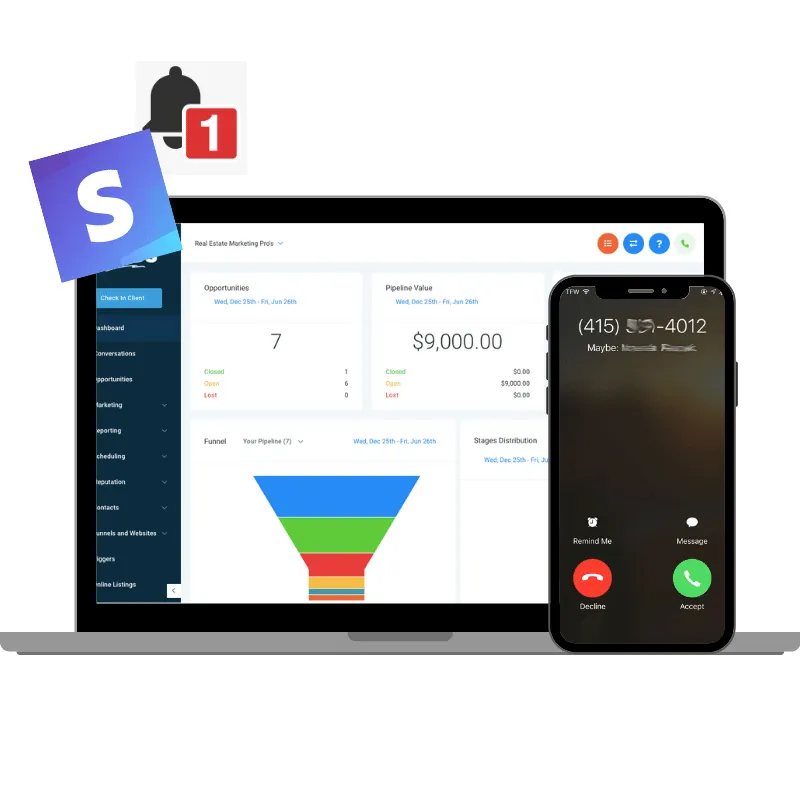
Every time we generate you a new lead interested in your marketing services, your dashboard will automatically add the new lead into your CRM, and send the new lead an SMS, email, and even automatically call you to connect you right away!

Become More Focused, Be More Productive, Burn Out Less
Price - FREE training
From The Desk Of Wayne Veldsman (blogs)
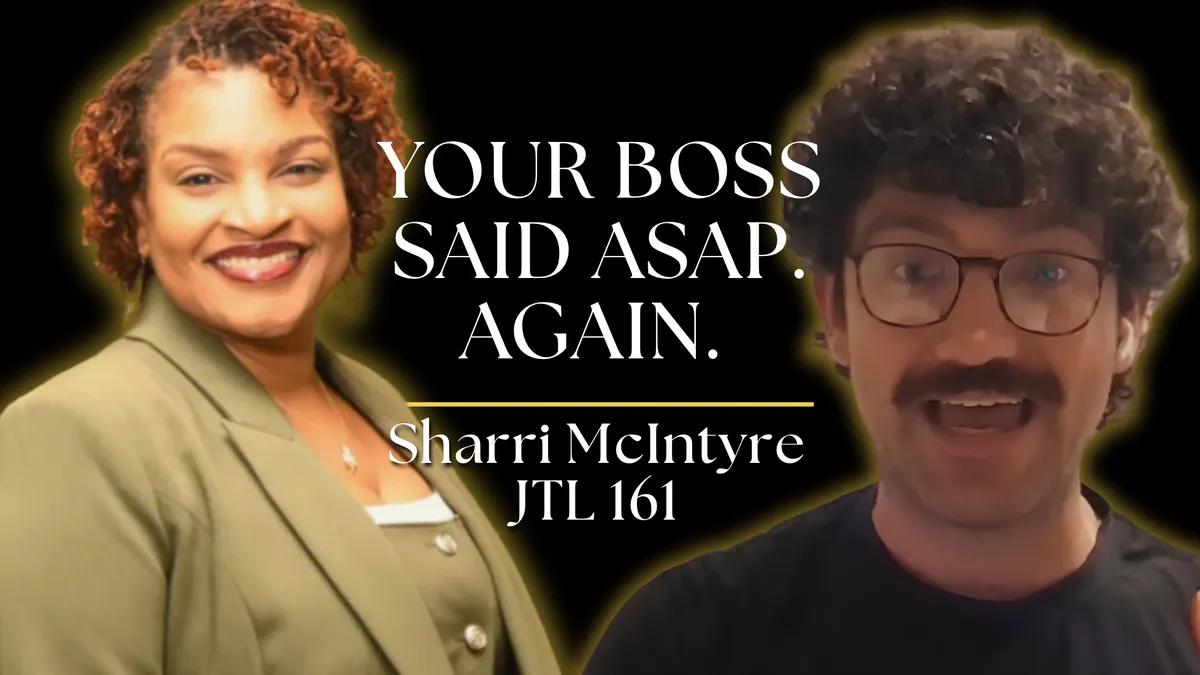
How to set boundaries at work | Sharri McIntyre - Founder of The McIntyre Collective
Want to hear the full conversation? Listen to the Journey To Legacy podcast Episode 161 with Sharri McIntyre for even more insights and stories from her remarkable entrepreneurial journey.
How to Set Boundaries at Work When Your Plate Is Already Full
Your boss arrives with an urgent request. You’ve already promised someone a report by lunch, and your afternoon is booked solid. Naturally, you say, “Sure.”
Apparently, tonight has volunteered.
Agreeing can feel easier than explaining why you’re stretched. But the work you’d already committed to still needs doing, and your boss may have no idea what their latest request will displace.
In her Journey to Legacy interview, executive coach and HR consultant Sharri McIntyre shared a practical approach she calls the collective no. Drawing on more than 20 years in HR, she helps people make workload decisions together.
Make your existing commitments visible
Before accepting another task, explain what’s already on your plate. Keep it specific enough for the other person to understand the choice.
Compare these responses:
“I’m really busy.”
“I’m finishing the client proposal due at noon, then preparing tomorrow’s presentation.”
The second gives your manager information they can act on. They might know the proposal has been postponed. They might have someone available to help with the presentation. Until you raise it, neither of you can use that information.
You don’t need to recite every email you’ve answered since breakfast. Name the commitments that would actually be affected.
Ask what should move
This is where Sharri’s collective no comes in. Once you’ve explained your existing priorities, ask which task should shift, be delegated, or be reassigned.
A version you could use:
“I understand this is urgent. I’m currently working on the proposal due today and tomorrow’s presentation. Which would you like me to move so I can take this on?”
Now there’s a decision to make together.
Your boss might ask you to pause the presentation. They might give the new request to a colleague. They could also confirm that the proposal still matters most and that their request can wait.
Whatever the answer, you’ve created an opportunity to discuss the trade-off before a deadline gets missed.
Confirm what you’ve agreed
Once you’ve discussed the priorities, briefly confirm the plan. For example:
“I’ll handle the new request this morning and return to the presentation tomorrow. That means the first draft will be ready Thursday.”
This follow-through makes the effect on the original deadline clear. It also gives your manager a chance to correct anything you’ve misunderstood.
If another person is expecting that presentation, update them too. A changed priority needs to reach the people whose plans depend on it.
The conversation won’t always remove work. Sometimes everything will still feel urgent. You can then discuss what help is available or whether a smaller first version would meet the immediate need.
Try it with the next request
Sharri developed this approach after seeing difficult workload conversations reach HR only once frustration had boiled over.
You can practice it earlier. The next time an extra task arrives, pause long enough to explain your current commitments and ask what should move.
It may feel awkward at first, especially if you’re used to being the person who always says yes. Keep the conversation focused on delivering the work well.
Your evening shouldn’t be the automatic backup plan.
Listen to Sharri McIntyre’s full conversation on Journey to Legacy for more on workplace boundaries and creating a working life you can sustain.
TRANSCRIPTS:
WAYNE:
Do you believe that working twenty-four/seven is the only way to make your business succeed? Well, today's guest says that your multi-million dollar idea may be waiting in the quiet space that you keep skipping. Welcome to Journey to Legacy. I'm your host, Wayne Veldsman. This is the show where leaders share their journeys, and they help us redefine what legacy really means.
Joining me today is Sharri McIntyre, founder of The McIntyre Collective. As an executive and career coach and HR consultant, she helps leaders handle burnout, rebuild confidence, and create success that is healthier and easier to sustain. She brings decades of experience in HR leadership, holding dual HR certifications, a Cornell certification, and her own story of over thirty years experience as walking proof.
In this episode, you'll learn how to say no to a new task by sharing the no with your boss, how to rest in small bites, and how to check whether you're chasing your own definition of success or somebody else's. Everybody, you're gonna greatly enjoy the episode. Please help me in welcoming our guest today, Ms. Sharri McIntyre.
Nice. Sharri, so I like to kick off in a pretty interesting way. Tell everybody about yourself and maybe what makes you credible.
Why should people listen to you today?
SHARRI:
Awesome. Will do. So my name is Sharri. I am an HR professional by choice. I enjoy the people element of the workplace. Telling stories, doing interviews, helping growth, they're all important to me, and they align with my skill set, my expertise, my education, and my certifications. So what makes me credible would be my years of experience, so holding an HR title for various companies for more than 20 years now.
Being certified, dual certified in HR, so I possess the SHRM-CP as well as the PHR. I'm also certified from Cornell University for inclusion. And then lastly, my most recent certification is my coaching credentials. So I am certified to be a career coach as well as an executive coach.
WAYNE:
That's great. Curious, here's a question for myself.
SHARRI:
Mm-hmm.
WAYNE:
Where do you think most of your personal experience and maybe what you use day to day comes from? Is it more of that 20 years of HR, or are the different certifications that you've gone through, to be able to teach what you're teaching today?
SHARRI:
So as an entrepreneur, it pivots. I'm finding that the experiences in corporate America, as well as my experiences growing up and what shapes me, I find that I reflect on that quite a bit in my conversations with clients.
WAYNE:
So sounding like more of that past learned experience, less of the official accreditations. Do you think that it's, call it a requirement for somebody who is in, you know, HR and leadership coaching, consulting like yourself to get these accreditations? Or can we pull from past experiences to be able to effectively help people?
SHARRI:
Honestly, when I was an internal HR professional, the credentials were required. A, to even get the interview to land the job, right? You needed to show that you have that bachelor's degree and those certifications. And I felt like I quoted employment law and precedents in the internal space. Now that I'm an external HR professional, I'm more on workplace wellness and building thriving cultures, and what resonates with others is more the personal experience now.
I think I get the initial solicitation, right? I think I get the initial interview or consultation because of my background and my credentials, but what's really driving the change, the transformation, and the continuance with my services, it's the personal experiences.
WAYNE:
Yeah. That's so interesting. And so almost to land a job.
SHARRI:
Mm-hmm.
WAYNE:
To land potentially even a client, it is showing these certifications on paper, yet the day-to-day helping people is mostly from experience.
SHARRI:
That's what I'm experiencing, yes.
WAYNE:
Yeah, do you think that's something that will change over time, that people will actually realize the importance of what actually day-to-day is gonna help us most is just the experience versus being able to show a piece of paper?
SHARRI:
I think that's what we're evolving to because, and not selfishly because I'm an external HR professional and that works for me. But I think with the introduction of AI, I think that's giving people the book smarts, right? The certifications, the technical information. So I feel like AI can't replace what I've experienced in the how many terminations have I sat through, how many interviews have I sat through, how many investigations.
AI will never be able to replace that. It's my years of experience.
WAYNE:
Yeah. 'Cause AI can essentially get these certifications, right? They will study and learn the same material, but knowing how to communicate with people effectively, knowing the small nuances that you have learned and gathered over the years of sitting through all these, what you just mentioned, all these terminations, is skills and experiences and, again, small nuances that just by learning from a book one can't get at all.
SHARRI:
Completely agree.
WAYNE:
Yeah. Sorry. So tell us a little bit about what are you specifically working on today. I know you mentioned it just briefly, but tell us about The McIntyre Collective.
SHARRI:
Will do. I help leaders navigate workplace wellness. That's the easiest way, the simplest way to give a summary. How that looks differs with each and every person, each and every situation. It's really hard because as an entrepreneur, I get so much advice that you need to have one specific niche and one specific ideal client, and I don't.
I can help in so many areas of the human resource sphere. I can help with group leadership coaching. I can help with workshops, lunch and learns at an organization, retreats. You can fly me to Bali and have me do a workplace wellness retreat on the beach. So there's so many avenues where my expertise, and I say that as in a humble way as I can, it's needed in the environment that everyone is living in with burnout and change management, and the word resilience is used so much today.
It's ever-present in the current climate of the work environment.
WAYNE:
So you just mentioned resilience. I mean, burnout I would love to talk more about. Change management, right? What context are you hearing the most term? Let's just start with resilience, right? Like, what are you hearing from some of the companies that you work with, or why is that sort of a trigger word right now that people are so focused on?
SHARRI:
Sure. I hear resilience more in my one-on-one executive coaching with female leaders. That is where I hear it. They, as well as myself, I'm able to be quite empathetic with them. It's a terminology that's used where they feel like they're wearing a cape, like they're a superhero, and they have to be all things to all people at all times, and that's a heavy weight to carry long term.
So resilience comes up because not only do they have to do that at work, they still have to be strong when they come home and be either a mother or a wife or anything else that may be on their plate, and God forbid, if they're trying to also start a side hustle or an entrepreneurial experience on top of that.
So the strength and resilience is what we talk about as the fuel to give them the courage and the strength to keep going.
WAYNE:
Wow. The strength and the resilience is the fuel to give them the courage to keep going.
SHARRI:
Mm-hmm.
WAYNE:
Can somebody start to build more resilience in their day-to-day life so that they have the fuel to keep going?
SHARRI:
Resilience is learned, unfortunately, through tough situations. You have to experience being stretched in order to amplify that skill set. So, as a child, I used to tell... I grew up a pretty religious household, and my mom would always say, "Don't pray asking for patience," because the only way to learn patience is going through tough situations.
So I would have to apply that to resilience. You build that muscle by having to be strong in situations.
WAYNE:
Well, yeah, you build it by being strong in certain situations. It's funny 'cause I ultimately agree with you that resilience is learned over time, but it's kind of a tough thing to be able to tell somebody that comes to you in need, a leader that's saying, "I'm struggling so much. I'm feeling like giving up.
How can I be more resilient?" Then to just tell them, "Well, just keep going. Good luck. It comes with time." Right? What can we tell these people that are already asking this question 'cause they're on the edge of feeling like they can't keep going, they need more resilience. What can we tell them?
SHARRI:
You have to implement certain levels of self-care and boundaries, and that is what helps you to fortitude through. And it's tough to tell someone to create boundaries when they're not the CEO, right? Because you get asked and tasked and pulled. How do you go to work and not be seen as being insubordinate, right?
You're trying to implement boundaries without saying no. And so I have created a term called the collective no, and the way that you approach the collective no is, let's say you are at the point of no return. You, it's Monday morning, you arrive at work, your calendar is full, you have no white space, no downtime, you're back to back, and enters your boss with an urgent priority. How do you set a boundary in that moment?
So the way that the collective no appears is you say, "I understand what you are presenting to me. I understand it is a priority. However, I have A, B, and C identified as priorities as well. Which would you like for me to shift, delegate, reassign?" And so once you kind of open that door for a conversation, the no becomes both of your no.
It's now a collective no, because the boss may say, "Oh, I didn't realize you had A, B and C. Let me go give this to Jane Doe. Thank you for bringing that to my attention." Or, "A and B are no longer a priority. This now needs to jump in front. I'm glad we had that conversation." If you don't take the time to have that conversation, you let the boss enter, throw that priority in your lap, he leaves out, you now cry internally because you're trying to accomplish all four because you think you have to.
But if you engage in the collective no process, you may be able to eliminate one, two, or three.
WAYNE:
Yeah. I like this process a lot, right? So now you're already stretched really thin. You're being asked at work to do something additional, right? Something else is on your plate and, "Hey, you have to do this. I need it ASAP." Right? And then you simply can reply with, "Sounds great. Just so that you're aware, I also have A, B, and C that are urgent priorities on my desk right now. Which one do you want me to prioritize?" Right? Pretty simple to just turn it around, make sure they're aware of all of the work that you already have going on, and then allow them to tell you what's most important, what they want to see first. And I guess that kind of gives you a moment to then be able to breathe and say, "Okay, well, hey, you, the boss, have now told me specifically do this first, this second, this third. Or did I hear you... What did I miss there? What did I hear incorrectly?"
SHARRI:
That's a very great recap. And to make the point even a little more clear, as an internal HR professional, I would often get called in when the opposite is done, right? So if they don't take the moment to have that collective no conversation, maybe they bark back at their boss and they say, "Are you crazy?
I have 18 other things I'm working on. How dare you come in here?" Now we have an issue where the boss is calling HR to now possibly reprimand that person for the way they handled the situation, or classifying them as being now insubordinate, or saying they now are a performance problem. They're not handling their workload.
So an internal HR handled that as a reactive measure. In my role now, external HR, I'm able to help people come up with a solution and make it more of a proactive approach.
WAYNE:
Wonderful. Yeah. Make sure there's a proactive approach. You understand these strategies before it's reactive.
SHARRI:
Mm-hmm.
WAYNE:
Hearing instances like that is somewhat surprising to me, never having been deep inside of a corporate environment.
SHARRI:
Mm.
WAYNE:
Gonna say, kind of snap and potentially yell at whether it's just a superior, a subordinate, a colleague, is kind of tough.
To me like that's probably somebody who is pushing towards the classic term of burnout or what causes somebody to react in a way like that at work?
SHARRI:
Exactly. Unfortunately. Well, there's quite a few parameters at play, and I wanna be very clear, being a coach is not a counselor or a therapist, right? So I am gonna mention mental health awareness because mental health comes to play in work, and as a coach, I do not diagnose, I do not treat trauma.
However, I meet people where they are and help to action plan, be a sounding board, and create solutions for them. So the reason I gave that little caveat is because when you say what can cause someone to react in a negative way, such as yelling or blowing up, burnout can be a cause, mental health can be a cause, stress can be a cause, personal demands at home can be a cause.
Unfortunately, workplace violence is on the rise. There was a statistic in 2019, before the pandemic, approximately one in eight individuals could experience some form of workplace violence, whether that was directly or witnessing it. After the pandemic and now the return to work, I was told that is now one in four.
So the odds of someone in a corporate environment, workplace, and when I say corporate, it can be a manufacturing plant, it could be supply chain, it could be retail, it can be a variety of industries. The likelihood of you either hearing about or experiencing some type of workplace violence or incident, it's unfortunately a little too common.
WAYNE:
Yeah. Wow. It's like it's doubled literally according to those statistics, and of course, we're not gonna hold you exact like what these numbers are. But what's caused that? I mean, it's a drastic increase in workplace violence. In my mind, I would've figured it has gone down over the years as people become more aware.
There's more knowledge easily accessible. What has increased a almost doubling of workplace violence in the last six years?
SHARRI:
Yeah. In my opinion, it is poor stress management and lack of usage of resources that are available. I would always... When I was an internal HR professional, I would always start with, "Are you familiar with the benefits that are available to you?" Right? Whether that means leave of absence, whether that means employee assistance program.
"Are you aware of the benefits that are available to you?" Sometimes I would get a yes, sometimes I would get a no. The next question would be, "If you are aware, have you used these resources? Have you explored them?" And far too often, the answer would be no. So, the amount of stress in the workplace has dramatically changed with women, with men, with multi-generational.
There was a training we did, I wanna say in 2023, and they gave the example of The Flintstones, the cartoon show that was popular in '70s and '80s. And back then, only Fred and Barney, which were the male head of households, they were the only ones who went to work. And when the sound of the horn would blow, they stopped what they were doing.
If they were in the middle of still moving some stones, they stopped, they walked, they got home. Dinner was ready because Wilma and Betty were there all day tending to the home and the kids, and life was great. Their evening was their evening. I didn't see any stress on that cartoon. Now... Go ahead.
WAYNE:
You know, please.
SHARRI:
Okay.
WAYNE:
This is literally towards poor stress management, right?
SHARRI:
Okay.
WAYNE:
What does it look like?
SHARRI:
Now you have a phone that is attached to your hand or your wrist or your ear or even your eyes now, right? With the Meta glasses. So you are completely connected to your device. You don't turn it off. You and your wife are probably both in the workplace, so who's figuring out the meal? Who's picking up the kid from daycare?
There's... And then on top of that, you may have an aging parent that you're caring for as well. So there's so many dynamics that have changed, and you bring all of that to work.
WAYNE:
True. I mean, being connected 24/7 to work or to home, to aging parents, right? Can definitely, I mean, increase stress so much. But man, the fact that it's increasing violence in the workplace, which is, of course, could be, you know, something simple, verbal, not necessarily just saying physical violence or.
SHARRI:
Sure.
WAYNE:
Or something like that happening.
SHARRI:
We can say incidents.
WAYNE:
That's great. And so one of the things you mentioned was poor stress management. So today, right, 2026, let's talk about some good stress management practices. What can individuals be doing to help lower this statistic of the increasing of workplace violence?
SHARRI:
Absolutely necessary, and I talk about this a lot. So first step when people think of self-love or self-care or creating boundaries or implementing rest practices, they think, "I need to go on vacation every month." Right? A, you probably can't afford to do that and, B, your job might not give you that much PTO.
So what are some strategies that you can do that are microdosing or bite-size? And I talk with clients about this all the time and we come up with a strategy. I'll use myself as an example. My most recent role in corporate America, I was commuting and I had a horrible commute. It was pretty tough. On a good day, it was two hours each way.
WAYNE:
Wow.
Commute, right?
SHARRI:
Yeah.
And so I had to prepare for my week. So Sunday evening was not my own. It was basically work because I would meal prep, I would lay out my clothes, I would do everything I could because those three days that I was commuting it was wake up, get ready, go out the door, come home, sleep, wake up, get ready, go out the door, come home, sleep.
There was nothing else on, in room for that. And I signed up for it. I knew the commute, but it did take a toll. It did take a toll. But I'm saying that story to share that I knew my Saturdays had to be powerful rest periods for me because I knew I no longer had Sunday really, and I knew what I was up against that Monday, Tuesday, Wednesday.
So my Saturdays were powerful. I mean, I was off limits. If it wasn't important to me or fueling me or giving me joy, it couldn't go on my calendar. And I share that with clients now because I began to find joy in the most simplest things. So watering my plants became a form of self-love, self-care, and recharging.
And someone else may be like, "Watering plants?" It became a space of joy. I actually just bought this plant here behind me, little eucalyptus. I said, "I now have an office mate. Her name is Yuki."
WAYNE:
Nice.
SHARRI:
Do you see how that gave me joy? So you have to microdose. You have to find things that are important to you and that can recharge you quickly.
Yes, plan formal vacations. Yes, take your PTO time. Yes, use your resources, such as the employee assistance program or a leave of absence if needed, but find those ways to find joy and recharge.
WAYNE:
Hmm. The ways, I like how you put this microdose.
SHARRI:
Mm-hmm.
WAYNE:
Quickly.
SHARRI:
Mm-hmm.
WAYNE:
Things that bring you joy, bring you energy. You, we were talking sort of there mostly about employees, like sitting inside of a corporate. The vast majority of our audience are actually entrepreneurs, specifically, feel that they need to be working 24/7 to not even just get ahead, but to keep up, right?
To be able to bring in clients, sell extra products or services. So, what would you say to one of these new entrepreneurs that feel the only way to succeed is to work 24/7? They don't have time to take a vacation, even for much of, if any, self-love and recharging.
SHARRI:
I would tell them that they need to reframe that thought process. If they think that they have to be in their business 24/7 in order for it to thrive, they're actually wrong. Your creative output diminishes when you are running on fumes. You need that quiet time to come up with the next big thing. You can't do that if you're operating in burnout.
So I would challenge them to take a moment to say, "Am I really creative and making my business thrive if I'm operating in burnout?" Your million-dollar idea is happening in that white space. It's waiting for you to sit down and have that quiet space to generate that amazing idea.
WAYNE:
That one. Why is there, you said, if you're operating in burnout, define for us what is burnout?
SHARRI:
So please don't quote me. The Webster Dictionary will probably say it's extreme fatigue, anxiety, and not being your productive self. I say it's when you're stressed to the max. I'm an '80s kid, right? To the max. You don't want to be stretching yourself so thin that you are burning the candle from both ends.
WAYNE:
Okay. I know you mentioned it's, like, can affect, let's just say creativity, right? For entrepreneurs out there that are trying to search for their ticket, right, for their million-dollar business, need to take a break, take a step back, right? Make sure you take care of yourself so that you can be creative and come up with these new ideas so you, that you don't [unclear] out and sort of get stuck in a rut. At the same time, I think burnout is a little bit of an overused word sometimes, What would you say to somebody that says, an individual that is saying that they have burnout is actually just afraid of working hard, that they're pretty much just lazy?
SHARRI:
Aw. Well, I hope, I hope no one's lazy. That's a pretty tough, categorization to be placed in. But I do think burnout gets overused. I actually had a client the other day say that, they had, some employees coming to them saying that they couldn't do their job because they were burnt out. And the leader said to me, "They do two tasks, two tasks.
How are they burnt out with two tasks?" So yes, I do agree that burnout is being overused. But you can, you can tell if it's a true burnout situation when it has altered who you normally are, right? So if you are normally outgoing, energetic, an extrovert in meetings, participating, full of ideas, planning the next event, just if it starts to change who you are, that's probably a sign that burnout is impending.
If you don't enjoy things that you used to enjoy, that could be a sign that burnout is impending. So there's probably a test or a checklist out there that you can implement to confirm, or we can ask AI to create us one, I'm sure. But it... I would say it's when your typical behavior has been altered or if you're no longer finding joy in things that once brought you joy.
I think that would be a good pulse check.
WAYNE:
Yeah. I think that's a pretty great pulse check. What about, what would you say to one of these crazy entrepreneurs that are working so hard and they don't believe that burnout is even a thing? They just believe it's an excuse.
SHARRI:
They will find out. And unfortunately, it would be either with a diminishing health, or an injury. No, burnout is absolutely real, and you know you're in it when something shakes you to wake you up to make you slow down. Unfortunately, things such as heart attacks and stress and strokes and things like that, can be connected to that.
I'll even give a personal example. I had high blood pressure, and I thought it was just hereditary. I'm a Black woman. My dad had it, my grandma had it. I just, I eat soul food. So I thought my high blood pressure was just a factor of who I am. Well, guess what? If I were to share my little chart of my home monitoring device, I have been an entrepreneur, it will be a year the end of this month.
The last seven months, my chart has literally gone like this. I am approaching getting off of my high blood pressure medicine, and I have to say, it's... The only thing that's drastically changed is I no longer have a corporate role. I am in an entrepreneurial space where I'm able to create soft mornings, have self-care, self-love, smile, work on tasks that bring me joy, work with people that bring me joy.
Those are the factors that have changed, and it's had a drastic reduction on my blood pressure.
WAYNE:
This is so wonderful to hear that, like, once you have a little bit more choice of what you get to do in your day-to-day, right, a little bit more control and, like, very measurable happens for you showing direct, like, blood pressure decreasing to this point that it's changing your life on a pretty much like a medical standing, which is really amazing. Sharri, I see this poster over your head.
SHARRI:
Yes.
WAYNE:
One it says mindset, one success.
SHARRI:
Mm-hmm.
WAYNE:
Excuse me. I'm curious about success in your mind. Oftentimes when I, again, I talk to entrepreneurs, they say that they'll slow down once they're successful, once they reach success, right? Talk to us a little bit about what does success look like?
Is it an end point, right? How would you speak to a potential client that is on this mindset trajectory of like, they're gonna do it whatever it takes until they reach success?
SHARRI:
I love that you asked that question because I have a tool on my website called the Success Scorecard, and I encourage leaders to take this checklist, invest 15 to 20 minutes to take it, to identify what is important to you. Are you successful or are you chasing someone else's definition of successful?
Have you identified what it means to you and what is truly important? I use the phrase, from success to significance, and I thought I was successful. I had obtained my dream job. I had obtained the title of vice president. I thought this should feel good. And some days it did, but most days it didn't.
I'm identifying what success will look like for me now, and it involves factors that I didn't really put into play when I was defining success in corporate America. I thought VP title, VP title, become a vice president, become a vice president. Work hard. Be the last one there. Be the first one there. Come up with the next big idea.
You can do it. You can do it. Now, I still want to be successful. I still have strong work ethic. I still have a luxurious lifestyle I wanna maintain. However, comma, I factor in my grandkids, attending their football games, doing swim lessons, picking up the youngest from daycare. Those are ways that I'm identifying success that were actually burdens when I was in corporate America.
It was like, "Oh my God, you want me to come to your football game? Oh, how can I squeeze that in?" Whereas now I build my calendar around, "I can't do anything this weekend. I'm headed to DC to my grandson's football game."
WAYNE:
Nice. I like that also 'cause that shows your example that, I mean, how you can define success changes, right? Everybody should definitely go check out the success scorecard on your website. I'm...
SHARRI:
Yes.
WAYNE:
[unclear] it myself.
SHARRI:
Please do.
WAYNE:
Help us identify what's most important to us. You know, and at one stage of your career, it can be getting the next promotion, another title, right?
Increase in your salary, recognition for being the first person there, the last person out the door. And then it can change, right? As your life changes and your careers pivot to successes now defined by having the time and flexibility to go to a grandson's football game, right? Or to set your own schedule so that you can have a slow morning, and then maybe you still... Then you, then you work late until 7 or 8 PM if that's what you want. But success is defined differently for each person based on the different stages of life that they're at.
SHARRI:
Very well said.
WAYNE:
So then it's... Sharri, I think that goes nicely into sort of the overarching theme of the show, which is legacy. I think a lot of people define legacy quite differently, all the way from, you know, leaving billions of dollars to generations, to having your name on a building or, you know, how you affect people day to day. Would you say is your definition of legacy, and maybe what's the legacy you're working to leave from the world?
SHARRI:
Oh, it's funny, you know, the word legacy can change just as the word success, as we just discussed. And when I first heard the name of your podcast, and I said, "Journey to Legacy," when I would think of legacy, I would think of Dr. Martin Luther King and, you know, Harriet Tubman and Barack Obama, people who've done these just transformable things for the, nation.
And after speaking with you and discussing it, and it's like, no, you know, we're building legacy every day in every conversation, how we show up, who we impact. And it connected me to my favorite quote. Maya Angelou said, "People will forget what you tell them. They may even forget what you do. But they will never forget how you made them feel."
And as an HR professional, I always try to factor in their feelings, right? What are we doing? How is this impacting? How are they gonna feel? So I hope that my legacy is Sharri took the time to make sure that her impact on you was a positive impact. Either I helped you to navigate a tough situation, or I gave you a tip to make your life better, or I made you laugh with a simple joke.
But the impact that your life has had by knowing Sharri McIntyre was positive or made better because of her.
WAYNE:
I totally agree, right? Like, we had such a great conversation around this, and that Maya Angelou quote is one I often think about also, right? That truly, like, people forget what you did, but it's seldom that they'll forget how you [unclear]... And the way that we interact with individuals every single day, how we impact them, how we make them feel, the legacy that I also agree is the one that is worth leaving. So thank you so much for sharing. I really appreciate it. Sharri, for people that want to learn more about you or the McIntyre Collective, where's the best place for them to go?
SHARRI:
It would be my website. Let's just go to themcintyrecollective.com, and if you do /consultation, I am giving complimentary consultations to anyone who wants to just talk and identify if there's something that I can do to help them to either navigate through burnout or create workplace wellness for their teams.
WAYNE:
All right. Thank you so much. We'll put a link down in the show notes. I look forward to talking to you again. Thank you so much.
SHARRI:
This has been an absolute pleasure. Thank you.
WAYNE:
That's a wrap, everybody. That was Sharri McIntyre of the McIntyre Collective. Thank you so much for coming on and for sharing your story so openly. So here are three things to take with you from the interview today. First, use the collective no. When something new lands on your desk, name what is already on your plate and ask your boss which item they want you to shift, delegate, or reassign.
The no becomes shared. Second, rest in small bites. You may not get a vacation every month, but you can find quick things that bring you joy and recharge you. Running on fumes shrinks your creativity. And third, give yourself permission to redefine success as you grow. You can be grateful for what you've built and still choose a new direction.
Sharri's success scorecard takes fifteen to twenty minutes and can help you to get started. Lastly, when I asked Sharri what legacy means to her, she reminded us that titles and accomplishments matter, sure, but people are the true measure of impact. Her hope is that anyone who crossed her path walks away with seeing something greater in themselves.
That's a legacy that we can all start to build today, one conversation at a time. To connect with Sharri, please visit themcintyrecollective.com. She's offering free consultations to anyone who needs help overcoming burnout. And you can also go find the McIntyre Collective on LinkedIn and Instagram.
Everything is linked in the show notes below. And for more episodes and to join our community, please visit us over at journeytolegacy.org. Until next time, keep building your legacy.

The 3-Step Strategy To Growing Businesses Digitally
Are you an Agency Owner, Service Provider, or Entrepreneur who sells online and want your pipeline filled with 300+ appointments with your idea client every single month? Are your SERIOUS about growing your business and want to work with Wayne 1-on-1?
Launch Into Digital Entrepreneurship is a course and coaching program specifically designed to take agency owners and online service providers from manual prospecting and wondering if this is ever going to work out, to having a very specific system in place which is going to allow you to generate 20 to 30 booked appointments every single day!
You're going to get a step by step process to building out your prospecting, sales and fulfilment system, and building your sales team so that you can close clients while stepping away from your sales process.
Price - $1,997 $97 (Limited Time Offer!)
Every time we generate you a new lead interested in your marketing services, your dashboard will automatically add the new lead into your CRM, and send the new lead an SMS, email, and even automatically call you to connect you right away!
Become More Focused, Be More Productive, Burn Out Less
Price - FREE Training
From The Desk Of Wayne Veldsman (blogs)
How to set boundaries at work | Sharri McIntyre - Founder of The McIntyre Collective
Want to hear the full conversation? Listen to the Journey To Legacy podcast Episode 161 with Sharri McIntyre for even more insights and stories from her remarkable entrepreneurial journey.
How to Set Boundaries at Work When Your Plate Is Already Full
Your boss arrives with an urgent request. You’ve already promised someone a report by lunch, and your afternoon is booked solid. Naturally, you say, “Sure.”
Apparently, tonight has volunteered.
Agreeing can feel easier than explaining why you’re stretched. But the work you’d already committed to still needs doing, and your boss may have no idea what their latest request will displace.
In her Journey to Legacy interview, executive coach and HR consultant Sharri McIntyre shared a practical approach she calls the collective no. Drawing on more than 20 years in HR, she helps people make workload decisions together.
Make your existing commitments visible
Before accepting another task, explain what’s already on your plate. Keep it specific enough for the other person to understand the choice.
Compare these responses:
“I’m really busy.”
“I’m finishing the client proposal due at noon, then preparing tomorrow’s presentation.”
The second gives your manager information they can act on. They might know the proposal has been postponed. They might have someone available to help with the presentation. Until you raise it, neither of you can use that information.
You don’t need to recite every email you’ve answered since breakfast. Name the commitments that would actually be affected.
Ask what should move
This is where Sharri’s collective no comes in. Once you’ve explained your existing priorities, ask which task should shift, be delegated, or be reassigned.
A version you could use:
“I understand this is urgent. I’m currently working on the proposal due today and tomorrow’s presentation. Which would you like me to move so I can take this on?”
Now there’s a decision to make together.
Your boss might ask you to pause the presentation. They might give the new request to a colleague. They could also confirm that the proposal still matters most and that their request can wait.
Whatever the answer, you’ve created an opportunity to discuss the trade-off before a deadline gets missed.
Confirm what you’ve agreed
Once you’ve discussed the priorities, briefly confirm the plan. For example:
“I’ll handle the new request this morning and return to the presentation tomorrow. That means the first draft will be ready Thursday.”
This follow-through makes the effect on the original deadline clear. It also gives your manager a chance to correct anything you’ve misunderstood.
If another person is expecting that presentation, update them too. A changed priority needs to reach the people whose plans depend on it.
The conversation won’t always remove work. Sometimes everything will still feel urgent. You can then discuss what help is available or whether a smaller first version would meet the immediate need.
Try it with the next request
Sharri developed this approach after seeing difficult workload conversations reach HR only once frustration had boiled over.
You can practice it earlier. The next time an extra task arrives, pause long enough to explain your current commitments and ask what should move.
It may feel awkward at first, especially if you’re used to being the person who always says yes. Keep the conversation focused on delivering the work well.
Your evening shouldn’t be the automatic backup plan.
Listen to Sharri McIntyre’s full conversation on Journey to Legacy for more on workplace boundaries and creating a working life you can sustain.
TRANSCRIPTS:
WAYNE:
Do you believe that working twenty-four/seven is the only way to make your business succeed? Well, today's guest says that your multi-million dollar idea may be waiting in the quiet space that you keep skipping. Welcome to Journey to Legacy. I'm your host, Wayne Veldsman. This is the show where leaders share their journeys, and they help us redefine what legacy really means.
Joining me today is Sharri McIntyre, founder of The McIntyre Collective. As an executive and career coach and HR consultant, she helps leaders handle burnout, rebuild confidence, and create success that is healthier and easier to sustain. She brings decades of experience in HR leadership, holding dual HR certifications, a Cornell certification, and her own story of over thirty years experience as walking proof.
In this episode, you'll learn how to say no to a new task by sharing the no with your boss, how to rest in small bites, and how to check whether you're chasing your own definition of success or somebody else's. Everybody, you're gonna greatly enjoy the episode. Please help me in welcoming our guest today, Ms. Sharri McIntyre.
Nice. Sharri, so I like to kick off in a pretty interesting way. Tell everybody about yourself and maybe what makes you credible.
Why should people listen to you today?
SHARRI:
Awesome. Will do. So my name is Sharri. I am an HR professional by choice. I enjoy the people element of the workplace. Telling stories, doing interviews, helping growth, they're all important to me, and they align with my skill set, my expertise, my education, and my certifications. So what makes me credible would be my years of experience, so holding an HR title for various companies for more than 20 years now.
Being certified, dual certified in HR, so I possess the SHRM-CP as well as the PHR. I'm also certified from Cornell University for inclusion. And then lastly, my most recent certification is my coaching credentials. So I am certified to be a career coach as well as an executive coach.
WAYNE:
That's great. Curious, here's a question for myself.
SHARRI:
Mm-hmm.
WAYNE:
Where do you think most of your personal experience and maybe what you use day to day comes from? Is it more of that 20 years of HR, or are the different certifications that you've gone through, to be able to teach what you're teaching today?
SHARRI:
So as an entrepreneur, it pivots. I'm finding that the experiences in corporate America, as well as my experiences growing up and what shapes me, I find that I reflect on that quite a bit in my conversations with clients.
WAYNE:
So sounding like more of that past learned experience, less of the official accreditations. Do you think that it's, call it a requirement for somebody who is in, you know, HR and leadership coaching, consulting like yourself to get these accreditations? Or can we pull from past experiences to be able to effectively help people?
SHARRI:
Honestly, when I was an internal HR professional, the credentials were required. A, to even get the interview to land the job, right? You needed to show that you have that bachelor's degree and those certifications. And I felt like I quoted employment law and precedents in the internal space. Now that I'm an external HR professional, I'm more on workplace wellness and building thriving cultures, and what resonates with others is more the personal experience now.
I think I get the initial solicitation, right? I think I get the initial interview or consultation because of my background and my credentials, but what's really driving the change, the transformation, and the continuance with my services, it's the personal experiences.
WAYNE:
Yeah. That's so interesting. And so almost to land a job.
SHARRI:
Mm-hmm.
WAYNE:
To land potentially even a client, it is showing these certifications on paper, yet the day-to-day helping people is mostly from experience.
SHARRI:
That's what I'm experiencing, yes.
WAYNE:
Yeah, do you think that's something that will change over time, that people will actually realize the importance of what actually day-to-day is gonna help us most is just the experience versus being able to show a piece of paper?
SHARRI:
I think that's what we're evolving to because, and not selfishly because I'm an external HR professional and that works for me. But I think with the introduction of AI, I think that's giving people the book smarts, right? The certifications, the technical information. So I feel like AI can't replace what I've experienced in the how many terminations have I sat through, how many interviews have I sat through, how many investigations.
AI will never be able to replace that. It's my years of experience.
WAYNE:
Yeah. 'Cause AI can essentially get these certifications, right? They will study and learn the same material, but knowing how to communicate with people effectively, knowing the small nuances that you have learned and gathered over the years of sitting through all these, what you just mentioned, all these terminations, is skills and experiences and, again, small nuances that just by learning from a book one can't get at all.
SHARRI:
Completely agree.
WAYNE:
Yeah. Sorry. So tell us a little bit about what are you specifically working on today. I know you mentioned it just briefly, but tell us about The McIntyre Collective.
SHARRI:
Will do. I help leaders navigate workplace wellness. That's the easiest way, the simplest way to give a summary. How that looks differs with each and every person, each and every situation. It's really hard because as an entrepreneur, I get so much advice that you need to have one specific niche and one specific ideal client, and I don't.
I can help in so many areas of the human resource sphere. I can help with group leadership coaching. I can help with workshops, lunch and learns at an organization, retreats. You can fly me to Bali and have me do a workplace wellness retreat on the beach. So there's so many avenues where my expertise, and I say that as in a humble way as I can, it's needed in the environment that everyone is living in with burnout and change management, and the word resilience is used so much today.
It's ever-present in the current climate of the work environment.
WAYNE:
So you just mentioned resilience. I mean, burnout I would love to talk more about. Change management, right? What context are you hearing the most term? Let's just start with resilience, right? Like, what are you hearing from some of the companies that you work with, or why is that sort of a trigger word right now that people are so focused on?
SHARRI:
Sure. I hear resilience more in my one-on-one executive coaching with female leaders. That is where I hear it. They, as well as myself, I'm able to be quite empathetic with them. It's a terminology that's used where they feel like they're wearing a cape, like they're a superhero, and they have to be all things to all people at all times, and that's a heavy weight to carry long term.
So resilience comes up because not only do they have to do that at work, they still have to be strong when they come home and be either a mother or a wife or anything else that may be on their plate, and God forbid, if they're trying to also start a side hustle or an entrepreneurial experience on top of that.
So the strength and resilience is what we talk about as the fuel to give them the courage and the strength to keep going.
WAYNE:
Wow. The strength and the resilience is the fuel to give them the courage to keep going.
SHARRI:
Mm-hmm.
WAYNE:
Can somebody start to build more resilience in their day-to-day life so that they have the fuel to keep going?
SHARRI:
Resilience is learned, unfortunately, through tough situations. You have to experience being stretched in order to amplify that skill set. So, as a child, I used to tell... I grew up a pretty religious household, and my mom would always say, "Don't pray asking for patience," because the only way to learn patience is going through tough situations.
So I would have to apply that to resilience. You build that muscle by having to be strong in situations.
WAYNE:
Well, yeah, you build it by being strong in certain situations. It's funny 'cause I ultimately agree with you that resilience is learned over time, but it's kind of a tough thing to be able to tell somebody that comes to you in need, a leader that's saying, "I'm struggling so much. I'm feeling like giving up.
How can I be more resilient?" Then to just tell them, "Well, just keep going. Good luck. It comes with time." Right? What can we tell these people that are already asking this question 'cause they're on the edge of feeling like they can't keep going, they need more resilience. What can we tell them?
SHARRI:
You have to implement certain levels of self-care and boundaries, and that is what helps you to fortitude through. And it's tough to tell someone to create boundaries when they're not the CEO, right? Because you get asked and tasked and pulled. How do you go to work and not be seen as being insubordinate, right?
You're trying to implement boundaries without saying no. And so I have created a term called the collective no, and the way that you approach the collective no is, let's say you are at the point of no return. You, it's Monday morning, you arrive at work, your calendar is full, you have no white space, no downtime, you're back to back, and enters your boss with an urgent priority. How do you set a boundary in that moment?
So the way that the collective no appears is you say, "I understand what you are presenting to me. I understand it is a priority. However, I have A, B, and C identified as priorities as well. Which would you like for me to shift, delegate, reassign?" And so once you kind of open that door for a conversation, the no becomes both of your no.
It's now a collective no, because the boss may say, "Oh, I didn't realize you had A, B and C. Let me go give this to Jane Doe. Thank you for bringing that to my attention." Or, "A and B are no longer a priority. This now needs to jump in front. I'm glad we had that conversation." If you don't take the time to have that conversation, you let the boss enter, throw that priority in your lap, he leaves out, you now cry internally because you're trying to accomplish all four because you think you have to.
But if you engage in the collective no process, you may be able to eliminate one, two, or three.
WAYNE:
Yeah. I like this process a lot, right? So now you're already stretched really thin. You're being asked at work to do something additional, right? Something else is on your plate and, "Hey, you have to do this. I need it ASAP." Right? And then you simply can reply with, "Sounds great. Just so that you're aware, I also have A, B, and C that are urgent priorities on my desk right now. Which one do you want me to prioritize?" Right? Pretty simple to just turn it around, make sure they're aware of all of the work that you already have going on, and then allow them to tell you what's most important, what they want to see first. And I guess that kind of gives you a moment to then be able to breathe and say, "Okay, well, hey, you, the boss, have now told me specifically do this first, this second, this third. Or did I hear you... What did I miss there? What did I hear incorrectly?"
SHARRI:
That's a very great recap. And to make the point even a little more clear, as an internal HR professional, I would often get called in when the opposite is done, right? So if they don't take the moment to have that collective no conversation, maybe they bark back at their boss and they say, "Are you crazy?
I have 18 other things I'm working on. How dare you come in here?" Now we have an issue where the boss is calling HR to now possibly reprimand that person for the way they handled the situation, or classifying them as being now insubordinate, or saying they now are a performance problem. They're not handling their workload.
So an internal HR handled that as a reactive measure. In my role now, external HR, I'm able to help people come up with a solution and make it more of a proactive approach.
WAYNE:
Wonderful. Yeah. Make sure there's a proactive approach. You understand these strategies before it's reactive.
SHARRI:
Mm-hmm.
WAYNE:
Hearing instances like that is somewhat surprising to me, never having been deep inside of a corporate environment.
SHARRI:
Mm.
WAYNE:
Gonna say, kind of snap and potentially yell at whether it's just a superior, a subordinate, a colleague, is kind of tough.
To me like that's probably somebody who is pushing towards the classic term of burnout or what causes somebody to react in a way like that at work?
SHARRI:
Exactly. Unfortunately. Well, there's quite a few parameters at play, and I wanna be very clear, being a coach is not a counselor or a therapist, right? So I am gonna mention mental health awareness because mental health comes to play in work, and as a coach, I do not diagnose, I do not treat trauma.
However, I meet people where they are and help to action plan, be a sounding board, and create solutions for them. So the reason I gave that little caveat is because when you say what can cause someone to react in a negative way, such as yelling or blowing up, burnout can be a cause, mental health can be a cause, stress can be a cause, personal demands at home can be a cause.
Unfortunately, workplace violence is on the rise. There was a statistic in 2019, before the pandemic, approximately one in eight individuals could experience some form of workplace violence, whether that was directly or witnessing it. After the pandemic and now the return to work, I was told that is now one in four.
So the odds of someone in a corporate environment, workplace, and when I say corporate, it can be a manufacturing plant, it could be supply chain, it could be retail, it can be a variety of industries. The likelihood of you either hearing about or experiencing some type of workplace violence or incident, it's unfortunately a little too common.
WAYNE:
Yeah. Wow. It's like it's doubled literally according to those statistics, and of course, we're not gonna hold you exact like what these numbers are. But what's caused that? I mean, it's a drastic increase in workplace violence. In my mind, I would've figured it has gone down over the years as people become more aware.
There's more knowledge easily accessible. What has increased a almost doubling of workplace violence in the last six years?
SHARRI:
Yeah. In my opinion, it is poor stress management and lack of usage of resources that are available. I would always... When I was an internal HR professional, I would always start with, "Are you familiar with the benefits that are available to you?" Right? Whether that means leave of absence, whether that means employee assistance program.
"Are you aware of the benefits that are available to you?" Sometimes I would get a yes, sometimes I would get a no. The next question would be, "If you are aware, have you used these resources? Have you explored them?" And far too often, the answer would be no. So, the amount of stress in the workplace has dramatically changed with women, with men, with multi-generational.
There was a training we did, I wanna say in 2023, and they gave the example of The Flintstones, the cartoon show that was popular in '70s and '80s. And back then, only Fred and Barney, which were the male head of households, they were the only ones who went to work. And when the sound of the horn would blow, they stopped what they were doing.
If they were in the middle of still moving some stones, they stopped, they walked, they got home. Dinner was ready because Wilma and Betty were there all day tending to the home and the kids, and life was great. Their evening was their evening. I didn't see any stress on that cartoon. Now... Go ahead.
WAYNE:
You know, please.
SHARRI:
Okay.
WAYNE:
This is literally towards poor stress management, right?
SHARRI:
Okay.
WAYNE:
What does it look like?
SHARRI:
Now you have a phone that is attached to your hand or your wrist or your ear or even your eyes now, right? With the Meta glasses. So you are completely connected to your device. You don't turn it off. You and your wife are probably both in the workplace, so who's figuring out the meal? Who's picking up the kid from daycare?
There's... And then on top of that, you may have an aging parent that you're caring for as well. So there's so many dynamics that have changed, and you bring all of that to work.
WAYNE:
True. I mean, being connected 24/7 to work or to home, to aging parents, right? Can definitely, I mean, increase stress so much. But man, the fact that it's increasing violence in the workplace, which is, of course, could be, you know, something simple, verbal, not necessarily just saying physical violence or.
SHARRI:
Sure.
WAYNE:
Or something like that happening.
SHARRI:
We can say incidents.
WAYNE:
That's great. And so one of the things you mentioned was poor stress management. So today, right, 2026, let's talk about some good stress management practices. What can individuals be doing to help lower this statistic of the increasing of workplace violence?
SHARRI:
Absolutely necessary, and I talk about this a lot. So first step when people think of self-love or self-care or creating boundaries or implementing rest practices, they think, "I need to go on vacation every month." Right? A, you probably can't afford to do that and, B, your job might not give you that much PTO.
So what are some strategies that you can do that are microdosing or bite-size? And I talk with clients about this all the time and we come up with a strategy. I'll use myself as an example. My most recent role in corporate America, I was commuting and I had a horrible commute. It was pretty tough. On a good day, it was two hours each way.
WAYNE:
Wow.
Commute, right?
SHARRI:
Yeah.
And so I had to prepare for my week. So Sunday evening was not my own. It was basically work because I would meal prep, I would lay out my clothes, I would do everything I could because those three days that I was commuting it was wake up, get ready, go out the door, come home, sleep, wake up, get ready, go out the door, come home, sleep.
There was nothing else on, in room for that. And I signed up for it. I knew the commute, but it did take a toll. It did take a toll. But I'm saying that story to share that I knew my Saturdays had to be powerful rest periods for me because I knew I no longer had Sunday really, and I knew what I was up against that Monday, Tuesday, Wednesday.
So my Saturdays were powerful. I mean, I was off limits. If it wasn't important to me or fueling me or giving me joy, it couldn't go on my calendar. And I share that with clients now because I began to find joy in the most simplest things. So watering my plants became a form of self-love, self-care, and recharging.
And someone else may be like, "Watering plants?" It became a space of joy. I actually just bought this plant here behind me, little eucalyptus. I said, "I now have an office mate. Her name is Yuki."
WAYNE:
Nice.
SHARRI:
Do you see how that gave me joy? So you have to microdose. You have to find things that are important to you and that can recharge you quickly.
Yes, plan formal vacations. Yes, take your PTO time. Yes, use your resources, such as the employee assistance program or a leave of absence if needed, but find those ways to find joy and recharge.
WAYNE:
Hmm. The ways, I like how you put this microdose.
SHARRI:
Mm-hmm.
WAYNE:
Quickly.
SHARRI:
Mm-hmm.
WAYNE:
Things that bring you joy, bring you energy. You, we were talking sort of there mostly about employees, like sitting inside of a corporate. The vast majority of our audience are actually entrepreneurs, specifically, feel that they need to be working 24/7 to not even just get ahead, but to keep up, right?
To be able to bring in clients, sell extra products or services. So, what would you say to one of these new entrepreneurs that feel the only way to succeed is to work 24/7? They don't have time to take a vacation, even for much of, if any, self-love and recharging.
SHARRI:
I would tell them that they need to reframe that thought process. If they think that they have to be in their business 24/7 in order for it to thrive, they're actually wrong. Your creative output diminishes when you are running on fumes. You need that quiet time to come up with the next big thing. You can't do that if you're operating in burnout.
So I would challenge them to take a moment to say, "Am I really creative and making my business thrive if I'm operating in burnout?" Your million-dollar idea is happening in that white space. It's waiting for you to sit down and have that quiet space to generate that amazing idea.
WAYNE:
That one. Why is there, you said, if you're operating in burnout, define for us what is burnout?
SHARRI:
So please don't quote me. The Webster Dictionary will probably say it's extreme fatigue, anxiety, and not being your productive self. I say it's when you're stressed to the max. I'm an '80s kid, right? To the max. You don't want to be stretching yourself so thin that you are burning the candle from both ends.
WAYNE:
Okay. I know you mentioned it's, like, can affect, let's just say creativity, right? For entrepreneurs out there that are trying to search for their ticket, right, for their million-dollar business, need to take a break, take a step back, right? Make sure you take care of yourself so that you can be creative and come up with these new ideas so you, that you don't [unclear] out and sort of get stuck in a rut. At the same time, I think burnout is a little bit of an overused word sometimes, What would you say to somebody that says, an individual that is saying that they have burnout is actually just afraid of working hard, that they're pretty much just lazy?
SHARRI:
Aw. Well, I hope, I hope no one's lazy. That's a pretty tough, categorization to be placed in. But I do think burnout gets overused. I actually had a client the other day say that, they had, some employees coming to them saying that they couldn't do their job because they were burnt out. And the leader said to me, "They do two tasks, two tasks.
How are they burnt out with two tasks?" So yes, I do agree that burnout is being overused. But you can, you can tell if it's a true burnout situation when it has altered who you normally are, right? So if you are normally outgoing, energetic, an extrovert in meetings, participating, full of ideas, planning the next event, just if it starts to change who you are, that's probably a sign that burnout is impending.
If you don't enjoy things that you used to enjoy, that could be a sign that burnout is impending. So there's probably a test or a checklist out there that you can implement to confirm, or we can ask AI to create us one, I'm sure. But it... I would say it's when your typical behavior has been altered or if you're no longer finding joy in things that once brought you joy.
I think that would be a good pulse check.
WAYNE:
Yeah. I think that's a pretty great pulse check. What about, what would you say to one of these crazy entrepreneurs that are working so hard and they don't believe that burnout is even a thing? They just believe it's an excuse.
SHARRI:
They will find out. And unfortunately, it would be either with a diminishing health, or an injury. No, burnout is absolutely real, and you know you're in it when something shakes you to wake you up to make you slow down. Unfortunately, things such as heart attacks and stress and strokes and things like that, can be connected to that.
I'll even give a personal example. I had high blood pressure, and I thought it was just hereditary. I'm a Black woman. My dad had it, my grandma had it. I just, I eat soul food. So I thought my high blood pressure was just a factor of who I am. Well, guess what? If I were to share my little chart of my home monitoring device, I have been an entrepreneur, it will be a year the end of this month.
The last seven months, my chart has literally gone like this. I am approaching getting off of my high blood pressure medicine, and I have to say, it's... The only thing that's drastically changed is I no longer have a corporate role. I am in an entrepreneurial space where I'm able to create soft mornings, have self-care, self-love, smile, work on tasks that bring me joy, work with people that bring me joy.
Those are the factors that have changed, and it's had a drastic reduction on my blood pressure.
WAYNE:
This is so wonderful to hear that, like, once you have a little bit more choice of what you get to do in your day-to-day, right, a little bit more control and, like, very measurable happens for you showing direct, like, blood pressure decreasing to this point that it's changing your life on a pretty much like a medical standing, which is really amazing. Sharri, I see this poster over your head.
SHARRI:
Yes.
WAYNE:
One it says mindset, one success.
SHARRI:
Mm-hmm.
WAYNE:
Excuse me. I'm curious about success in your mind. Oftentimes when I, again, I talk to entrepreneurs, they say that they'll slow down once they're successful, once they reach success, right? Talk to us a little bit about what does success look like?
Is it an end point, right? How would you speak to a potential client that is on this mindset trajectory of like, they're gonna do it whatever it takes until they reach success?
SHARRI:
I love that you asked that question because I have a tool on my website called the Success Scorecard, and I encourage leaders to take this checklist, invest 15 to 20 minutes to take it, to identify what is important to you. Are you successful or are you chasing someone else's definition of successful?
Have you identified what it means to you and what is truly important? I use the phrase, from success to significance, and I thought I was successful. I had obtained my dream job. I had obtained the title of vice president. I thought this should feel good. And some days it did, but most days it didn't.
I'm identifying what success will look like for me now, and it involves factors that I didn't really put into play when I was defining success in corporate America. I thought VP title, VP title, become a vice president, become a vice president. Work hard. Be the last one there. Be the first one there. Come up with the next big idea.
You can do it. You can do it. Now, I still want to be successful. I still have strong work ethic. I still have a luxurious lifestyle I wanna maintain. However, comma, I factor in my grandkids, attending their football games, doing swim lessons, picking up the youngest from daycare. Those are ways that I'm identifying success that were actually burdens when I was in corporate America.
It was like, "Oh my God, you want me to come to your football game? Oh, how can I squeeze that in?" Whereas now I build my calendar around, "I can't do anything this weekend. I'm headed to DC to my grandson's football game."
WAYNE:
Nice. I like that also 'cause that shows your example that, I mean, how you can define success changes, right? Everybody should definitely go check out the success scorecard on your website. I'm...
SHARRI:
Yes.
WAYNE:
[unclear] it myself.
SHARRI:
Please do.
WAYNE:
Help us identify what's most important to us. You know, and at one stage of your career, it can be getting the next promotion, another title, right?
Increase in your salary, recognition for being the first person there, the last person out the door. And then it can change, right? As your life changes and your careers pivot to successes now defined by having the time and flexibility to go to a grandson's football game, right? Or to set your own schedule so that you can have a slow morning, and then maybe you still... Then you, then you work late until 7 or 8 PM if that's what you want. But success is defined differently for each person based on the different stages of life that they're at.
SHARRI:
Very well said.
WAYNE:
So then it's... Sharri, I think that goes nicely into sort of the overarching theme of the show, which is legacy. I think a lot of people define legacy quite differently, all the way from, you know, leaving billions of dollars to generations, to having your name on a building or, you know, how you affect people day to day. Would you say is your definition of legacy, and maybe what's the legacy you're working to leave from the world?
SHARRI:
Oh, it's funny, you know, the word legacy can change just as the word success, as we just discussed. And when I first heard the name of your podcast, and I said, "Journey to Legacy," when I would think of legacy, I would think of Dr. Martin Luther King and, you know, Harriet Tubman and Barack Obama, people who've done these just transformable things for the, nation.
And after speaking with you and discussing it, and it's like, no, you know, we're building legacy every day in every conversation, how we show up, who we impact. And it connected me to my favorite quote. Maya Angelou said, "People will forget what you tell them. They may even forget what you do. But they will never forget how you made them feel."
And as an HR professional, I always try to factor in their feelings, right? What are we doing? How is this impacting? How are they gonna feel? So I hope that my legacy is Sharri took the time to make sure that her impact on you was a positive impact. Either I helped you to navigate a tough situation, or I gave you a tip to make your life better, or I made you laugh with a simple joke.
But the impact that your life has had by knowing Sharri McIntyre was positive or made better because of her.
WAYNE:
I totally agree, right? Like, we had such a great conversation around this, and that Maya Angelou quote is one I often think about also, right? That truly, like, people forget what you did, but it's seldom that they'll forget how you [unclear]... And the way that we interact with individuals every single day, how we impact them, how we make them feel, the legacy that I also agree is the one that is worth leaving. So thank you so much for sharing. I really appreciate it. Sharri, for people that want to learn more about you or the McIntyre Collective, where's the best place for them to go?
SHARRI:
It would be my website. Let's just go to themcintyrecollective.com, and if you do /consultation, I am giving complimentary consultations to anyone who wants to just talk and identify if there's something that I can do to help them to either navigate through burnout or create workplace wellness for their teams.
WAYNE:
All right. Thank you so much. We'll put a link down in the show notes. I look forward to talking to you again. Thank you so much.
SHARRI:
This has been an absolute pleasure. Thank you.
WAYNE:
That's a wrap, everybody. That was Sharri McIntyre of the McIntyre Collective. Thank you so much for coming on and for sharing your story so openly. So here are three things to take with you from the interview today. First, use the collective no. When something new lands on your desk, name what is already on your plate and ask your boss which item they want you to shift, delegate, or reassign.
The no becomes shared. Second, rest in small bites. You may not get a vacation every month, but you can find quick things that bring you joy and recharge you. Running on fumes shrinks your creativity. And third, give yourself permission to redefine success as you grow. You can be grateful for what you've built and still choose a new direction.
Sharri's success scorecard takes fifteen to twenty minutes and can help you to get started. Lastly, when I asked Sharri what legacy means to her, she reminded us that titles and accomplishments matter, sure, but people are the true measure of impact. Her hope is that anyone who crossed her path walks away with seeing something greater in themselves.
That's a legacy that we can all start to build today, one conversation at a time. To connect with Sharri, please visit themcintyrecollective.com. She's offering free consultations to anyone who needs help overcoming burnout. And you can also go find the McIntyre Collective on LinkedIn and Instagram.
Everything is linked in the show notes below. And for more episodes and to join our community, please visit us over at journeytolegacy.org. Until next time, keep building your legacy.





Copyright 2021 © Wayne Veldsman
Need help? Email our support team at: wayne@vel.consulting