We Help Entrepreneurs Build
Highly Profitable LIVES
We'll teach you everything you need to know about living a profitable life as a 21st century lifestyle Entrepreneur. Curious how?
We Help Entrepreneurs Build Highly Profitable Lives.
We'll teach you everything you need to know about living a profitable life as a 21st century lifestyle Entrepreneur. Curious how?
Future Publications & Features




Future Publications & Features

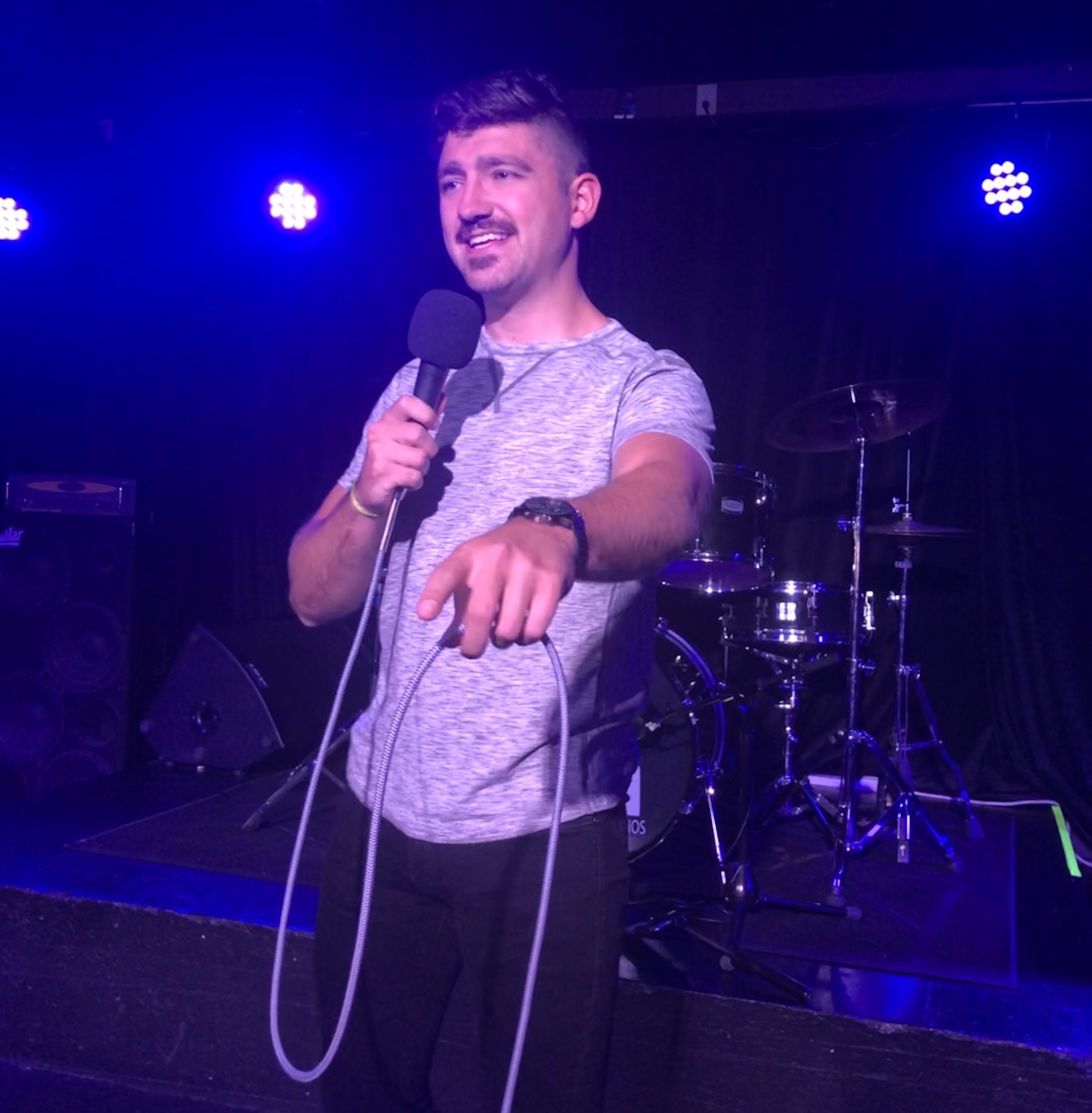
Who Is Wayne Veldsman?
Wayne Veldsman, owner of Vel.Consulting and Journey To Legacy, began his career by building several digital businesses out of his college dorm room....
Wayne is an accomplished business growth strategist, success coach, and entrepreneur. He specializes in helping entrepreneurial minded individuals to grow both their mindsets and their income.
After starting his first business in 2014, Wayne successfully launched and scaled a digital marketing agency to a 7-figure valuation before deciding to exit in 2019 to move to Denver, Colorado and start chasing his passion of coaching and public speaking.
Wayne actively works with entrepreneurs and businesses who are looking to take massive action and create drastic changes in their lives.
Not Sure How To Make The Drastic Change Necessary To Live The Life Of Freedom That Comes With Being A Lifestyle Entrepreneur?
Discover the stupid simple method to growing businesses digitally on autopilot, so that you can get back to your life.
Our students and clients aren't just satisfied, they're building life-changing businesses, doing what they want when they want, and living their lives chasing passion, not just profits.
Media Spotlights...







The 3-Step Strategy To Growing Businesses Digitally
Are you an Agency Owner, Service Provider, or Entrepreneur who sells online and want your pipeline filled with 300+ appointments with your idea client every single month? Are your SERIOUS about growing your business and want to work with Wayne 1-on-1?
Launch Into Digital Entrepreneurship is a course and coaching program specifically designed to take agency owners and online service providers from manual prospecting and wondering if this is ever going to work out, to having a very specific system in place which is going to allow you to generate 20 to 30 booked appointments every single day!
You're going to get a step by step process to building out your prospecting, sales and fulfilment system, and building your sales team so that you can close clients while stepping away from your sales process.

Price - $1,997 $97 (Limited Time Offer!)
Every time we generate you a new lead interested in your marketing services, your dashboard will automatically add the new lead into your CRM, and send the new lead an SMS, email, and even automatically call you to connect you right away!

Become More Focused, Be More Productive, Burn Out Less
Price - FREE training
From The Desk Of Wayne Veldsman (blogs)
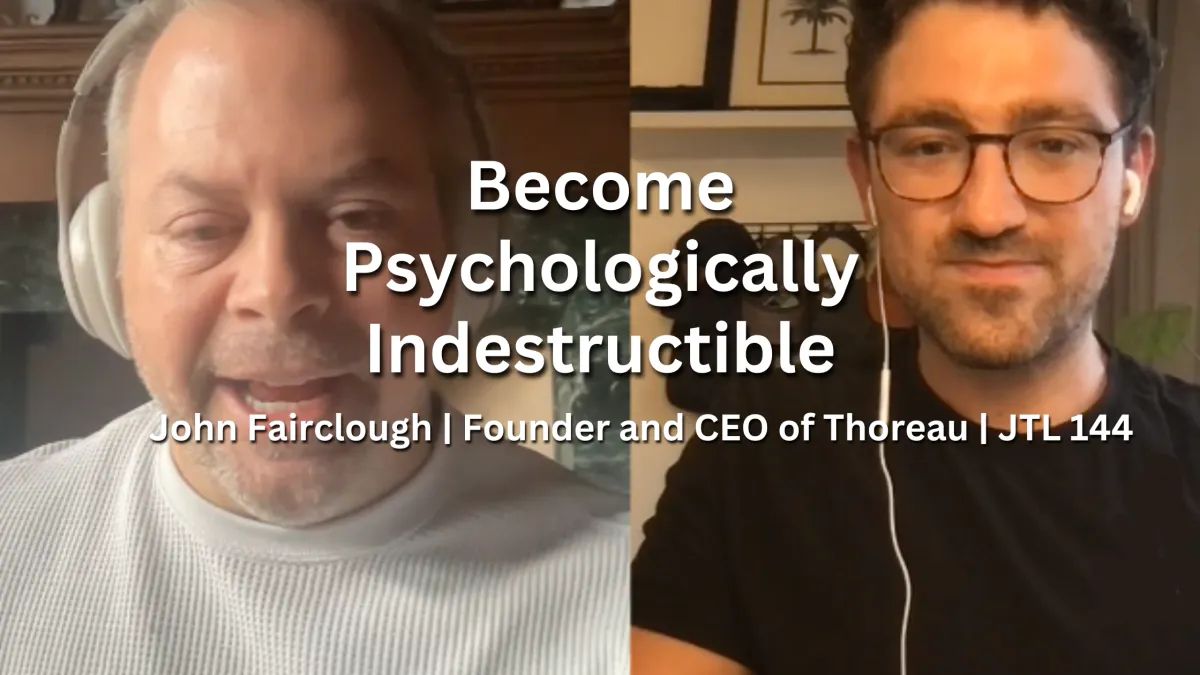
John Fairclough on Inner Peace, Identity, and Real Success
Want to hear the full conversation? Listen to the Journey To Legacy podcast Episode 144 with John Fairclough for even more insights and stories from his remarkable entrepreneurial journey.
How to Become Psychologically Indestructible: John Fairclough on Inner Peace, Identity, and Real Success
What if success isn’t about grinding harder or building bigger businesses?
What if real success is about becoming psychologically indestructible?
In this episode of Journey to Legacy, entrepreneur and author John Fairclough shares how he went from bouncing between homes at just 11 years old to building companies that now serve luxury brands across the United States, Canada, Guam, and Puerto Rico.
You can watch the full episode on the Journey to Legacy podcast here:
https://journeytolegacypodcast.com/
But the real story of this interview isn’t about business success.
It’s about resilience, identity, and learning how to build a strong inner life—the kind that allows you to face adversity without losing yourself in the process.
From Instability to Strength
John’s early life was far from stable. At the age of 11, he stopped living with his mother and began moving between relatives and friends’ homes.
For many people, that kind of experience creates lasting limitations.
For John, it built resilience.
Instead of developing a victim mentality, he developed qualities that would shape his entrepreneurial success: self-reliance, determination, and confidence in his own abilities.
Today, John shares lessons from his experiences through his writing, leadership work, and public speaking. You can learn more about his work on his official website:https://johnfairclough.com/
John makes an important point, though: while he wouldn’t wish that kind of upbringing on his own children, he also recognizes that the adversity helped develop the strengths that define him today.
This mindset is one of the first steps toward becoming psychologically indestructible.
It’s not about denying hardship, it’s about deciding what hardship develops in you.
When Success Without Alignment Breaks You
One of the most powerful moments in the conversation came when John shared a realization he had during his career.
He had built high-performing systems everywhere except inside himself.
Like many entrepreneurs, he focused heavily on building companies, solving problems, and growing operations. But eventually he realized that external success cannot replace internal alignment.
When your identity and values are unclear, success can actually amplify stress, anxiety, and burnout.
That’s why John now focuses much of his work on helping leaders and entrepreneurs strengthen their internal foundation.
Because without inner stability, even the most successful people can feel lost.
You can also follow John’s insights and content on his YouTube You can also follow John’s insights and content on his YouTube channel.
Stop “Going Along to Get Along”
Another key idea John shared is the danger of “going along to get along.”
For years, he tolerated poor behavior and crossed boundaries simply because he believed he was strong enough to endure it.
But over time he realized something deeper.
He was slowly erasing himself.
Many high-performing people fall into this trap. They become the dependable one, the problem solver, the person who absorbs pressure so others don’t have to.
But endurance without boundaries isn’t strength, it’s self-abandonment.
John’s message is simple but powerful:
You don’t need a permission slip to be yourself.
Setting boundaries and living in alignment with your values isn’t selfish, it’s essential.
A Successful Life Is a Peaceful Life
When asked how he defines success, John gave an answer that challenges modern hustle culture.
“A successful life is a peaceful life.”
Not a louder life.
Not a busier life.
Not a life filled with constant achievement.
A peaceful one.
That peace doesn’t come from avoiding challenges. It comes from knowing who you are and making decisions that align with your values.
When you live that way, outside pressure loses its power over you.
And that’s what it means to become psychologically indestructible.
Legacy Starts Close to Home
Toward the end of the conversation, John shared what legacy means to him.
It isn’t about wealth or status.
It’s about his children.
If they grow up knowing they are loved and that he is proud of them, he considers his life a success.
That perspective reframes the idea of legacy entirely. Legacy isn’t just what you build—it’s the impact you have on the people closest to you.
Watch the Full Interview
This blog post is based on Episode 144 of the Journey to Legacy podcast with host Wayne Veldsman.
At Journey To Legacy and the JTL Community, we focus on educational communications coaching to help you build stronger relationships and sell better. Join us and take your business and life to the next level, guaranteed.
Read the Full Podcast Interview Transcript Below
John Fairclough - Journey to Legacy Podcast Recording - Nov 19, 2025
Wayne Veldsman: [00:00:00] What if success isn't about grinding harder, but it's about becoming psychologically indestructible. Welcome back to Journey to Legacy. Today's guest went from bouncing between homes at 11 years old, to now building global companies that serve luxury brands around the world. But the real story today isn't about the businesses he's built.
It's about the moment he realized he had built high performing systems everywhere except inside of himself. In this episode of John Fairclough shares what it means to win the inner war, redefine success, and build a truly fulfilling life, not just a profitable one. This interview is honestly one of my favorites of the years so far, and so I hope you enjoy it as much as I did.
John Fairclough. [00:01:00] Um, John, my friend, thank you so much for being here today. I really appreciate it.
John: Glad to be here. Thank you for having me.
Wayne Veldsman: pleasure. For everybody out there that's maybe not familiar with you, go ahead and just give us a little brief introduction if you don't mind.
John: My name's John Farlow. I started a handful of companies. I've acquired others, and, um, currently working on building up our real, retail facility, maintenance business, um, a consulting practice. And, I have a book coming out here, in February that I'm pretty excited about.
Wayne Veldsman: Super exciting book. Coming out in February started, a handful of companies acquired others real estate investor. Dive a little bit deeper for me when you say you've started a couple of companies, it, uh, for some people that are listening, maybe they think it's oh, a little small marketing agency, one man shop could give us a little bit more specifics about what you've been working on.
John: So I started a. Uh, construction services company. We're basically facility maintenance, so we fix things that break we also remodel, [00:02:00] refresh, repaint. Those are the trades that we primarily handle, and so that's usually a local business. And mine started local and then I grew it regional. So I started handling a handful of states and then I took it national and international.
So now we're, we, uh, provide services to retailers across the us, Canada, Guam, and Puerto Rico.
Wayne Veldsman: My understanding is that you're servicing some of the, the biggest global brands that there are.
John: Yes. If you went through a more of a luxury mall, if you walk through there, uh, we, we've got a lot of clients in there. We, we, we service over 130 retailers.
Wayne Veldsman: So going from like a small, you know, construction company to. Absolute global perspective when you first started. I'm guessing that's not something that you pictured that was going to happen, or wasn't your end goal or am I wrong?
John: I, I didn't really think about the customer that I was gonna be working for. I thought about, uh, the size of the company I was gonna run, and I thought that it was gonna be a large, i, I, I thought I believed that I was gonna be, uh, wildly successful in business.
Wayne Veldsman: [00:03:00] Where, where did that belief come from?
John: It's just natural for me, but I, uh, it's kinda like I didn't have another, any other choice. Kinda had a a, a tougher upbringing., And it, it brought out a lot of strengths in me, so my resilience, my determination, my self-reliance, a lot of those things came through from what I endured as a, as a child.
And so I just kind of held that. You know, belief that I, I could do anything. I just have to put my mind to it, and that's why I tried it and did.
Wayne Veldsman: I think it's rarer and rare these days that people have this strong belief in themselves. You know, hearing you say that it comes from your upbringing and being tougher, do you think the reason is that people are believing in themselves less? Is it because life is easier? They're not having to overcome these challenges?
What's your opinion?
John: I believe there's a lot of factors that, that go into why people are not confident. And so there's the typical thing. Just like being told negative things or always being pushed to homogenize, right? Always behave, always color within the lines. , I believe that there's [00:04:00] a limiting aspect to that.
It's kind of like my son, I like when he gets muddy, even though I don't like that his clothes are dirty. I like that he is outside playing, exploring, jumping, taking chances, maybe getting injured. Obviously I don't want him to get hurt, but I'm, I'm very comfortable with him. Uh, falling down and, and, uh, having to pick himself up.
So, so I, I believe that there's been this kind of change where people look at, uh, things like falling down or, and I'll give a better example. I have, I have four children and two of 'em are, uh, just a year apart and they bicker all the time. And a lot of parents want the, the bickering to stop, and I certainly don't wanna listen to it.
Nor does anybody else that's around. But there is a skill being developed, like conflict resolution, um, because they go through this fight that they're, they're yelling, they're throwing things at each other and then they're playing not too long thereafter. And so a lot of trying to correct behavior that we don't wanna see or witness removes the ability for the, the, the [00:05:00] children to resolve conflict.
And this has been going on for a long time. Uh, where, where, where kids have been. Kind of having to modify their behavior, but they're losing that interaction. They're, they're losing that practice, um, that, that is happening really in a safe environment between the siblings or, or within the home. So, I believe that's a, a contributing factor as well.
Wayne Veldsman: Interesting, right? That something as small as fighting with your siblings, right? Or I love the example of your son, right? Like you're saying go out, like experience things, get muddy. Dare I say, go break some bones. That will heal a hundred percent. John, I, I said this to my older sister one time that has three little kids, and, uh, one of 'em bounced out of a bouncy house and I actually just offhand made the comment like, you know, I hope your kids like break their arms and stuff.
And she looked at me and I was like, well, I hope it heals a hundred percent, but like, have these experiences, right? Come sort of from a little bit, not even a tougher upbringing, but learn how to overcome obstacles and [00:06:00] challenges. Um. If you don't mind, I know. We'll, we'll get up to, you're doing a lot of work on personal development for entrepreneurs and CEOs and executives, you said that you came from a little bit of a tougher upbringing, right?
What do you mean by that? What did it look like? I.
John: I stopped living with my mom when I was around 11. I bounced around from different family members' homes and I lived with my friends' grandparents and just, uh, didn't have a lot of roots in that way. My parents were unable to raise my siblings and I, so, uh, living in someone else's home presents all kinds of different scenarios and challenges and.
You know safety. Like, am I going to be able to stay here if I misbehave, am I gonna be kicked out? Um, these kinds of things were, a little unsettling and then they modify your behavior, my behavior. And, uh, I heard a lot of negative things about my parents and stuff. And so you kind of keep hearing those, those kinds of things.
And, um. You know, eventually [00:07:00] I got to a point where I had to just start to take ownership of what I believed and not let so many other people's opinions and, and thoughts enter my sphere, because if I listened to them I certainly wouldn't have become, successful and, and much of anything.
Wayne Veldsman: Moved out of your mom's house, the age of 11, you were bouncing around. that you just mentioned, that you know you are often thinking, if I misbehave right, you're in a friend's house, will I be kicked out? to me sounds like it could potentially, cause I'm gonna use the word traumas, that for the rest of your life, you might have to color in the lines, but it sounds like it almost made you want to rebel and do the opposite.
John: Yeah, so I had that situation, and then the, the people that were in my life, and then just the way my personality is, uh, and, and just my skillset, you, you put that combination together and you respond to something the way that you feel comfortable. So by not having parents, around, for example I [00:08:00] wasn't indoctrinated right?
So I bounced around. So, um, I, I was able to and needed to, and was able to form my own opinions. On situations and things even like my faith, I found my faith as an adult. That wasn't something that was pushed upon me. It was something that got drawn out of me, but that was by my choice. And so it's, it's pretty, pretty cool that, that, those difficult times.
I guess it's like the words good and bad and it seems like society has changed. Good to mean what I want and bad to mean. What I don't want. I try to stay pretty precise in, in words. And so my, my upbringing, um, though I wouldn't want my son to go through it, if my options are to have that and have all the strengths that came out of it, or to have a, a, a more traditional upbringing and not have those strengths give me what I went through.
So, so I'm not into this, you know, victim hood and, and poor me and any of that stuff, although I understand that some people [00:09:00] aren't, um, at a, a spot where they're strong to work through that. I definitely think that most self-help should be, uh, supervised.
Wayne Veldsman: Most self-help should be supervised, but I really enjoy that you're saying, right? If you had to pick all of the struggles and challenges that you went through, whether you learned from right, or you pick a. Soft upbringing. A comfortable upbringing, you would still pick the latter people that didn't go through a challenging upbringing. Right? can they do today? 'cause we're about to get into your, your most of your current work that is really around, like said, personal development, but what can these individuals do today to build these skills of self-reliance that maybe they didn't get while growing up?
John: You bring up a great point in that, uh. My difficult times. At your difficult times. If we rate 'em against each other, well there, there's, there's probably gonna be a bunch of disparities, some that were much worse for you, some much worse [00:10:00] for me. Um, you, you know, whatever that is. But I believe we all have like the best 10% of situations and we all have the worst 10% of situations.
So I believe that everybody has. Items that they believe are traumatic and, and dramatic. So if you're an entrepreneur and, and you've got a building, you're building a business and you've got client complaints, uh, someone that doesn't show a vendor that does something wrong and doesn't deliver on time, you, you, uh, huge opportunities.
You're, you're dealing with all that. And com contrast that with a maybe a, a, a father that's stay at home and the mother goes to work. Their days are gonna have very different experiences, but it doesn't mean that the stay-at-home dad or the stay-at-home mom doesn't still experience things that are traumatic and dramatic to their day.
So I just wanted to be mindful of that, of that piece. Um, I, I believe that the, the challenge, and, and this is what we do in our leadership development piece, is to give people, some diverse experiences, right, similar to what they've done, and just kind of move them a little bit outside of what [00:11:00] they've known.
And , so, a little diverse and then adverse. Give them things where there's a high likelihood of failure and let them work through that. And, and if we put people in a position to, to do both of those, hopefully simultaneously. Um, it, what it, the only way to be successful that I've learned is that you have to be open-minded.
So it, we wanna keep people's minds open, give them diverse experiences and adverse experiences, and they become fantastic teammates.
Wayne Veldsman: Give them diverse experiences and adverse experiences, sort of this training inside of the leadership development. But he also said they have to be open-minded. John, we all know this saying, right, lead a horse to water. Right? But you can't force him to drink. Is it possible to develop somebody to be more open-minded so that we can then give him or her this leadership development training?
John: That's what adversity. So if the likelihood to fail, so if we took this more personal, uh, to, to a personal level, if the person doesn't have any money, [00:12:00] um, and, but they have to feed their kid there, there's going to be a change in behavior. Like, would I go next door and ask my neighbor for groceries or for money?
No. If I couldn't feed my kid and my options, my, my only options were that there's someone next door I would, and so giving them that adverse piece, what it does is it opened up this door to humility, and to be open-minded means that we are going to allow other information in. And so maybe we're not humble, we're too proud.
That's one reason that the door's closed. But another reason why the door's closed is that we're afraid. Putting people in a spot where they're afraid and, and, uh, creating some comfort around that to where they can actually go out and explore inside of that fearful spot, um, uh, helps them. It's like I don't want people to go outside their comfort zones.
What I'm trying to do is help people expand their comfort zones.
Wayne Veldsman: Help them expand their comfort zones, not go outside of their comfort zones. Define that for me a little bit more. It's tough to understand what the difference [00:13:00] is between that, right? Of expanding your comfort zone versus going outside of your comfort zone.
John: One is, uh, hey, your com comfort zone is wrong and it should be bigger, and you gotta get outside of it. It's almost like what's wrong with you? You should go outside of that. And the other one is saying, Hey, I wanna accompany you and help you get this to be bigger. And so, so what are the obstacles? What is it that you're afraid of?
Let me be here to keep you. Faith through that, or let me sh you know, teach you, share with you, um, demonstrate for you whatever the case might be.
Wayne Veldsman: Okay, so the one where you say get outta your comfort zone, it's almost labeling it as a negative, saying your comfort zone is wrong. It's too small, versus providing education and coaching to expand your comfort zone is saying, let's grow. Let's continue to understand. You talked a little bit about fears a moment ago. How, how important is it for us to start to understand our fears? And [00:14:00] I'm also curious, can fear be used as a good thing in leadership and personal development?
John: So just to state it clearly we need comfort with every emotion. So, so I don't wanna look at sad, mad, upset, fearful. None of them are bad having, you know, fight or flight is a, it's a human piece, right? It's, we're not trying to get rid of that. And so, uh, to demonize fear would be the wrong move, although that's often what happens.
It's not a little bit differently. Um, a lot of people want to explain why. We understand that, that there's some value in that. So I'm not gonna diminish it, but I am going to challenge it and say from my upbringing, if I was to say to you, Hey, I was raised in this tough situation, um, and I, you know, I want this, and I bounced around.
I went to 20 schools and, and all of this. And so therefore I'm not really trusting in a relationship at the beginning. A lot of people understand that and, and it gives some credibility to it and [00:15:00] whatever. The thing is, what that does is that, that says that, Hey, I'm not allowed to, to be slow to trust.
Like that's, that's a bad thing. So I have to justify why I'm that way as if it's kind of less than, and it's like, no, I'm just going to say I'm not trusting, and that's the end of the sentence, and I don't owe anybody else anything. And, and so by not having to explain it, really what I'm doing is I'm giving value to things without, um.
Without having to support it and, and I'm allowing other people to do the same. And I believe that's a critical element, uh, to what we're talking about here.
Wayne Veldsman: Interesting. I mean, so is that, that they're trying to almost escape it? They're not giving value to it 'cause they wanna just kind of get the conversation over with as easy as possible, not share too many details.
John: Well, I, so I would say it more the other way. I'm saying, I'm being so clear that at first I'm, I am wildly trusting, uh, you know, I mean, I, I make a quick grade whether or not [00:16:00] I trust 'em or not, and then I'll. Let 'em in at certain levels, and that's just what I do. So I'm not slow to trust despite my upbringing, but I face situations where someone says.
Well, because of my upbringing, you know, I'm not very trusting and like, well why? Because what they're doing is they're explaining, they're giving reasoning, but do we really understand what happened inside of our heads to make us that way? And, and how are you gonna connect? You are not trusting to that item.
Why can't it be not trusting because of you saw somebody else? Get hit by their parent. Or you saw somebody, uh, you know, at a baseball game and, and a fight broke out. Like we can't really peg what happened. And so if we build up this facade and we just keep telling ourselves that this is what it is, all of a sudden it's no longer about, Hey, that I don't trust.
It's about this reason why I don't trust. And now it's some sort of victim and a trauma and all these other things where. Why do I have to explain why I am the way that I am? Uh, and, and if you're gonna [00:17:00] put that requirement on me, it's really like saying I need a permission slip to be myself, and I don't need a permission slip to be myself.
Wayne Veldsman: Definitely don't need a permission slip to be yourself. John, I think this is a good transition for us to talk a little bit about. Your other businesses and projects that you're working on right now that is around this space of personal development. And then also, um, helping people out with their own definitions around being a good person.
alright. Quick break here. I wanna share something with you guys. It's the fact that I've always hated shopping. Like seriously. I'd rather do almost anything else. I'm the kind of guy that finds a shirt that he likes that fits perfectly. That looks good enough. And then I wear it essentially every day.
I don't want the mental load of every morning having to figure out if something looks good or is in style, and that's exactly why I am super excited about today's new sponsor. Taylor [00:18:00] is a men's wear rental subscription where stylists and AI pick outfits. For you from hundreds of premium brands. They send you outfits that match your lifestyle and your vibe.
You wear them for a few weeks and then you simply send them back in exchange for a brand new batch. It's free shipping both ways. No need to do laundry and no more shopping. Plus, if you really love something they send you, you can even buy it from them for up to like 70% off. It's honestly such a smart system.
So if you wanna look sharp without wasting time, without filling your closet with stuff you barely wear and without wasting mental energy, this is the greatest option. Head on over to Taylor Style to try it for yourself and use [00:19:00] code JTL for 25% off your first month. That's Taylor, T-A-E-L-O-R. Style news code Jtl for 25% off your first month.
John: Sure.
Wayne Veldsman: what, what are you working
John: Sure.
Wayne Veldsman: What is, what's the company or, uh, or the systems.
John: So I wrote a book and a couple of different reasons why I wrote the book, but I was really excited to kind, kind of share ways to, uh, become much stronger. And when IF wrote my first draft, I had a psych a handful of psychologists review it. I had a bunch of people review it because I wanted to make sure it was good and sound so that it wasn't where I was coming out with things that were, um, outlandish and, and wrong.
I didn't mind outlandish, but true. But so, so one of the psychologists came back and, and my team wants to use it for the inside cover of the book, but said that that reading this will help make somebody psychologically indestructible. Because what we do is in the, the book's broken down into three sections, and the first one is [00:20:00] around having an open mind, so challenging some of the, the commonly held beliefs and, and showing that there, there are nuances to it that they are not right.
So, so perfection is flawed is one of the, the paradoxes that I share. And if we think about the expense of making things perfect when it's not necessary to be perfect. To get an A in a class, um, at a 93% level counts as the same a as at a hundred percent level. But if we demanded that it was always at a hundred percent, how much more energy is being ex expended unnecessarily.
So we're demonstrating an example of a problem with perfection in pursuit. That, so perfection is, is really what we're challenging. So, so the, this kind of how do I open up someone's mind? Let's, let's expose some of the things that are a little bit missing or imprecise within what society generally accepts.
Second part of the book is around articulating. It's a workbook where you are asked a battery of questions and, there's basically what we're doing is creating a bunch of [00:21:00] inputs to help you, uh, articulate your definition of a good person. It's really your core identity. And this is significant. Oh, go ahead.
I'm sorry.
Wayne Veldsman: on the edge of my seat.
John: So, so when we have our own personal definition of, of a good person, so for me, my definition of a good man is many decisions that I can make that line up with my definition of a good man. I'm able to defend my decisions. I'm able to, to know why I did what I did, and it puts me more in a peaceful spot.
And so if we think about where anxiety comes from, a lot of it, not all of it, but a lot of it resides in. Behaving a way outside of what we believe is right, and so this, by having this, um, articulated and supported for a person, we're, we're basically putting them in a position to more easily make more decisions that align with their, their personal definition of a good person.
And then the last section of the book. Our tools to activate that. So, so once you know you've got your core identity, like you, you, this [00:22:00] is what you believe to be true, and you wanna live it. People need a, um, some tools and ways to activate it and then not only activate it, but how to recover when they fall off track, because we always do.
How do we, how do we recover? And so created a toolkit. So that not only is it presenting, , ideas, it creates a, a path for someone to be able to document, articulate it, and then to activate it. And, and we believe that that's whole. And if we can put that in people's hands, that they're gonna have a lot less anxiety, spend a lot more time being themselves and be a lot more present for all of their priorities in their life, not just their business.
Wayne Veldsman: Original line of how to make yourself psychologically indestructible. I'm, I'm instantly sold. What's the, uh, have you guys already decided on what the title of the book will be?
John: Sure. So the original title that shows my personality but the publisher said No, John was be you like, be yourself. The best advice I ever gave myself. So it was like,
Wayne Veldsman: Yeah.
John: [00:23:00] I didn't hear the, it's not the best advice I ever heard. It was the best advice I ever gave myself. But, um, uh, through really kind of going through it and beating up the, the title and really looking at what it is, um, I took a phrase that's Common Brace for Impact and I turned it into embrace for Impact.
So it's embrace for impact. Crack the, crack the code, win the inner war.
Wayne Veldsman: Brace for Impact. Embrace For Impact. Crack the code, win the Inner War.
John: Yes.
Wayne Veldsman: title of the best advice I ever gave myself. Where, where did that idea come from? Because it sounds like you're almost teaching people how to give themself advice. Right. How to listen to themselves, understand themselves better, and move forward.
John: One of the exercises in creating someone's personal manifesto is to ask, uh, what's some of your favorite advice to give? And the things that we really like to give to others is often what we need to hear. And so I really needed to keep [00:24:00] hearing be you, John, be you, John, be you. Uh, but, but nobody was really telling me that, so I had to tell myself that.
And in, in doing that and, and really embracing myself in that manner. And so you can see kind of where, how that embrace came into play. It, it doing that really gave me that, that, uh, that clear runway to say, Hey. I'm gonna do it my way, and you might not like it and it might be a problem or whatever, but I'm gonna do it my way.
But there was a stigma that stayed with me because in my pursuit of doing it my way, my biggest shadow, my biggest problem was that I knew I could endure a lot. So I went along to get along, and that was one of the most destructive things. I mean, it bothered me for decades. And, uh, when I finally slayed that dragon.
I, I felt most free to be me. And it was finally, like that was done. And now, anytime that I'm getting pushed into this position where, um, I, I need to [00:25:00] walk on eggshells or whatever the case is, I just, I confront it. I've, I've learned how to establish boundaries around that. Um, where, where people want to, to say things like, what kind of man will do this and what kind of man will do that?
And I just roll right over it. It's, it, it's unimpactful to me, which, you know, creates a whole nother set of, uh, interesting insights.
Wayne Veldsman: absolutely. Lemme, lemme see if I'm, if I heard you correctly, the, you went along to get along. Is that like you were acting in a way to be accepted and get along with other people?
John: Uh, so that was part of it, right? And living in someone else's home and or worrying about whether or not you're gonna, I'm gonna get thrown out or whatever. But then fast forward, uh, um. Uh, so my client might say something that's out of line, okay, I don't wanna disrupt it. Or I have a key employee who might wanna try to take one of my clients and go do something else and, and do something nefarious or, or whatever the case is.
And so it kind of did a lot of placating, um, and I was doing it under the, uh, [00:26:00] the mindset or, you know, I framed it in my head like, Hey, I could endure this, so I'm going to, so I'll endure it and I'll find, I'll wear it like a badge of honor. But what was happening was I was self erasing and what, what mattered to John and this surrounded me.
I had a lot of relationships all around me where uh, nobody was really thinking about me and nobody was like looking out for me. They just wanted for me, and I kept achieving and helping and supporting. And then the moment I would stop doing that, all of a sudden I was this bad person and selfish and I should have done this and I should've done that.
It's like. I, I don't see anybody else telling anybody else what to do with their money. I don't see anybody else telling, you know, like, I have a family too. And so, yeah, sometimes people help their parents or their siblings, but cousins and, and, and going further out and further out and all these people that there's no connection to and, and aiding them, uh, you know, it's a, it's a little bit different.
And so, uh, I, I really [00:27:00] went too far in this piece of helping because I could. Um, and then feeling obligated like I should, and then I took back that and said, I'm gonna help who, whomever I want, and I'm not gonna feel obligated to help other people because I helped somebody else.
Wayne Veldsman: That's difficult. Like it's almost a, a snowball effect where you start helping, right? First your parents, your siblings, of course, your spouse and your kids, and then all of a sudden your cousins, and now it's, well, I helped this other person, so I guess I need to go help the next person and the next, and then it starts getting bigger and bigger and bigger until you recognize you're actually not even helping yourself.
John: I was exhausted, and so I'm showing up for my kids tired because I'm doing all these things for other people. I had a funny, uh, situation this past summer. Where I, I invite, my house is like an open house. Whoever wants to come can come over. And, and I host, I just had a, a cooking class at my house this past Sunday, cooking with class, cooking class, and [00:28:00] I'm the class, so it was just for fun.
But, but I, I have, party, these get togethers and so everybody's welcome, but I'll invite a few people specifically. And that other people won't come. And I was talking with one of my aunts and she's like, you know, John, you've gotta invite these other people too. Like are we really grading invitation lists?
All like people are offended. Like I'm not offended at all of the parties they've had at their home where they haven't invited me. Then she said, well, they've invited you sometimes Yeah. As a throw in because they've, you know, they're inviting everybody. But, but it's not like they said, oh, I really want John at my house.
Let me call John and have him here. Like, we're not gonna start regulating that, that, because I invited this one's sister. I have to invite that one's brother. And, uh, and, and I know it's a silly piece, but this just kind of goes back to saying, I'm going to, I'm going to invite who I want, and if you're gonna be offended that I didn't invite you, but we don't really have a close relationship.
Like, we're not going down that path. You know, you [00:29:00] can, but I'm not gonna, I'm establishing a boundary that says I'm going to invite to my home whomever I want and not feel obligated. I have to invite everybody else because it looks bad. What looks bad? That's for somebody else. I'm not gonna concern myself with that.
Wayne Veldsman: no, thanks for sharing that. You know, it's interesting how you say it. It might sound silly. heard a story this past week of. Almost the opposite side of your story where somebody didn't get invited and they were personally offended by it. sitting there and I was like, well, what if we can put ourselves in the other person's shoes? start at the simple things. there's not enough space. Easy as that. Right? Sorry. They had to trim it down. Maybe they just don't feel as close to you as you think that you are to them. Right? Whatever the reason is. They're not obligated, right? End of day. I think we all need to realize that we need to protect ourselves first, and then like, you know, our immediate [00:30:00] family, at least that's my argument before starting to worry about, oh, who is gonna be upset that they weren't on the guest list?
John: Right. And, and there's a, so something I learned that was really powerful is that, uh, it's not about us. It's not about us. So, so I had a friend that worked for me. He managed my real estate and he stole, and he stole quite a bit of money. And then not only did he steal, he continued to steal after we caught him, and it just turned into this real mess.
Okay. And super ugly, uh, super ugly situation. And what do you do with that? And so, so I chose to forgive and kind of, kind of work, work through it in that way. And a lot of people question that, and it's like I have the ability to decide. What I wanna do, like that's up to me where it's not an auto reply.
I was given a brain, I was given a heart, I was given hands. I wanna get those things to align and this is an important thing for me. So, so I wanna behave, uh, accordingly. This is, uh, this [00:31:00] is important to me. I don't want to have this sense of obligation of what I need to do. I want, I wanna be green-lighted.
And in your example where. The person you know, is, is judging that or whatever, I, I just go back and say, do you think that the person stole from me? Do I have to install the words from, like, can, can I just say that the person stole? And then start to say, what kind of person steals? Clearly they feel less than.
So, so when people feel less than they behave out of character, does I do, I have to personalize it and say that the act was towards me. So, hey, uh, so, so to your point about the invitation, was the invitation, like they didn't want me there or. They have space for 12 and they invited the first 12 that they wanted.
They thought that that was gonna be a great group of people there. You know, it, it doesn't have to be that it was about you and you were rejected. Like I don't think of it that the guy stole from me. I think that the guy [00:32:00] stole.
Wayne Veldsman: What a great mindset. I wanna invite everybody that's listening or watching rewind back anytime that you start to feel this. Like, me? It's like, well, are you making it about you? Right? If someone stole, they stole for them, right? It wasn't for you. It isn't to steal from you. It's 'cause they're probably feeling less than right.
They needed something else. And this can be man put into so many different situations in life. It's almost seeing a situation just simply for what it is. Not just trying to make it about us or feel hurt because of it, huh?
John: I have another example in that I'd like to share. Uh, so my, so my daughter, my eldest daughter we were kind of uh, messing around and we were shooting some videos and she started sharing her perspective on when her mom and I were divorced and we're great friends. Her mom and I are great friends and, uh, excellent relationship there.
And she was sharing and she said the words to [00:33:00] me that she hated me. She hated me. And, during this process. And I was like, wow. I was surprised, but I kind of felt some of that, you know, that anger towards her, uh, from her. And, um, so she, you know, was sharing these different things and I, I said, well, well, why?
And she said, you were giving me the support that I wanted mom to, and I was like, wow, that's, she's pretty demanding of her mom. And then I said, well, I was, I'm, I'm really glad. Uh, that you, you know, directed that towards me, which was odd. Uh, it was odd for her to hear, and then I was able to go more in depth.
Well, I was strong enough to endure it. And not saying that her mom isn't strong, her mom is, but if, if directing that towards me, the father that could absorb that or directing it towards her siblings or, or towards their mom or something that's different. I'm grateful that I was able to carry that burden for my daughter.
So like what? I wasn't [00:34:00] deserving of it or anything like that, but I'm proud that I took that on. So again, we go back to these situations and say, it doesn't have to be about us. She was hateful towards me, not because of something I did that was negative. It was that it made her feel this hurt. And she was a young girl, she was 11 years old, so it was, you know, a little bit different.
Um, but now her and her mom have a, an outstanding relationship. They always really did. Her mom is so good to her, so loving towards her, but there was this like, inner anger, and I'm glad that she directed it towards me, even though it wa it wasn't so deserving to come in my direction.
Wayne Veldsman: How interesting is that? I mean, your perspective, the way that you took it was, um, use the word remarkable, but I think different than most people. John, I'm, I'm curious, I want to take one step back. I know we don't have tons of time left here, you started multiple business, you came from nothing right up to [00:35:00] becoming a global CEO. At one point in your life, am I wrong to say that you were the classic definition of grind and hustle and what you see on the TV of what entrepreneurship is, was that one part of your life?
John: For very short. I, I worked really hard, putting in a ton of hours, but I didn't really, I subscribed to the grind mentality for a short period. I realized early on it was very unhealthy and, and it doesn't deliver the best results, though I don't, I do love accomplishment sacrificing your family and the things that make you happy and take removing joyful moments from your life.
Uh, all for the pursuit of money or building a more prestigious company. Sounds like a, a bad trade to me.
Wayne Veldsman: trade to me. And so I was curious, was there shift that happened or I said you only prescribed to this for a short period of time. Was there a moment where you realized, you know what, let me. Think differently. Let me [00:36:00] redefine what true success is actually that led you to the amazing work that you're doing today.
I mean, John, you, you almost told me that you don't want to talk about, you know, your rags to richest story. You just want to give value to help people develop themselves. Like was there a shift that happened that you realized this is actually what's the most important thing?
John: I'm glad to hear that you're in the anti-grind movement because people matter. You know, we have to we have to remind them that they do. And, and so the mistake that kind of going along to get along that I shared was I. Like, I saw myself as this warrior that kept enduring and battling and battling, uh, without any nurturing of that warrior.
Now fortunately, my, my ex-wife was, an outstanding spouse, so she was supportive. And she made a comment one time to me. This was before we even had children, and I came home from work and I was working, I was still working. And she just basically was like, Hey, are we gonna talk? Like she was, [00:37:00] she was pushing for us to just have a normal interaction.
And at first I was like, well, I got these things to do and this, you know, this is how we pay the bills. And like that, like that all ran through my head. But then it's like she never signed up to be an entrepreneur. She never signed up to, to, to start a business. She didn't do any of those things. I did. And then to bring that burden, like what was I doing during my day?
That was allowing all these distractions, because I just looked at it as, it's okay if I bring that work home and it's okay if I do that. And so starting to look at, you know, my home life as a client meeting as well, that needed that, that was important. Now, it wasn't always able to be that way. There was a lot of times where.
My work did come, come home. But you know what, there was a lot of times that I stopped working earlier and took my personal life into my, into my work time. So I understood that I was in control of that and I needed to make sure the things that were most important to me were treated as such. So being, being a, a very present [00:38:00] father was super important to me.
So I underperformed in my professional life, uh, willingly. I wanted to make sure I was present there. I don't define myself by my business success. If I could have one thing to talk about, it would be my children. That would be it. And the mark that I've left with them, that they know that they are loved and that I'm proud of them.
And if not, if nothing else from my life comes from it, other than those two things, I, I mean, that's a success for me.
Wayne Veldsman: Nice. Making sure that your children know that they're loved, you're proud of them, supported. Right. And so you even said that, you know, business success, that's not the most important. How, John, how would you define word success? Like what is that? What should it be?
John: So if I had to say one statement, uh, successful life is a peaceful life. Now peaceful doesn't mean without its chaos. I'm talking about internal peace. As long as John is behaving like John in accordance with John's definition of a good man, uh, [00:39:00] John's gonna have a peaceful life.
So that's the most simple statement. Now, outside of like, okay, what supports that? Okay, what do I wanna accomplish professionally, philanthropically, as a father, as a friend? Those are other things. And so. I have some adjectives. Maybe my favorite one, is to say like, I wanna be an honorable man.
And so there's a lot to that, but you know, what is an honorable man? And I wanna leave situations at least as good as I find them. So I'm not, I'm not the right fit for a lot of people. I'm disruptive, uh, to, to others. I, uh, I cause aggravation and so I don't want, I wanna leave a person at least as good as I found 'em.
That means I have to be disciplined to not, uh, try to indoctrinate 'em with my thoughts. If, if they're not gonna hear me, why am I gonna say it? I don't feel this obligation that I must say this, or like my faith that I must share my faith with other people. I don't feel that obligation. People kind of know my [00:40:00] faith just through the way I behave.
And then if they want to ask me about it, they can. And this is the idea that, you know, an honorable man is this certain way and, and I try to do as many things as I can to align with that.
Wayne Veldsman: That's great. Successful life is a peaceful life, right? I like these. I would love to hear more of these adjectives, right? But like being an honorable man, right? How would they act? Every situation you leave at, at least as good as you found it, not trying to push our thoughts and feelings and beliefs on other people. Just lead by example. And then people, if they want to know more, they'll ask and then be ready to share and educate, and hopefully help 'em improve. Huh.
John: I try to avoid persuasion. Because like leadership has been poisoned, I believe into, to really about being, follow, trying to gain more followers. So if you look at leaders, they try to say things and then they modify their positions in order to get more people to [00:41:00] follow them, and they become more lukewarm.
Whereas for me, I'd rather say, this is who I am. And then the people who are attracted to it are attracted to it, and the people that aren't aren't. And I'm not looking at those as being lost that didn't wanna come aboard. Like let them go find what really resonates with them. There. There's a different, piece that really works for them, and that's absolutely okay.
Wayne Veldsman: is again, right? It's like, let's not make this about ourselves, right? It's like. The people who
John: Right,
Wayne Veldsman: at our table or want us at their table, great. Other than otherwise everybody else, I, we just want the best for them. Right. Carry on, move forward.
John: right.
Wayne Veldsman: you started to mention a little bit as we start to wrap up, which I have so many notes and questions here that I didn't even touch on.
Like, we're gonna have to do this again 'cause I feel like we're just starting to get rolling. But, um. Along the, the vibe of the show or the theme of the show being Journey to Legacy, I really always like to ask my guests at the end like, what is the definition of legacy to you and is there a legacy that you're [00:42:00] working to leave on this world?
John: I believe that we're all kind of sent into the world to help make it a better place. Um, so, so, uh, I'm gonna start with. What's closest to me, and that's my family and, and that's my children. And helping them be confident and ready to take on their lives and, and for them to leave a solid mark on, on the lives of others.
That's, that's awesome. What I'm doing more professionally now is, uh, this, leading this movement where I want, so I shared earlier about that manifesto that. Helping someone articulate their definition of a good person, I want to have a million people fill that out and start living in accordance with it, and I believe the world will be a better place because of it.
Wayne Veldsman: Everybody. That's the The 1 million Manifesto Movement, right? We'll be sure to link to all these things down below as well. But John, it's really great to hear, especially from, uh. Global CEOs like, I mean, huge industry entrepreneurs when they [00:43:00] talk about legacy. It's not about the money that you leave behind or the skyscrapers or the statues, it's about how you are affecting those people closest to you, your children, your loved ones, and so you for that.
You're leading by example. There's no doubt in my mind. My pleasure, John, for everybody out there that wants to go learn more, 'cause I'm sure they want to hear more from you. What's the best place to connect or where can they go learn more about everything you're working on.
John: All the usual suspects. So I'm on LinkedIn, , John Faircloth. I started a YouTube channel for, now I'm not on social media other than LinkedIn. But I started a YouTube channel in with the thought of helping promote the book. So I started just a couple of months ago in, in May. And so you can find me there at Bud John Fairclough
Uh, and we actually are growing. We should hit a million subscribers by next week. So it's crazy growth story. It's, it's unbelievable. Uh, and then at johnfairclough.com you can find, uh, more, more about us.
Wayne Veldsman: Once again, we'll link to everything down [00:44:00] below. John, thank you so much my friend. I greatly appreciate it,
John: I look forward to next time we,
Wayne Veldsman: Bam. And that's a wrap. John, thank you so much for sharing, my friend. This conversation really hit hard for me personally. And as always, everybody, please do us a huge favor and share the episode to help us grow the podcast and get these unbelievable stories out to more people. Here are three things that really stood out to me today.
First, growth Without Alignment will eventually. Break you. You can build companies, money systems, but if your inner operating system isn't healthy, it catches up with you. Second. Success isn't about hustle. It's about. Peace, a peaceful life is a successful and fulfilling life. And third, you don't need a permission slip to be yourself.
Stop just going along to get along, make yourself psychologically [00:45:00] indestructible and lead from your own unique identity, not from ego. Thanks again for tuning in today. Let's remember that legacy isn't built through status. It's built through who you become and how you treat others. Today. This episode made you think, share it with someone else who needs it.
I'm your host, Wayne Veldsman, and we will see you next week.

The 3-Step Strategy To Growing Businesses Digitally
Are you an Agency Owner, Service Provider, or Entrepreneur who sells online and want your pipeline filled with 300+ appointments with your idea client every single month? Are your SERIOUS about growing your business and want to work with Wayne 1-on-1?
Launch Into Digital Entrepreneurship is a course and coaching program specifically designed to take agency owners and online service providers from manual prospecting and wondering if this is ever going to work out, to having a very specific system in place which is going to allow you to generate 20 to 30 booked appointments every single day!
You're going to get a step by step process to building out your prospecting, sales and fulfilment system, and building your sales team so that you can close clients while stepping away from your sales process.
Price - $1,997 $97 (Limited Time Offer!)
Every time we generate you a new lead interested in your marketing services, your dashboard will automatically add the new lead into your CRM, and send the new lead an SMS, email, and even automatically call you to connect you right away!
Become More Focused, Be More Productive, Burn Out Less
Price - FREE Training
From The Desk Of Wayne Veldsman (blogs)
John Fairclough on Inner Peace, Identity, and Real Success
Want to hear the full conversation? Listen to the Journey To Legacy podcast Episode 144 with John Fairclough for even more insights and stories from his remarkable entrepreneurial journey.
How to Become Psychologically Indestructible: John Fairclough on Inner Peace, Identity, and Real Success
What if success isn’t about grinding harder or building bigger businesses?
What if real success is about becoming psychologically indestructible?
In this episode of Journey to Legacy, entrepreneur and author John Fairclough shares how he went from bouncing between homes at just 11 years old to building companies that now serve luxury brands across the United States, Canada, Guam, and Puerto Rico.
You can watch the full episode on the Journey to Legacy podcast here:
https://journeytolegacypodcast.com/
But the real story of this interview isn’t about business success.
It’s about resilience, identity, and learning how to build a strong inner life—the kind that allows you to face adversity without losing yourself in the process.
From Instability to Strength
John’s early life was far from stable. At the age of 11, he stopped living with his mother and began moving between relatives and friends’ homes.
For many people, that kind of experience creates lasting limitations.
For John, it built resilience.
Instead of developing a victim mentality, he developed qualities that would shape his entrepreneurial success: self-reliance, determination, and confidence in his own abilities.
Today, John shares lessons from his experiences through his writing, leadership work, and public speaking. You can learn more about his work on his official website:https://johnfairclough.com/
John makes an important point, though: while he wouldn’t wish that kind of upbringing on his own children, he also recognizes that the adversity helped develop the strengths that define him today.
This mindset is one of the first steps toward becoming psychologically indestructible.
It’s not about denying hardship, it’s about deciding what hardship develops in you.
When Success Without Alignment Breaks You
One of the most powerful moments in the conversation came when John shared a realization he had during his career.
He had built high-performing systems everywhere except inside himself.
Like many entrepreneurs, he focused heavily on building companies, solving problems, and growing operations. But eventually he realized that external success cannot replace internal alignment.
When your identity and values are unclear, success can actually amplify stress, anxiety, and burnout.
That’s why John now focuses much of his work on helping leaders and entrepreneurs strengthen their internal foundation.
Because without inner stability, even the most successful people can feel lost.
You can also follow John’s insights and content on his YouTube You can also follow John’s insights and content on his YouTube channel.
Stop “Going Along to Get Along”
Another key idea John shared is the danger of “going along to get along.”
For years, he tolerated poor behavior and crossed boundaries simply because he believed he was strong enough to endure it.
But over time he realized something deeper.
He was slowly erasing himself.
Many high-performing people fall into this trap. They become the dependable one, the problem solver, the person who absorbs pressure so others don’t have to.
But endurance without boundaries isn’t strength, it’s self-abandonment.
John’s message is simple but powerful:
You don’t need a permission slip to be yourself.
Setting boundaries and living in alignment with your values isn’t selfish, it’s essential.
A Successful Life Is a Peaceful Life
When asked how he defines success, John gave an answer that challenges modern hustle culture.
“A successful life is a peaceful life.”
Not a louder life.
Not a busier life.
Not a life filled with constant achievement.
A peaceful one.
That peace doesn’t come from avoiding challenges. It comes from knowing who you are and making decisions that align with your values.
When you live that way, outside pressure loses its power over you.
And that’s what it means to become psychologically indestructible.
Legacy Starts Close to Home
Toward the end of the conversation, John shared what legacy means to him.
It isn’t about wealth or status.
It’s about his children.
If they grow up knowing they are loved and that he is proud of them, he considers his life a success.
That perspective reframes the idea of legacy entirely. Legacy isn’t just what you build—it’s the impact you have on the people closest to you.
Watch the Full Interview
This blog post is based on Episode 144 of the Journey to Legacy podcast with host Wayne Veldsman.
At Journey To Legacy and the JTL Community, we focus on educational communications coaching to help you build stronger relationships and sell better. Join us and take your business and life to the next level, guaranteed.
Read the Full Podcast Interview Transcript Below
John Fairclough - Journey to Legacy Podcast Recording - Nov 19, 2025
Wayne Veldsman: [00:00:00] What if success isn't about grinding harder, but it's about becoming psychologically indestructible. Welcome back to Journey to Legacy. Today's guest went from bouncing between homes at 11 years old, to now building global companies that serve luxury brands around the world. But the real story today isn't about the businesses he's built.
It's about the moment he realized he had built high performing systems everywhere except inside of himself. In this episode of John Fairclough shares what it means to win the inner war, redefine success, and build a truly fulfilling life, not just a profitable one. This interview is honestly one of my favorites of the years so far, and so I hope you enjoy it as much as I did.
John Fairclough. [00:01:00] Um, John, my friend, thank you so much for being here today. I really appreciate it.
John: Glad to be here. Thank you for having me.
Wayne Veldsman: pleasure. For everybody out there that's maybe not familiar with you, go ahead and just give us a little brief introduction if you don't mind.
John: My name's John Farlow. I started a handful of companies. I've acquired others, and, um, currently working on building up our real, retail facility, maintenance business, um, a consulting practice. And, I have a book coming out here, in February that I'm pretty excited about.
Wayne Veldsman: Super exciting book. Coming out in February started, a handful of companies acquired others real estate investor. Dive a little bit deeper for me when you say you've started a couple of companies, it, uh, for some people that are listening, maybe they think it's oh, a little small marketing agency, one man shop could give us a little bit more specifics about what you've been working on.
John: So I started a. Uh, construction services company. We're basically facility maintenance, so we fix things that break we also remodel, [00:02:00] refresh, repaint. Those are the trades that we primarily handle, and so that's usually a local business. And mine started local and then I grew it regional. So I started handling a handful of states and then I took it national and international.
So now we're, we, uh, provide services to retailers across the us, Canada, Guam, and Puerto Rico.
Wayne Veldsman: My understanding is that you're servicing some of the, the biggest global brands that there are.
John: Yes. If you went through a more of a luxury mall, if you walk through there, uh, we, we've got a lot of clients in there. We, we, we service over 130 retailers.
Wayne Veldsman: So going from like a small, you know, construction company to. Absolute global perspective when you first started. I'm guessing that's not something that you pictured that was going to happen, or wasn't your end goal or am I wrong?
John: I, I didn't really think about the customer that I was gonna be working for. I thought about, uh, the size of the company I was gonna run, and I thought that it was gonna be a large, i, I, I thought I believed that I was gonna be, uh, wildly successful in business.
Wayne Veldsman: [00:03:00] Where, where did that belief come from?
John: It's just natural for me, but I, uh, it's kinda like I didn't have another, any other choice. Kinda had a a, a tougher upbringing., And it, it brought out a lot of strengths in me, so my resilience, my determination, my self-reliance, a lot of those things came through from what I endured as a, as a child.
And so I just kind of held that. You know, belief that I, I could do anything. I just have to put my mind to it, and that's why I tried it and did.
Wayne Veldsman: I think it's rarer and rare these days that people have this strong belief in themselves. You know, hearing you say that it comes from your upbringing and being tougher, do you think the reason is that people are believing in themselves less? Is it because life is easier? They're not having to overcome these challenges?
What's your opinion?
John: I believe there's a lot of factors that, that go into why people are not confident. And so there's the typical thing. Just like being told negative things or always being pushed to homogenize, right? Always behave, always color within the lines. , I believe that there's [00:04:00] a limiting aspect to that.
It's kind of like my son, I like when he gets muddy, even though I don't like that his clothes are dirty. I like that he is outside playing, exploring, jumping, taking chances, maybe getting injured. Obviously I don't want him to get hurt, but I'm, I'm very comfortable with him. Uh, falling down and, and, uh, having to pick himself up.
So, so I, I believe that there's been this kind of change where people look at, uh, things like falling down or, and I'll give a better example. I have, I have four children and two of 'em are, uh, just a year apart and they bicker all the time. And a lot of parents want the, the bickering to stop, and I certainly don't wanna listen to it.
Nor does anybody else that's around. But there is a skill being developed, like conflict resolution, um, because they go through this fight that they're, they're yelling, they're throwing things at each other and then they're playing not too long thereafter. And so a lot of trying to correct behavior that we don't wanna see or witness removes the ability for the, the, the [00:05:00] children to resolve conflict.
And this has been going on for a long time. Uh, where, where, where kids have been. Kind of having to modify their behavior, but they're losing that interaction. They're, they're losing that practice, um, that, that is happening really in a safe environment between the siblings or, or within the home. So, I believe that's a, a contributing factor as well.
Wayne Veldsman: Interesting, right? That something as small as fighting with your siblings, right? Or I love the example of your son, right? Like you're saying go out, like experience things, get muddy. Dare I say, go break some bones. That will heal a hundred percent. John, I, I said this to my older sister one time that has three little kids, and, uh, one of 'em bounced out of a bouncy house and I actually just offhand made the comment like, you know, I hope your kids like break their arms and stuff.
And she looked at me and I was like, well, I hope it heals a hundred percent, but like, have these experiences, right? Come sort of from a little bit, not even a tougher upbringing, but learn how to overcome obstacles and [00:06:00] challenges. Um. If you don't mind, I know. We'll, we'll get up to, you're doing a lot of work on personal development for entrepreneurs and CEOs and executives, you said that you came from a little bit of a tougher upbringing, right?
What do you mean by that? What did it look like? I.
John: I stopped living with my mom when I was around 11. I bounced around from different family members' homes and I lived with my friends' grandparents and just, uh, didn't have a lot of roots in that way. My parents were unable to raise my siblings and I, so, uh, living in someone else's home presents all kinds of different scenarios and challenges and.
You know safety. Like, am I going to be able to stay here if I misbehave, am I gonna be kicked out? Um, these kinds of things were, a little unsettling and then they modify your behavior, my behavior. And, uh, I heard a lot of negative things about my parents and stuff. And so you kind of keep hearing those, those kinds of things.
And, um. You know, eventually [00:07:00] I got to a point where I had to just start to take ownership of what I believed and not let so many other people's opinions and, and thoughts enter my sphere, because if I listened to them I certainly wouldn't have become, successful and, and much of anything.
Wayne Veldsman: Moved out of your mom's house, the age of 11, you were bouncing around. that you just mentioned, that you know you are often thinking, if I misbehave right, you're in a friend's house, will I be kicked out? to me sounds like it could potentially, cause I'm gonna use the word traumas, that for the rest of your life, you might have to color in the lines, but it sounds like it almost made you want to rebel and do the opposite.
John: Yeah, so I had that situation, and then the, the people that were in my life, and then just the way my personality is, uh, and, and just my skillset, you, you put that combination together and you respond to something the way that you feel comfortable. So by not having parents, around, for example I [00:08:00] wasn't indoctrinated right?
So I bounced around. So, um, I, I was able to and needed to, and was able to form my own opinions. On situations and things even like my faith, I found my faith as an adult. That wasn't something that was pushed upon me. It was something that got drawn out of me, but that was by my choice. And so it's, it's pretty, pretty cool that, that, those difficult times.
I guess it's like the words good and bad and it seems like society has changed. Good to mean what I want and bad to mean. What I don't want. I try to stay pretty precise in, in words. And so my, my upbringing, um, though I wouldn't want my son to go through it, if my options are to have that and have all the strengths that came out of it, or to have a, a, a more traditional upbringing and not have those strengths give me what I went through.
So, so I'm not into this, you know, victim hood and, and poor me and any of that stuff, although I understand that some people [00:09:00] aren't, um, at a, a spot where they're strong to work through that. I definitely think that most self-help should be, uh, supervised.
Wayne Veldsman: Most self-help should be supervised, but I really enjoy that you're saying, right? If you had to pick all of the struggles and challenges that you went through, whether you learned from right, or you pick a. Soft upbringing. A comfortable upbringing, you would still pick the latter people that didn't go through a challenging upbringing. Right? can they do today? 'cause we're about to get into your, your most of your current work that is really around, like said, personal development, but what can these individuals do today to build these skills of self-reliance that maybe they didn't get while growing up?
John: You bring up a great point in that, uh. My difficult times. At your difficult times. If we rate 'em against each other, well there, there's, there's probably gonna be a bunch of disparities, some that were much worse for you, some much worse [00:10:00] for me. Um, you, you know, whatever that is. But I believe we all have like the best 10% of situations and we all have the worst 10% of situations.
So I believe that everybody has. Items that they believe are traumatic and, and dramatic. So if you're an entrepreneur and, and you've got a building, you're building a business and you've got client complaints, uh, someone that doesn't show a vendor that does something wrong and doesn't deliver on time, you, you, uh, huge opportunities.
You're, you're dealing with all that. And com contrast that with a maybe a, a, a father that's stay at home and the mother goes to work. Their days are gonna have very different experiences, but it doesn't mean that the stay-at-home dad or the stay-at-home mom doesn't still experience things that are traumatic and dramatic to their day.
So I just wanted to be mindful of that, of that piece. Um, I, I believe that the, the challenge, and, and this is what we do in our leadership development piece, is to give people, some diverse experiences, right, similar to what they've done, and just kind of move them a little bit outside of what [00:11:00] they've known.
And , so, a little diverse and then adverse. Give them things where there's a high likelihood of failure and let them work through that. And, and if we put people in a position to, to do both of those, hopefully simultaneously. Um, it, what it, the only way to be successful that I've learned is that you have to be open-minded.
So it, we wanna keep people's minds open, give them diverse experiences and adverse experiences, and they become fantastic teammates.
Wayne Veldsman: Give them diverse experiences and adverse experiences, sort of this training inside of the leadership development. But he also said they have to be open-minded. John, we all know this saying, right, lead a horse to water. Right? But you can't force him to drink. Is it possible to develop somebody to be more open-minded so that we can then give him or her this leadership development training?
John: That's what adversity. So if the likelihood to fail, so if we took this more personal, uh, to, to a personal level, if the person doesn't have any money, [00:12:00] um, and, but they have to feed their kid there, there's going to be a change in behavior. Like, would I go next door and ask my neighbor for groceries or for money?
No. If I couldn't feed my kid and my options, my, my only options were that there's someone next door I would, and so giving them that adverse piece, what it does is it opened up this door to humility, and to be open-minded means that we are going to allow other information in. And so maybe we're not humble, we're too proud.
That's one reason that the door's closed. But another reason why the door's closed is that we're afraid. Putting people in a spot where they're afraid and, and, uh, creating some comfort around that to where they can actually go out and explore inside of that fearful spot, um, uh, helps them. It's like I don't want people to go outside their comfort zones.
What I'm trying to do is help people expand their comfort zones.
Wayne Veldsman: Help them expand their comfort zones, not go outside of their comfort zones. Define that for me a little bit more. It's tough to understand what the difference [00:13:00] is between that, right? Of expanding your comfort zone versus going outside of your comfort zone.
John: One is, uh, hey, your com comfort zone is wrong and it should be bigger, and you gotta get outside of it. It's almost like what's wrong with you? You should go outside of that. And the other one is saying, Hey, I wanna accompany you and help you get this to be bigger. And so, so what are the obstacles? What is it that you're afraid of?
Let me be here to keep you. Faith through that, or let me sh you know, teach you, share with you, um, demonstrate for you whatever the case might be.
Wayne Veldsman: Okay, so the one where you say get outta your comfort zone, it's almost labeling it as a negative, saying your comfort zone is wrong. It's too small, versus providing education and coaching to expand your comfort zone is saying, let's grow. Let's continue to understand. You talked a little bit about fears a moment ago. How, how important is it for us to start to understand our fears? And [00:14:00] I'm also curious, can fear be used as a good thing in leadership and personal development?
John: So just to state it clearly we need comfort with every emotion. So, so I don't wanna look at sad, mad, upset, fearful. None of them are bad having, you know, fight or flight is a, it's a human piece, right? It's, we're not trying to get rid of that. And so, uh, to demonize fear would be the wrong move, although that's often what happens.
It's not a little bit differently. Um, a lot of people want to explain why. We understand that, that there's some value in that. So I'm not gonna diminish it, but I am going to challenge it and say from my upbringing, if I was to say to you, Hey, I was raised in this tough situation, um, and I, you know, I want this, and I bounced around.
I went to 20 schools and, and all of this. And so therefore I'm not really trusting in a relationship at the beginning. A lot of people understand that and, and it gives some credibility to it and [00:15:00] whatever. The thing is, what that does is that, that says that, Hey, I'm not allowed to, to be slow to trust.
Like that's, that's a bad thing. So I have to justify why I'm that way as if it's kind of less than, and it's like, no, I'm just going to say I'm not trusting, and that's the end of the sentence, and I don't owe anybody else anything. And, and so by not having to explain it, really what I'm doing is I'm giving value to things without, um.
Without having to support it and, and I'm allowing other people to do the same. And I believe that's a critical element, uh, to what we're talking about here.
Wayne Veldsman: Interesting. I mean, so is that, that they're trying to almost escape it? They're not giving value to it 'cause they wanna just kind of get the conversation over with as easy as possible, not share too many details.
John: Well, I, so I would say it more the other way. I'm saying, I'm being so clear that at first I'm, I am wildly trusting, uh, you know, I mean, I, I make a quick grade whether or not [00:16:00] I trust 'em or not, and then I'll. Let 'em in at certain levels, and that's just what I do. So I'm not slow to trust despite my upbringing, but I face situations where someone says.
Well, because of my upbringing, you know, I'm not very trusting and like, well why? Because what they're doing is they're explaining, they're giving reasoning, but do we really understand what happened inside of our heads to make us that way? And, and how are you gonna connect? You are not trusting to that item.
Why can't it be not trusting because of you saw somebody else? Get hit by their parent. Or you saw somebody, uh, you know, at a baseball game and, and a fight broke out. Like we can't really peg what happened. And so if we build up this facade and we just keep telling ourselves that this is what it is, all of a sudden it's no longer about, Hey, that I don't trust.
It's about this reason why I don't trust. And now it's some sort of victim and a trauma and all these other things where. Why do I have to explain why I am the way that I am? Uh, and, and if you're gonna [00:17:00] put that requirement on me, it's really like saying I need a permission slip to be myself, and I don't need a permission slip to be myself.
Wayne Veldsman: Definitely don't need a permission slip to be yourself. John, I think this is a good transition for us to talk a little bit about. Your other businesses and projects that you're working on right now that is around this space of personal development. And then also, um, helping people out with their own definitions around being a good person.
alright. Quick break here. I wanna share something with you guys. It's the fact that I've always hated shopping. Like seriously. I'd rather do almost anything else. I'm the kind of guy that finds a shirt that he likes that fits perfectly. That looks good enough. And then I wear it essentially every day.
I don't want the mental load of every morning having to figure out if something looks good or is in style, and that's exactly why I am super excited about today's new sponsor. Taylor [00:18:00] is a men's wear rental subscription where stylists and AI pick outfits. For you from hundreds of premium brands. They send you outfits that match your lifestyle and your vibe.
You wear them for a few weeks and then you simply send them back in exchange for a brand new batch. It's free shipping both ways. No need to do laundry and no more shopping. Plus, if you really love something they send you, you can even buy it from them for up to like 70% off. It's honestly such a smart system.
So if you wanna look sharp without wasting time, without filling your closet with stuff you barely wear and without wasting mental energy, this is the greatest option. Head on over to Taylor Style to try it for yourself and use [00:19:00] code JTL for 25% off your first month. That's Taylor, T-A-E-L-O-R. Style news code Jtl for 25% off your first month.
John: Sure.
Wayne Veldsman: what, what are you working
John: Sure.
Wayne Veldsman: What is, what's the company or, uh, or the systems.
John: So I wrote a book and a couple of different reasons why I wrote the book, but I was really excited to kind, kind of share ways to, uh, become much stronger. And when IF wrote my first draft, I had a psych a handful of psychologists review it. I had a bunch of people review it because I wanted to make sure it was good and sound so that it wasn't where I was coming out with things that were, um, outlandish and, and wrong.
I didn't mind outlandish, but true. But so, so one of the psychologists came back and, and my team wants to use it for the inside cover of the book, but said that that reading this will help make somebody psychologically indestructible. Because what we do is in the, the book's broken down into three sections, and the first one is [00:20:00] around having an open mind, so challenging some of the, the commonly held beliefs and, and showing that there, there are nuances to it that they are not right.
So, so perfection is flawed is one of the, the paradoxes that I share. And if we think about the expense of making things perfect when it's not necessary to be perfect. To get an A in a class, um, at a 93% level counts as the same a as at a hundred percent level. But if we demanded that it was always at a hundred percent, how much more energy is being ex expended unnecessarily.
So we're demonstrating an example of a problem with perfection in pursuit. That, so perfection is, is really what we're challenging. So, so the, this kind of how do I open up someone's mind? Let's, let's expose some of the things that are a little bit missing or imprecise within what society generally accepts.
Second part of the book is around articulating. It's a workbook where you are asked a battery of questions and, there's basically what we're doing is creating a bunch of [00:21:00] inputs to help you, uh, articulate your definition of a good person. It's really your core identity. And this is significant. Oh, go ahead.
I'm sorry.
Wayne Veldsman: on the edge of my seat.
John: So, so when we have our own personal definition of, of a good person, so for me, my definition of a good man is many decisions that I can make that line up with my definition of a good man. I'm able to defend my decisions. I'm able to, to know why I did what I did, and it puts me more in a peaceful spot.
And so if we think about where anxiety comes from, a lot of it, not all of it, but a lot of it resides in. Behaving a way outside of what we believe is right, and so this, by having this, um, articulated and supported for a person, we're, we're basically putting them in a position to more easily make more decisions that align with their, their personal definition of a good person.
And then the last section of the book. Our tools to activate that. So, so once you know you've got your core identity, like you, you, this [00:22:00] is what you believe to be true, and you wanna live it. People need a, um, some tools and ways to activate it and then not only activate it, but how to recover when they fall off track, because we always do.
How do we, how do we recover? And so created a toolkit. So that not only is it presenting, , ideas, it creates a, a path for someone to be able to document, articulate it, and then to activate it. And, and we believe that that's whole. And if we can put that in people's hands, that they're gonna have a lot less anxiety, spend a lot more time being themselves and be a lot more present for all of their priorities in their life, not just their business.
Wayne Veldsman: Original line of how to make yourself psychologically indestructible. I'm, I'm instantly sold. What's the, uh, have you guys already decided on what the title of the book will be?
John: Sure. So the original title that shows my personality but the publisher said No, John was be you like, be yourself. The best advice I ever gave myself. So it was like,
Wayne Veldsman: Yeah.
John: [00:23:00] I didn't hear the, it's not the best advice I ever heard. It was the best advice I ever gave myself. But, um, uh, through really kind of going through it and beating up the, the title and really looking at what it is, um, I took a phrase that's Common Brace for Impact and I turned it into embrace for Impact.
So it's embrace for impact. Crack the, crack the code, win the inner war.
Wayne Veldsman: Brace for Impact. Embrace For Impact. Crack the code, win the Inner War.
John: Yes.
Wayne Veldsman: title of the best advice I ever gave myself. Where, where did that idea come from? Because it sounds like you're almost teaching people how to give themself advice. Right. How to listen to themselves, understand themselves better, and move forward.
John: One of the exercises in creating someone's personal manifesto is to ask, uh, what's some of your favorite advice to give? And the things that we really like to give to others is often what we need to hear. And so I really needed to keep [00:24:00] hearing be you, John, be you, John, be you. Uh, but, but nobody was really telling me that, so I had to tell myself that.
And in, in doing that and, and really embracing myself in that manner. And so you can see kind of where, how that embrace came into play. It, it doing that really gave me that, that, uh, that clear runway to say, Hey. I'm gonna do it my way, and you might not like it and it might be a problem or whatever, but I'm gonna do it my way.
But there was a stigma that stayed with me because in my pursuit of doing it my way, my biggest shadow, my biggest problem was that I knew I could endure a lot. So I went along to get along, and that was one of the most destructive things. I mean, it bothered me for decades. And, uh, when I finally slayed that dragon.
I, I felt most free to be me. And it was finally, like that was done. And now, anytime that I'm getting pushed into this position where, um, I, I need to [00:25:00] walk on eggshells or whatever the case is, I just, I confront it. I've, I've learned how to establish boundaries around that. Um, where, where people want to, to say things like, what kind of man will do this and what kind of man will do that?
And I just roll right over it. It's, it, it's unimpactful to me, which, you know, creates a whole nother set of, uh, interesting insights.
Wayne Veldsman: absolutely. Lemme, lemme see if I'm, if I heard you correctly, the, you went along to get along. Is that like you were acting in a way to be accepted and get along with other people?
John: Uh, so that was part of it, right? And living in someone else's home and or worrying about whether or not you're gonna, I'm gonna get thrown out or whatever. But then fast forward, uh, um. Uh, so my client might say something that's out of line, okay, I don't wanna disrupt it. Or I have a key employee who might wanna try to take one of my clients and go do something else and, and do something nefarious or, or whatever the case is.
And so it kind of did a lot of placating, um, and I was doing it under the, uh, [00:26:00] the mindset or, you know, I framed it in my head like, Hey, I could endure this, so I'm going to, so I'll endure it and I'll find, I'll wear it like a badge of honor. But what was happening was I was self erasing and what, what mattered to John and this surrounded me.
I had a lot of relationships all around me where uh, nobody was really thinking about me and nobody was like looking out for me. They just wanted for me, and I kept achieving and helping and supporting. And then the moment I would stop doing that, all of a sudden I was this bad person and selfish and I should have done this and I should've done that.
It's like. I, I don't see anybody else telling anybody else what to do with their money. I don't see anybody else telling, you know, like, I have a family too. And so, yeah, sometimes people help their parents or their siblings, but cousins and, and, and going further out and further out and all these people that there's no connection to and, and aiding them, uh, you know, it's a, it's a little bit different.
And so, uh, I, I really [00:27:00] went too far in this piece of helping because I could. Um, and then feeling obligated like I should, and then I took back that and said, I'm gonna help who, whomever I want, and I'm not gonna feel obligated to help other people because I helped somebody else.
Wayne Veldsman: That's difficult. Like it's almost a, a snowball effect where you start helping, right? First your parents, your siblings, of course, your spouse and your kids, and then all of a sudden your cousins, and now it's, well, I helped this other person, so I guess I need to go help the next person and the next, and then it starts getting bigger and bigger and bigger until you recognize you're actually not even helping yourself.
John: I was exhausted, and so I'm showing up for my kids tired because I'm doing all these things for other people. I had a funny, uh, situation this past summer. Where I, I invite, my house is like an open house. Whoever wants to come can come over. And, and I host, I just had a, a cooking class at my house this past Sunday, cooking with class, cooking class, and [00:28:00] I'm the class, so it was just for fun.
But, but I, I have, party, these get togethers and so everybody's welcome, but I'll invite a few people specifically. And that other people won't come. And I was talking with one of my aunts and she's like, you know, John, you've gotta invite these other people too. Like are we really grading invitation lists?
All like people are offended. Like I'm not offended at all of the parties they've had at their home where they haven't invited me. Then she said, well, they've invited you sometimes Yeah. As a throw in because they've, you know, they're inviting everybody. But, but it's not like they said, oh, I really want John at my house.
Let me call John and have him here. Like, we're not gonna start regulating that, that, because I invited this one's sister. I have to invite that one's brother. And, uh, and, and I know it's a silly piece, but this just kind of goes back to saying, I'm going to, I'm going to invite who I want, and if you're gonna be offended that I didn't invite you, but we don't really have a close relationship.
Like, we're not going down that path. You know, you [00:29:00] can, but I'm not gonna, I'm establishing a boundary that says I'm going to invite to my home whomever I want and not feel obligated. I have to invite everybody else because it looks bad. What looks bad? That's for somebody else. I'm not gonna concern myself with that.
Wayne Veldsman: no, thanks for sharing that. You know, it's interesting how you say it. It might sound silly. heard a story this past week of. Almost the opposite side of your story where somebody didn't get invited and they were personally offended by it. sitting there and I was like, well, what if we can put ourselves in the other person's shoes? start at the simple things. there's not enough space. Easy as that. Right? Sorry. They had to trim it down. Maybe they just don't feel as close to you as you think that you are to them. Right? Whatever the reason is. They're not obligated, right? End of day. I think we all need to realize that we need to protect ourselves first, and then like, you know, our immediate [00:30:00] family, at least that's my argument before starting to worry about, oh, who is gonna be upset that they weren't on the guest list?
John: Right. And, and there's a, so something I learned that was really powerful is that, uh, it's not about us. It's not about us. So, so I had a friend that worked for me. He managed my real estate and he stole, and he stole quite a bit of money. And then not only did he steal, he continued to steal after we caught him, and it just turned into this real mess.
Okay. And super ugly, uh, super ugly situation. And what do you do with that? And so, so I chose to forgive and kind of, kind of work, work through it in that way. And a lot of people question that, and it's like I have the ability to decide. What I wanna do, like that's up to me where it's not an auto reply.
I was given a brain, I was given a heart, I was given hands. I wanna get those things to align and this is an important thing for me. So, so I wanna behave, uh, accordingly. This is, uh, this [00:31:00] is important to me. I don't want to have this sense of obligation of what I need to do. I want, I wanna be green-lighted.
And in your example where. The person you know, is, is judging that or whatever, I, I just go back and say, do you think that the person stole from me? Do I have to install the words from, like, can, can I just say that the person stole? And then start to say, what kind of person steals? Clearly they feel less than.
So, so when people feel less than they behave out of character, does I do, I have to personalize it and say that the act was towards me. So, hey, uh, so, so to your point about the invitation, was the invitation, like they didn't want me there or. They have space for 12 and they invited the first 12 that they wanted.
They thought that that was gonna be a great group of people there. You know, it, it doesn't have to be that it was about you and you were rejected. Like I don't think of it that the guy stole from me. I think that the guy [00:32:00] stole.
Wayne Veldsman: What a great mindset. I wanna invite everybody that's listening or watching rewind back anytime that you start to feel this. Like, me? It's like, well, are you making it about you? Right? If someone stole, they stole for them, right? It wasn't for you. It isn't to steal from you. It's 'cause they're probably feeling less than right.
They needed something else. And this can be man put into so many different situations in life. It's almost seeing a situation just simply for what it is. Not just trying to make it about us or feel hurt because of it, huh?
John: I have another example in that I'd like to share. Uh, so my, so my daughter, my eldest daughter we were kind of uh, messing around and we were shooting some videos and she started sharing her perspective on when her mom and I were divorced and we're great friends. Her mom and I are great friends and, uh, excellent relationship there.
And she was sharing and she said the words to [00:33:00] me that she hated me. She hated me. And, during this process. And I was like, wow. I was surprised, but I kind of felt some of that, you know, that anger towards her, uh, from her. And, um, so she, you know, was sharing these different things and I, I said, well, well, why?
And she said, you were giving me the support that I wanted mom to, and I was like, wow, that's, she's pretty demanding of her mom. And then I said, well, I was, I'm, I'm really glad. Uh, that you, you know, directed that towards me, which was odd. Uh, it was odd for her to hear, and then I was able to go more in depth.
Well, I was strong enough to endure it. And not saying that her mom isn't strong, her mom is, but if, if directing that towards me, the father that could absorb that or directing it towards her siblings or, or towards their mom or something that's different. I'm grateful that I was able to carry that burden for my daughter.
So like what? I wasn't [00:34:00] deserving of it or anything like that, but I'm proud that I took that on. So again, we go back to these situations and say, it doesn't have to be about us. She was hateful towards me, not because of something I did that was negative. It was that it made her feel this hurt. And she was a young girl, she was 11 years old, so it was, you know, a little bit different.
Um, but now her and her mom have a, an outstanding relationship. They always really did. Her mom is so good to her, so loving towards her, but there was this like, inner anger, and I'm glad that she directed it towards me, even though it wa it wasn't so deserving to come in my direction.
Wayne Veldsman: How interesting is that? I mean, your perspective, the way that you took it was, um, use the word remarkable, but I think different than most people. John, I'm, I'm curious, I want to take one step back. I know we don't have tons of time left here, you started multiple business, you came from nothing right up to [00:35:00] becoming a global CEO. At one point in your life, am I wrong to say that you were the classic definition of grind and hustle and what you see on the TV of what entrepreneurship is, was that one part of your life?
John: For very short. I, I worked really hard, putting in a ton of hours, but I didn't really, I subscribed to the grind mentality for a short period. I realized early on it was very unhealthy and, and it doesn't deliver the best results, though I don't, I do love accomplishment sacrificing your family and the things that make you happy and take removing joyful moments from your life.
Uh, all for the pursuit of money or building a more prestigious company. Sounds like a, a bad trade to me.
Wayne Veldsman: trade to me. And so I was curious, was there shift that happened or I said you only prescribed to this for a short period of time. Was there a moment where you realized, you know what, let me. Think differently. Let me [00:36:00] redefine what true success is actually that led you to the amazing work that you're doing today.
I mean, John, you, you almost told me that you don't want to talk about, you know, your rags to richest story. You just want to give value to help people develop themselves. Like was there a shift that happened that you realized this is actually what's the most important thing?
John: I'm glad to hear that you're in the anti-grind movement because people matter. You know, we have to we have to remind them that they do. And, and so the mistake that kind of going along to get along that I shared was I. Like, I saw myself as this warrior that kept enduring and battling and battling, uh, without any nurturing of that warrior.
Now fortunately, my, my ex-wife was, an outstanding spouse, so she was supportive. And she made a comment one time to me. This was before we even had children, and I came home from work and I was working, I was still working. And she just basically was like, Hey, are we gonna talk? Like she was, [00:37:00] she was pushing for us to just have a normal interaction.
And at first I was like, well, I got these things to do and this, you know, this is how we pay the bills. And like that, like that all ran through my head. But then it's like she never signed up to be an entrepreneur. She never signed up to, to, to start a business. She didn't do any of those things. I did. And then to bring that burden, like what was I doing during my day?
That was allowing all these distractions, because I just looked at it as, it's okay if I bring that work home and it's okay if I do that. And so starting to look at, you know, my home life as a client meeting as well, that needed that, that was important. Now, it wasn't always able to be that way. There was a lot of times where.
My work did come, come home. But you know what, there was a lot of times that I stopped working earlier and took my personal life into my, into my work time. So I understood that I was in control of that and I needed to make sure the things that were most important to me were treated as such. So being, being a, a very present [00:38:00] father was super important to me.
So I underperformed in my professional life, uh, willingly. I wanted to make sure I was present there. I don't define myself by my business success. If I could have one thing to talk about, it would be my children. That would be it. And the mark that I've left with them, that they know that they are loved and that I'm proud of them.
And if not, if nothing else from my life comes from it, other than those two things, I, I mean, that's a success for me.
Wayne Veldsman: Nice. Making sure that your children know that they're loved, you're proud of them, supported. Right. And so you even said that, you know, business success, that's not the most important. How, John, how would you define word success? Like what is that? What should it be?
John: So if I had to say one statement, uh, successful life is a peaceful life. Now peaceful doesn't mean without its chaos. I'm talking about internal peace. As long as John is behaving like John in accordance with John's definition of a good man, uh, [00:39:00] John's gonna have a peaceful life.
So that's the most simple statement. Now, outside of like, okay, what supports that? Okay, what do I wanna accomplish professionally, philanthropically, as a father, as a friend? Those are other things. And so. I have some adjectives. Maybe my favorite one, is to say like, I wanna be an honorable man.
And so there's a lot to that, but you know, what is an honorable man? And I wanna leave situations at least as good as I find them. So I'm not, I'm not the right fit for a lot of people. I'm disruptive, uh, to, to others. I, uh, I cause aggravation and so I don't want, I wanna leave a person at least as good as I found 'em.
That means I have to be disciplined to not, uh, try to indoctrinate 'em with my thoughts. If, if they're not gonna hear me, why am I gonna say it? I don't feel this obligation that I must say this, or like my faith that I must share my faith with other people. I don't feel that obligation. People kind of know my [00:40:00] faith just through the way I behave.
And then if they want to ask me about it, they can. And this is the idea that, you know, an honorable man is this certain way and, and I try to do as many things as I can to align with that.
Wayne Veldsman: That's great. Successful life is a peaceful life, right? I like these. I would love to hear more of these adjectives, right? But like being an honorable man, right? How would they act? Every situation you leave at, at least as good as you found it, not trying to push our thoughts and feelings and beliefs on other people. Just lead by example. And then people, if they want to know more, they'll ask and then be ready to share and educate, and hopefully help 'em improve. Huh.
John: I try to avoid persuasion. Because like leadership has been poisoned, I believe into, to really about being, follow, trying to gain more followers. So if you look at leaders, they try to say things and then they modify their positions in order to get more people to [00:41:00] follow them, and they become more lukewarm.
Whereas for me, I'd rather say, this is who I am. And then the people who are attracted to it are attracted to it, and the people that aren't aren't. And I'm not looking at those as being lost that didn't wanna come aboard. Like let them go find what really resonates with them. There. There's a different, piece that really works for them, and that's absolutely okay.
Wayne Veldsman: is again, right? It's like, let's not make this about ourselves, right? It's like. The people who
John: Right,
Wayne Veldsman: at our table or want us at their table, great. Other than otherwise everybody else, I, we just want the best for them. Right. Carry on, move forward.
John: right.
Wayne Veldsman: you started to mention a little bit as we start to wrap up, which I have so many notes and questions here that I didn't even touch on.
Like, we're gonna have to do this again 'cause I feel like we're just starting to get rolling. But, um. Along the, the vibe of the show or the theme of the show being Journey to Legacy, I really always like to ask my guests at the end like, what is the definition of legacy to you and is there a legacy that you're [00:42:00] working to leave on this world?
John: I believe that we're all kind of sent into the world to help make it a better place. Um, so, so, uh, I'm gonna start with. What's closest to me, and that's my family and, and that's my children. And helping them be confident and ready to take on their lives and, and for them to leave a solid mark on, on the lives of others.
That's, that's awesome. What I'm doing more professionally now is, uh, this, leading this movement where I want, so I shared earlier about that manifesto that. Helping someone articulate their definition of a good person, I want to have a million people fill that out and start living in accordance with it, and I believe the world will be a better place because of it.
Wayne Veldsman: Everybody. That's the The 1 million Manifesto Movement, right? We'll be sure to link to all these things down below as well. But John, it's really great to hear, especially from, uh. Global CEOs like, I mean, huge industry entrepreneurs when they [00:43:00] talk about legacy. It's not about the money that you leave behind or the skyscrapers or the statues, it's about how you are affecting those people closest to you, your children, your loved ones, and so you for that.
You're leading by example. There's no doubt in my mind. My pleasure, John, for everybody out there that wants to go learn more, 'cause I'm sure they want to hear more from you. What's the best place to connect or where can they go learn more about everything you're working on.
John: All the usual suspects. So I'm on LinkedIn, , John Faircloth. I started a YouTube channel for, now I'm not on social media other than LinkedIn. But I started a YouTube channel in with the thought of helping promote the book. So I started just a couple of months ago in, in May. And so you can find me there at Bud John Fairclough
Uh, and we actually are growing. We should hit a million subscribers by next week. So it's crazy growth story. It's, it's unbelievable. Uh, and then at johnfairclough.com you can find, uh, more, more about us.
Wayne Veldsman: Once again, we'll link to everything down [00:44:00] below. John, thank you so much my friend. I greatly appreciate it,
John: I look forward to next time we,
Wayne Veldsman: Bam. And that's a wrap. John, thank you so much for sharing, my friend. This conversation really hit hard for me personally. And as always, everybody, please do us a huge favor and share the episode to help us grow the podcast and get these unbelievable stories out to more people. Here are three things that really stood out to me today.
First, growth Without Alignment will eventually. Break you. You can build companies, money systems, but if your inner operating system isn't healthy, it catches up with you. Second. Success isn't about hustle. It's about. Peace, a peaceful life is a successful and fulfilling life. And third, you don't need a permission slip to be yourself.
Stop just going along to get along, make yourself psychologically [00:45:00] indestructible and lead from your own unique identity, not from ego. Thanks again for tuning in today. Let's remember that legacy isn't built through status. It's built through who you become and how you treat others. Today. This episode made you think, share it with someone else who needs it.
I'm your host, Wayne Veldsman, and we will see you next week.





Copyright 2021 © Wayne Veldsman
Need help? Email our support team at: wayne@vel.consulting