We Help Entrepreneurs Build
Highly Profitable LIVES
We'll teach you everything you need to know about living a profitable life as a 21st century lifestyle Entrepreneur. Curious how?
We Help Entrepreneurs Build Highly Profitable Lives.
We'll teach you everything you need to know about living a profitable life as a 21st century lifestyle Entrepreneur. Curious how?
Future Publications & Features




Future Publications & Features


Who Is Wayne Veldsman?
Wayne Veldsman, owner of Vel.Consulting and Journey To Legacy, began his career by building several digital businesses out of his college dorm room....
Wayne is an accomplished business growth strategist, success coach, and entrepreneur. He specializes in helping entrepreneurial minded individuals to grow both their mindsets and their income.
After starting his first business in 2014, Wayne successfully launched and scaled a digital marketing agency to a 7-figure valuation before deciding to exit in 2019 to move to Denver, Colorado and start chasing his passion of coaching and public speaking.
Wayne actively works with entrepreneurs and businesses who are looking to take massive action and create drastic changes in their lives.
Not Sure How To Make The Drastic Change Necessary To Live The Life Of Freedom That Comes With Being A Lifestyle Entrepreneur?
Discover the stupid simple method to growing businesses digitally on autopilot, so that you can get back to your life.
Our students and clients aren't just satisfied, they're building life-changing businesses, doing what they want when they want, and living their lives chasing passion, not just profits.
Media Spotlights...







The 3-Step Strategy To Growing Businesses Digitally
Are you an Agency Owner, Service Provider, or Entrepreneur who sells online and want your pipeline filled with 300+ appointments with your idea client every single month? Are your SERIOUS about growing your business and want to work with Wayne 1-on-1?
Launch Into Digital Entrepreneurship is a course and coaching program specifically designed to take agency owners and online service providers from manual prospecting and wondering if this is ever going to work out, to having a very specific system in place which is going to allow you to generate 20 to 30 booked appointments every single day!
You're going to get a step by step process to building out your prospecting, sales and fulfilment system, and building your sales team so that you can close clients while stepping away from your sales process.
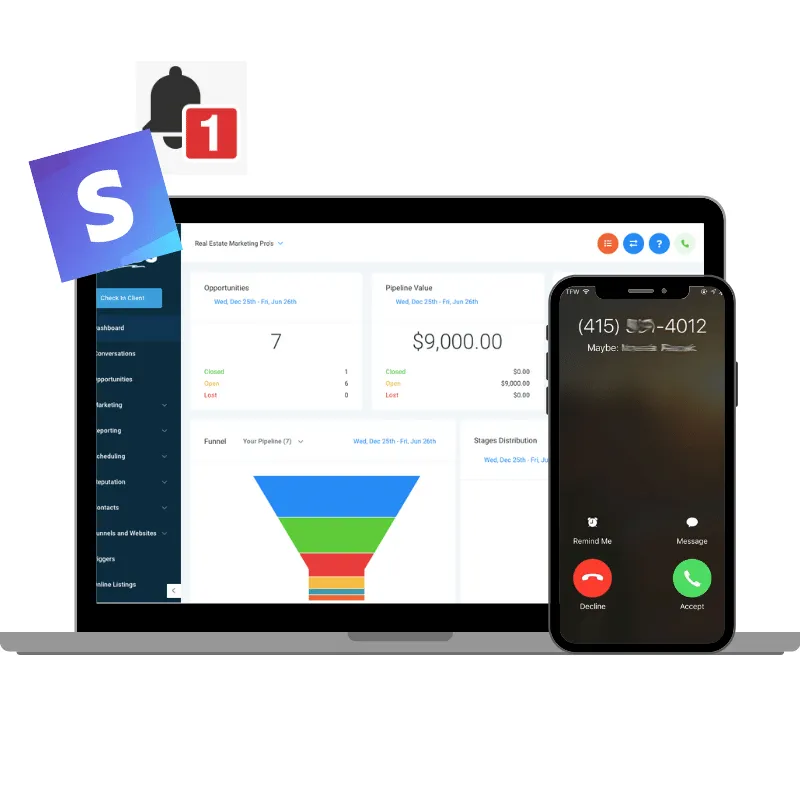
Price - $1,997 $97 (Limited Time Offer!)
Every time we generate you a new lead interested in your marketing services, your dashboard will automatically add the new lead into your CRM, and send the new lead an SMS, email, and even automatically call you to connect you right away!

Become More Focused, Be More Productive, Burn Out Less
Price - FREE training
From The Desk Of Wayne Veldsman (blogs)
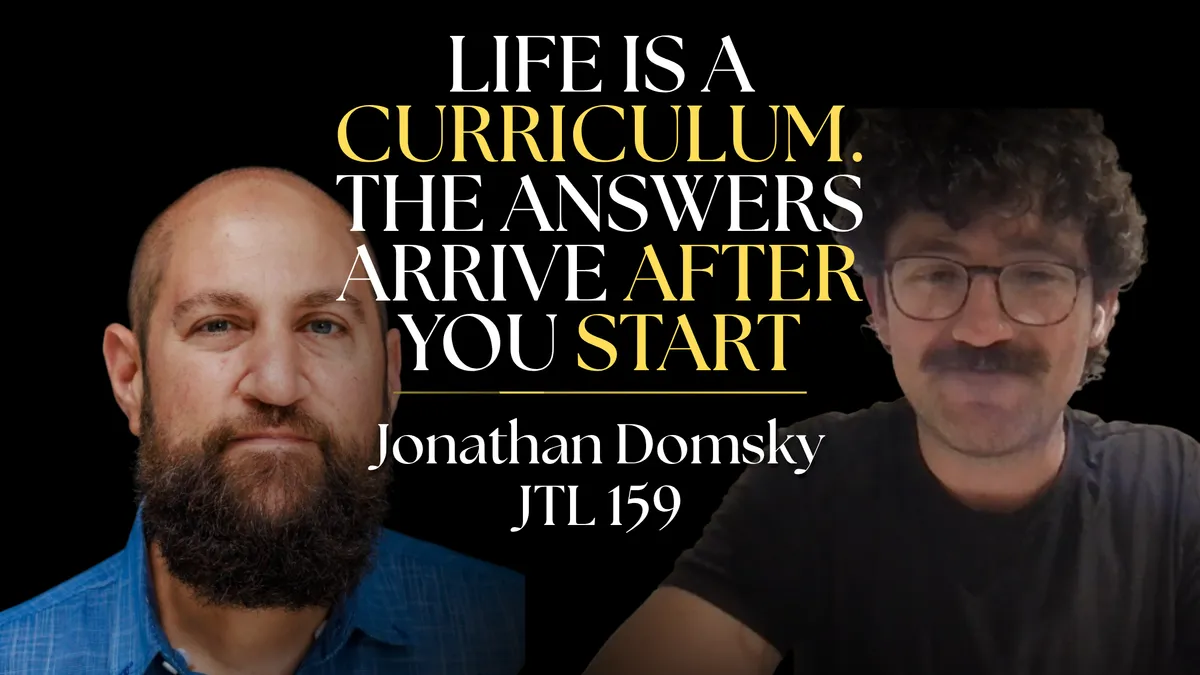
Find your purpose |Jonathan Domsly
Want to hear the full conversation? Listen to the Journey To Legacy podcast Episode 159 with Jonathan Domsky for even more insights and stories from his remarkable entrepreneurial journey.
How to Find Your Purpose: Life Is the Curriculum
Jonathan Domsky learned how to send an invoice after he sold his first product. He learned accounting when a bank asked for financial statements.
He didn’t have every business skill before becoming an entrepreneur. Each new responsibility showed him what he needed to learn next.
If you’re wondering how to find your purpose, his experience offers a practical starting point: take a manageable step, then pay attention to what it teaches you.
On Journey to Legacy, the Kidorable co-founder and business and life coach describes it this way:
“Life is a curriculum perfectly designed to work out your purpose.”
Start before you feel fully ready
Jonathan became an entrepreneur at 24 because he and his wife wanted more time together and the freedom to travel between Chicago and China. He had no family background in entrepreneurship. He learned through reading and conversations with people willing to share their experience.
His advice is to develop the basic skills your next step requires, then continue learning through doing. You can test an idea or take on a project while your longer-term direction is still taking shape.
Our guide to getting out of your comfort zone explores how a concrete commitment can help you begin.
Notice when your work feels meaningful
Jonathan built a successful children’s accessories company, but the highlight of his week was helping employees in meetings. He enjoyed seeing people arrive frustrated and leave with clarity.
Those moments revealed a pattern. Years later, during a walk beside Lake Michigan, he recognised that he wanted to become a full-time coach.
To explore your own direction, remember one specific moment when you felt fully engaged and useful. Write down what you were doing and whose situation improved because of it. Look for the ability behind the task, such as explaining something clearly or helping someone solve a problem.
Distinguish your strengths from your calling
Jonathan describes himself as excellent at data analysis. He could have pursued work that used that ability, but it didn’t connect with the purpose he wanted to serve.
His coaching framework considers your core values, your purpose and your “genius”: the activities you enjoy that create value for yourself and others. You can explore his approach through Untangled Coaching.
Name a value you want your work to express. Then consider which activities let you live that value while helping someone else.
If your job title has become your main source of identity, our article on career burnout and job identity offers another useful reflection.
Give your next step something to teach you
Choose one small experiment based on what you’ve noticed. Volunteer for a task that uses a strength you enjoy, or try a project connected to something you care about.
Afterwards, note what felt meaningful and what you’d want to change. Use that information to choose your next step.
Jonathan’s story shows how finding your purpose can involve recognising patterns in the life you’re already living. You can learn more about his journey on his About page.
Listen to Jonathan Domsky’s conversation with Wayne Veldsman on the Journey to Legacy podcast.
TRANSCRIPTS:
WAYNE:
In January twenty twenty, Jonathan Domsky took a walk to Lake Michigan that he'd taken hundreds of times before. But this time, when the water came into view, the ground seemed to shift beneath him. He had spent over two decades building a successful company, and in that moment yet, he knew it was not what he was born to do.
Welcome back to Journey to Legacy. I'm your host, Wayne Veldsman, and in this show, we interview leaders where they share their journeys behind their legacy and where we redefine what legacy really means. My guest today is Jonathan Domsky, a business and life coach and the founder of Untangled Coaching.
At twenty-four years old, Jonathan co-founded Kidorable, a children's accessory brand that's now sold in over five thousand stores and more than twenty countries. But after leading this company as the successful president, he's now stepped away to coach entrepreneurs to help them build businesses and lives that feel more meaningful and effortless while bringing joy to the forefront of their lives.
In this conversation, Jonathan shares his three-legged stool for finding your purpose. We talk about why giving without receiving is actually a form of selfishness, why profit fuels purpose, and why you will never truly feel ready to start. So why don't we just jump right on in?
JONATHAN:
Wayne, please tell me about you. What, what are you, what do you do when you're not hosting this beautiful podcast?
WAYNE:
I appreciate it, John. And first off, I love how you started your answer, right? That you're like, "Okay, well maybe the, the superficial things are, um..." That I, I primarily run a marketing agency that's focused on helping the nonprofit sector to raise more awareness, ultimately raise more funds make a bigger impact. so most of those are in education. Funny enough, I'm extra excited about our conversation here because I've had some business and life coach clients in the past that somewhat just came to me that, kind of, one who comes to mind specifically, almost forced me to take his money. Then he said, he was like, "No, Wayne, I know you don't believe it in yourself," but it's like, "But you are my life coach." And it's like, "
JONATHAN:
Yeah
WAYNE:
pay you so that we have consistent meetings."
JONATHAN:
Wow,
that's, that's cool. Yeah
WAYNE:
it's a direction, yeah. It's a direction that I, that I really love doing.
I think it's also, like, kind of what you just said. It's almost like who I am. but because it is so much of who I am, it's like I almost don't see it as a business. I'm like how can this, how can I charge anybody for this? It's like all I wanna do is talk to them about what their challenges are and,
JONATHAN:
I'll just throw one more thing out there and if you want, we can talk about this too. I work with a lot, I work with a lot of nonprofit leaders, and almost all of them feel exactly like you did. Like, they're mission-based people, which is beautiful, but they just sacrifice their own, well, financial wellbeing and often physical wellbeing in service of their mission.
And I just tell them, profit fuels purpose. Like, if you want... If you, if you wanna be doing this in 20 years, you know, if you wanna have an impact on a million people and not just 1,000 or like, you know, whatever their scale is, like, there needs to be a model where you're paid for what you do, and that your organization, like the more good you do, the more money you attract, and that you're not just always scrambling for dollars.
And it's, um... It, it just breaks my heart to see, like, really wonderful people who just wanna do so much good in the world and not taking care of themselves, and it does not serve their mission in the long term.
WAYNE:
Yeah
JONATHAN:
get over this idea that you have to sacrifice in order to do good in the world, and that, and not just give, but learn how to receive, it's, um, like
you'll, you'll, be so much more, you'll be so much more effective
WAYNE:
So, so much more. Um, and so because I have, of course, come across this as well, the same thing with all these nonprofit leaders where I'm just like, "Well, listen, if, you don't have the means to take care of your own family,
JONATHAN:
Ja
WAYNE:
if, you want to dedicate all of your time to this, but you can't because you have to now go divert your energy to something else to actually make [Source text incomplete.]
JONATHAN:
Yeah
WAYNE:
keep moving forward," it's like, well, how much more impactful could you be?
JONATHAN:
Yeah
WAYNE:
how do you actually convince somebody? How do you help somebody to change their mind to understand I can charge for this, this is something that somebody will actually pay for?
JONATHAN:
Yeah. So, so often it starts in here. You know, it starts, inside just their heads that a lot of the people who are drawn to this work, and beautifully so, at its root, many of them have this idea that they're not worthy, that they don't deserve to, enjoy life and to be financially secure and all the rest of it.
And what I try to show them is really how selfish it is to sacrifice. Because especially for these people who are just ... They're givers, right? Like, they, they , they've dedicated their life to making the world better in some way. They've touched hundreds, maybe thousands of people. The people who they've touched, they want to give back to them.
As human beings, we have this, this innate desire for reciprocity. And if you always give and you never receive, if you don't even like receiving a compliment, then there's an imbalance, and people don't like it. You know, I have, he, he sadly died of pancreatic cancer a couple years ago, but I had a dear friend who has enriched the lives of thousands of people.
He was not a nonprofit leader, but he was just a just an incredible human being. Enriched the lives of many organizations that he was a part of, just, like, making people just have fuller, happier lives. And also, he was a finance guy, so literally enriched the lives of hundreds of people, sometimes to the tune of a couple hundred million dollars.
Like, he was an exceptional human being. And when he was in a season of need, like, he wasn't willing to ask anyone for help. And I told him, like, "Everyone around you who you've touched, they want to give back to you, and they just don't know how. And if you would just tell them, like, 'This is what I need,' then they [Source text incomplete.]
and they'd be falling over themselves to do it. And what a gift that would be, to allow people to, in some small way, give back to you." So many of us are so focused on outward, achievement, outward giving, that we've lost touch with who we are and what we need and what other people need in order to feel that we're in a real relationship
WAYNE:
Two things that really stuck out to me there is the piece of, like, first off, realizing you're kind of in an imbalance
JONATHAN:
Yeah
WAYNE:
that, like, you feel. That it's like if you're just giving and not receiving,
JONATHAN:
Yeah
WAYNE:
is this imbalance, right? And it's tough to quantify, I guess, that it's, like, almost, like, on this, like, energetic level
JONATHAN:
Yeah
WAYNE:
is it this way?
But people can absolutely feel it. And then this other that's like a, a gift.
JONATHAN:
Yeah,
I no one likes cosmic bean counters. You know, just
like,
Well wait You know, I called you three times. You only called me twice. Like, I'm just gonna wait for you to call me." Like, no- nobody, nobody likes that. But
WAYNE:
bean counters
JONATHAN:
but even if there's a tremendous imbalance in, let's say, wealth, and you're someone's benefactor, like they should be able to give you a basket of fruit from their garden, and you should be able to receive it in a way that is gracious and doesn't make them feel like they shouldn't give you anything or they can't give you anything
WAYNE:
Yeah. Having to be open to receiving, right? Wanting people to feel like they can give you. You know, I recently had, had this situation where some new-ish friends, but also good friends at the same time, have this weird game going on where it's a constant almost battle to who is going to pay at a restaurant
JONATHAN:
Yeah
WAYNE:
the biggest one.
Let's just stick, stick there, right? And it's getting to this point where it's almost uncomfortable that it's like, and dare I say, I'm sure I'm part of the problem as well, right? Being able to look inwards. it's like they will not let me pay, and I don't understand why. And I'm like, "You're making this weird.
You're making this uncomfortable." And it feels like that's what part of this is, right? That's like you have to be willing to allow people to help you. You have to be open and ready to receive help or else other people won't be able to like connect with you as much
JONATHAN:
Well, and, and here's just a simple test. You know, it doesn't have to be just, like, who pays the bill at a restaurant. Wayne, what's a compliment that you like to receive?
WAYNE:
I've been receiving lots of comments on my curly hair. It's longer than I've ever had it before,
JONATHAN:
It's great. Yeah
WAYNE:
one. But better one is I, I really pride myself on my listening abilities, and so I love to receive a compliment if I'm a good listener
JONATHAN:
You know, I, um... So you know, we were talking earlier, I, I have my own podcast, The Pattern-Seeking Entrepreneur, um, conversations with founders whose minds don't work on default settings, and how thinking differently has helped them leverage success, where it's caused friction, what they're still figuring out.
And something I always ask in, uh, these conversations is, what's a compliment you like to receive? And these are very accomplished people. These are people who have started businesses. They're, um, you know, they, they have a certain level of worldly success. At least a third of the people I ask that question to say, like, "Oh, I hate receiving compliments."
And, you know, I'll ask them, like, a different question. Well, like, you know, whether or not other people recognize it, like, what's something that you just like about yourself? Something that you're, uh, you know, y- that you like to lead with in the world? But I, I find that, I find people's response to that question so fascinating.
You know, do they focus on, you know, something superficial like great hair, or do they focus on something that they've honed, like great listening skills? Or are they just really uncomfortable with the question because they just can't receive a damn compliment? And, uh, sometimes we'll spend two, three, or four minutes on it on the podcast just going, you know, investigating.
Like, tell me about that. Like, why don't you like receiving compliments? You know, one person said when he was, uh, a kid everyone told him how smart he was, and now he hates people telling him how smart he is because one, you know, like, this guy worked at Google. He met a lot of really smart people, you know, who are a lot smarter than him, so he just didn't felt like, you know, he was, like, in that super genius territory.
But he also felt it was a way to other him. Like, "Oh," like, "what a smart little kid." And that's, you know, that's what you say to kids who don't fit in, you know, that they're so smart. I just find that dynamic fascinating, when people can't own their genius. Not, not just IQ, but just, like, whatever that it is that that work that doesn't feel like work that creates effortless abundance.
WAYNE:
And so you mentioned, so in, in the podcast, right? The, the Pattern Seeking Entrepreneur podcast, right? It sounds like you're obviously, you're speaking with entrepreneurs. you think that that challenge of being able to receive a compliment, even being able to speak highly of oneself, right? Say [Source text incomplete.]
JONATHAN:
Yeah
WAYNE:
accomplished, say that you're doing a good job. that recurring in everyone? Is it primarily like a piece in entrepreneurs? Like, what are you finding?
JONATHAN:
I think it's a pretty universal trait that, I mean there's, there's lots of natural variation, but, like, a lot of people find it very challenging to sell themselves. And when you talk about, you know, people who are just starting out in business, the number one thing you need to do is be able to sell your product or service.
And a lot of people have this, I would say, erroneous, uh, view that somehow selling is manipulative, somehow selling is dirty, that it's just something that, um, you know, it's a necessary evil. They, they really wish they didn't have to do it. And it can be very challenging to just talk about yourself. It's much easier for me to say, like, what a amazing guy Wayne is and why everyone should work with him than maybe for you to say, like, you know, make the case for yourself.
WAYNE:
Works
JONATHAN:
But what I tell people is, "If you think sales is dirty, you're not doing it r- you're, you're not doing it right." And the way that I teach people, and I'm not a again, not a sales guru, but, uh, the thing that I start with with all the people I work with is to get really clear on who you are. Not who I think you should be, not who your mom thinks you should be, but, like, who you really are.
And who you are is a three-legged stool, and the easiest, most successful accessible leg of that stool is how your life should be lived. That's your core values. And when you live your life out of alignment with your core values, life's a slog. It just ... It's, it's exhausting to work against yourself. But when you work in full alignment with your core values, just life begins to feel effortless.
It begins to feel meaningful. It begins to feel joyful, even if you have a high degree of intense activity, which you should. It's, it's called a life of full engagement. And the challenge that I ask people, state your number one core value. So, you know, for me, my number one core value is loving kindness.
Lead with love, compassion, and acceptance, not with hurt or anger or fear. As applied to the challenge of sales, what is the fullest, most satisfying expression of your core value? And, you know, I'm a, I'm a business and life coach. I, I, I work with entrepreneurs. I, I help people have a life in business that feels more effortless, more meaningful, more joyous, to, like, really discover what they're born for and to, to find a clear path to get there.
And when I have, you know, a s- sales call, you know, when, when someone's referred to me or they, they, they come to me, that's what I do. I lead with love, compassion, and acceptance. I tell people, like, "I love the bruised and broken parts of people. I find them beautiful, and there is absolutely nothing you could say or do or be that would make me judge you."
That's a very powerful sales tool, to know that anything you say is confidential, and that I'm gonna love it. It's not manipulative. It's, it's the best expression of who I am
WAYNE:
no
JONATHAN:
Um, same thing with your purpose, like why your life should be lived. That's the next leg of that stool. And similarly with purpose, if you live your life out of alignment with your purpose, even if you're doing what you love, even if you're doing what you're great at, even if you're making a lot of money, it just feels empty.
And when you live your life in alignment with your purpose, you just feel like, "Yes, this was a great day. This is what life is supposed to be like." And your how and your why, they point a finger in the direction of your what. What were you born to do? What's your genius? And that's work that I really love to do with people, is help them discover what they were born for
WAYNE:
Look at also that what's your genius?
JONATHAN:
Yeah
WAYNE:
Interesting, right? What were you born to do? this three-legged stool is interesting, I actually haven't heard this. And so how would you define this? Is it the three-legged stool of how to get clear on who you are, how to discover oneself?
JONATHAN:
Yeah. So, you know, how do you discover what you're born for? And to me, it's answering this magic question: What could you joyfully devote your life to that leverages your genius in service of your purpose? What could you joyf- what could you joyfully devote your life to that leverages your genius in service of your purpose?
You know, especially for, you know, very capable people, even more so if they have a lot of resources, it's really hard to say, "Wayne, here's a blank piece of paper. Go nuts. Dream big.
WAYNE:
Yeah.
JONATHAN:
You know, whatever you want. Sky's the limit." Like, that's- it's too hard. There's a million things you could do. But with this narrow focus, with this lens, what could you joyfully devote your life to that leverages your genius in service of your purpose?
It's just so easy to come up with one, two, three, five things, any one of which would be awesome. There's a separate process to find the one. But, um, you know, how do you find your genius? And when I say genius, I'm not talk- I'm not saying that you're an Einstein or a da Vinci. Just my definition of genius is what do you joyfully, effortlessly do that creates abundance for yourself and those around you?
Even if it's one minute a year. Like, what are the things that you... Everyone has something, that there's been one minute at work over the last year where you just felt fully alive, that you were really contributing in an imp- impactful way. Now, that's backward-looking. Those are things that you've happened to stumble upon so far in your career.
But then ask the question: what are the skills, what are the abilities that power those genius activities? So, you know, what I happen to do for a living, I'm a business and life coach, but the... what are the genius skills and abilities? Well, I'm a really deep listener. I see patterns that I could extrapolate into possibility, uh, for your future.
I could listen to what people... I could observe what people are thinking and feeling in a way that they've never been able to articulate before, and just give it to them in this gift-wrapped box. Like, like, "Here's a sentence. Like, this is, uh, this is this thing that's been niggling at you for the last years."
I take complex, um, ideas, and I turn them into simple to understand, easy to follow processes. That, that's my genius. And then given my purpose, well, it's to untangle the clutter, obscuring our best, most authentic selves in service of a life and business that feels more effortless, more meaningful, more joyous.
Well, what can I joyfully devote my life to that leverages my genius and service my purpose? And there's a bunch of things. I could be a nurse. I could be a therapist. I could be a business and life coach. And it just... You know, I happen to be really excellent at data analysis.
WAYNE:
Mm.
JONATHAN:
Like I'm
kind of a wizard with Excel.
But doing data analysis does not check either of those boxes for genius or purpose. Like, I should not be an actuary. I think I'd be a really good actuary. I think I'd be a really good lawyer. I have those skills, but it's not my genius, and it's certainly not my purpose. So let's just not worry about those things
WAYNE:
I, I love these. They're really great examples, and I thank you for, like, bringing up exactly how this three-legged stool, right, of understanding and getting clear on who you are, right, relates to you personally, right? And that was really great examples for everybody. I wanna rewind back to this sales piece really quick, right?
'Cause I totally agree, like everybody's like, "Oh, it's, it's a necessary evil," right? It's like, well, why does it have to look and be evil, right, to do sales, right? Say,
JONATHAN:
Yeah
WAYNE:
if you truly want to help somebody, serve somebody. I'm, I'm blessed to be able to say, Jonathan, that I also have so much of this love and kindness that I wanna understand people, and, like, their challenges and problems in their life.
Like, I just wanna respect and, like, help, help them know that, like, everybody goes through these things. Like, let's tackle them head on and, like, turn them into strengths. But what I wanna get into here is how do you help people understand what they can sell in their genius, their purpose, what lights them up?
JONATHAN:
Yeah
WAYNE:
question selfishly for myself. It's like, it's effortless, right? What [Source text incomplete.]
JONATHAN:
Yeah
WAYNE:
my purpose? It's like, I love to do this. It's absolutely effortless. I can't imagine charging for it, 'cause it doesn't seem like work.
JONATHAN:
Yeah
WAYNE:
like, how do I almost not even just keep giving it away for free to everybody?
JONATHAN:
Yeah. Well, my answer to that, you know, we were talking about this earlier. You know, a lot of the people I work with are in the nonprofit space, and they're just beautiful human beings who are fulfilled by service, and they're mission-driven. They've dedicated themselves to their mission, and often, too often, they suffer greatly for it.
They don't pay themselves market wage. You know, they're not able to save for retirement. They're constantly dealing with drama in their own lives that comes from not giving themselves, um, nourishing themselves what they need, with their relationships often, with, uh, you know, certainly financially. And they are...
They, they burn out. And I tell them like, "If you wanna be doing this in another 20 years, or right now you're serving 1,000 people, but if you wanna serve 10,000 people, like, you need to nourish yourself." Profit fuels purpose. If you're not sustaining yourself, how are you gonna do this work? You can't give what you don't have.
And for, you know, so many of them, they're at a crossroads like, like, "Ah, this like I... You know, like I just..." They, you know, they have issues with their spouse 'cause they're not making enough money or they can't, can't afford to send their kid to school, to college. Or, you know, let alone, uh, you know, God forbid if they get sick or something like that.
But the people around you, like the people you're serving, they, they want you to thrive. No one wants you to be a penniless saint. Um, and, you know, most of us aren't saints, no matter how good we are. Like, we're not able to... We, we, we don't have this just enormous soul that we could just give indefinitely.
Like we, we could only... We can't give what we can't ha- what we can't give, we can't give what we don't have. And, uh, only by nourishing yourself, by taking a day off, by paying yourself, you know, enough to support your family and maybe to save a little bit for your future, can we do these things? And I would say again, look to your purpose.
Look to your, um, look to your, look to your values and ask, "How could it be more so?" And if there's not a business model behind it, it's always gonna be small
WAYNE:
Yeah, absolut- absolutely. You have to fuel your purpose, right? Profit fuels purpose. That way you can then impact more than just the 10 people or the 100 people right now.
JONATHAN:
Yeah. And just, again, to your specific question, you could give it away to 100 people. You can't give it away to 1,000 or 10,000 or a million because there's just not enough of you. You don't have enough resources to promote it, to, like, get people to even hear about it. Only if there's some sort of model behind it, business model behind it that makes it self-sustaining are you able to grow and have more of an impact
WAYNE:
Jonathan, I, I wanna take a c- couple steps back here.
JONATHAN:
Yeah
WAYNE:
course you're, you're a business and life coach through, uh, your company, Untangled Coaching. Take us back, 'cause I'm curious how, how you got here. You had told me before the episode started you've been an entrepreneur since you were 24 years old.
JONATHAN:
Yeah. I had a very unusual path to entrepreneurship. It was a love story. You know, in college I was, uh... I, I got degrees in economics and Chinese, and in 1994, the week that I graduated from college, I was on a plane with a one-way ticket to China, and I was expecting to have an adventure, and I did. I was expecting to perfect my Chinese.
That happened, too. In my 20s, I spoke Chinese far more than I spoke English. I was not expecting that three weeks in I would meet the woman I'd be married to for 29 years, but that's what happened. And we were just used to spending all of our time together. We had this epic love story for another time, for a different show.
Um, but when I came back to Chicago and she came to the US for the first time, we wanted to be able to keep spending all that time together. We wanted to be able to go back and forth to China, and it just seemed like it'd be really hard to do with a 9:00 to 5:00 job and two weeks of vacation a year. So we decided to become entrepreneurs.
I had no background in entrepreneurship. Both my parents are professionals. 100% of their friends are professionals. I was a junior in college before I knew that there were a million things to do in this world, and that being a doctor and lawyer were only two of them. But here we are, and, you know, I'm a learner.
I've, I've read over 3,000 books. I would, I would just talk to anybody who was willing to share their experience. And we started this children's accessories company, and, you know, it kind of took off. In a way, and if you had asked me, you know, 20, 25 years ago, am I passionate about my business? I would have told you yes.
If you had asked me, "Does selling fun, practical, unique children's accessories make my heart sing?" I'd say, "Well, you know, not really." Like, I, I learned how to be an efficient administrator, an inspiring manager, and, like, all these things that you need to, to grow in your business, but the highlight of my week was the 10 or so hours that I'd spend in meetings, 'cause I love meetings.
Good meetings. Those are the on- those are the only ones worth having. Um, good meetings are where problems are solved. Good meetings are where you get to help people accomplish their goals. It's where they come in frustrated and confused, and they leave with clarity and inspiration. And I designed my whole work life around meetings.
I ran our daily huddle, our daily customer service training meeting, weekly sales training meetings, weekly management accountability meetings, quarterly strategic planning meetings. We topped out at 28 employees. I had two-hour quarterly reviews with every single employee just 'cause I wanted to help them accomplish their goals inside and outside of work.
And after a couple decades, you know, the company was pretty highly optimized. I was working from home two hours a day. You know, I'd go into the office once a week for face-to-face meetings, and I was looking for some other way to express my entrepreneurial energies. And Wayne, it was a, it was a single day, it was January 31st, 2020, right before anyone, anyone heard what COVID was.
And Friday afternoon like any other, I took a walk from my home to Lake Michigan up the shoreline just to clear my head, process the week. Walk I've taken hundreds of times. But this day, as soon as the water came into view, I just... I felt the ground shift beneath my feet. It was like I was riding an avalanche.
I was literally unsteady. I needed to sit down. And I just realized in an instant I can't keep devoting my work life to something that doesn't light me up. I was born to be a coach. Like I, I love to learn. I'm great at teaching. The world needs people with clarity and a clear path on just who they are and where they're going and how to get there.
So I took a two-hour walk, cleared my head, came back, took to my-- talked to my wife and partner in the business about me exiting to become a full-time coach, and it is the best decision I've ever made. If it was, if it was merely work I was born for, and it is, it would just be a bright spot. But because what I do is I help people have lives and businesses that feel more effortless, more meaningful, more joyous.
So says me, those are the measures of success worth having in life. And especially that first year, there were like 50 times where I'd be on a call with a client talking about alignment with purpose and values and relationships and goal attainment and just overcoming constraints and removing obstacles in front of you, or moving the obstacles inside of you.
And I would just think to myself, "Oh, Jonathan, there's that part of your life that's out of alignment too. You should do something about that." And I did 50 times, and I just worked out all of my misalignments, all my fears, all my compulsions. They're, they're all gone, and I just had this elevated feeling of wellbeing ever since.
And that's what I try to give a taste of that to the people I work with
WAYNE:
This is so great, ho- honestly, Jonathan. It's such a pleasure for me. There's so many things that stick out just to, you know, how fortunate that right out of university you went on this trip, right? And it led to this, to meeting the love of your life and this realization of like, you know what, like, I wanna s- keep building this love story.
JONATHAN:
All I wanna do is spend time with her What's better than working out there with Soniya? Yeah
WAYNE:
Right? It's like, how do I create my own life strategically so that I can do that? that's how you found entrepreneurship, how entrepreneurship found you,
JONATHAN:
Yeah
WAYNE:
I, I absolutely love, love, love that. I'm gonna keep, just give a little summary or re- retreat or repeat back to where we are now.
But then you started, started the company. You grew it, I think, up to, like, 23 people. Like, I'm sure
JONATHAN:
About 28 people, a little over six million. Yeah
WAYNE:
succ-" You guys were doing about 6 million?
JONATHAN:
Yeah, yeah
WAYNE:
Wow. "Jonathan's a success. textbook," right? "Wow, he's got the ha- happiest, best life ever." then all of a sudden you feel like the, literally you said the ground shaking beneath you of like, "I am in misalignment.
I am not happy." sure... And then you made this huge pivot to find the alignment that you realized, like, you know what? I love the meetings. I love interacting with people. I love hearing stories, and, uh, and led you to where you are, are today. And you had mentioned these measures of success. What I'm curious about is a f- a few different things we'll bounce around, is that a lot of people talk about purpose, right?
And it's like, "Oh, what's my purpose in, in life?
WAYNE:
back at 24, did you chase a different purpose? Can purpose change? Like, where do we start?
JONATHAN:
Yeah. It, it's such a good question, Wayne, and there's, there's a few different answers to it. So when I started my company, I had goals, but goals are very different than purpose. And, you know, especially in a company, you know, if the founder has a goal like, "I wanna retire by the time I'm 40," or, "I wanna grow this to $100 million," nobody in your company cares whether you retire by the time you're 40.
Like, that's not gonna get people to like, "You know, I wanna, I just wanna work harder so that Wayne could retire a little bit earlier." Like, nobody cares about that. The best goals for your company are rooted in purpose. Now, I wasn't able to articulate all this when we started, but we were always a very mission, purpose-driven company.
And the purpose of our company when we started... We had, we, we actually had two different articulations of it, but the first was the company is a vehicle- For personal and professional growth for everyone who works with us. The company's a vehicle for personal and professional growth for everyone who works with us.
It just never made any sense to me that, like, I would sacrifice for the good of the company. Like, the company is here to serve. It's here to serve the... Or like me, it's here to serve our employees. Like, we're all about growth. You know, I talked about all those meetings. Like, half those meetings were just about how to help people grow, you know, personally and professionally.
And we had vanishingly small attrition. Like almost no, almost nobody quit our company. We ... You know, many people felt more at home in our company than they did in their own, with their own families.
WAYNE:
Wow!
JONATHAN:
We were very much a values and mission, uh, driven company. And very early on, we ... You know, I discovered, uh, how to find your company core values and how to find your company purpose as distinct from your, you know, from your own personal purpose.
But as entrepreneurs, you know, our values, our purpose, they radiate from us like body heat. So even if ... When, when you're small, when you have between two and seven employees, even if you haven't been able to articulate your purpose, even if you haven't been able to articulate your values, like everybody kind of sort of knows what they are.
Because, like, the company is just an embodiment of you. And, um, again, you may or may not be aligned with your purpose or values, but people, people know what they are. So when I started, again, I had goals, but it was two or three, four years in before I discovered all these tools that really allow a company to scale.
And a l- and for s- a lot of people feel like, well, like values, that just seems like such a luxury. Not if you wanna grow. Because, again, when you're small enough that you're making all the decisions, without articulating them you know what your own values are. But nobody needs their manager to say, "Hey, wait.
Should, should we make a million dollars on this deal or should we make a thousand dollars?" Like, nobody needs help,
you know making decision. Nobody needs help saying like, "Hey, should I, should I get a hug or should I burn my fingers?" Like, these, these things yield very easily to analytical logic. But what about you ship something, your customer needs it the next day, you do everything right and UPS loses the package?
What are you supposed to do in that situation? That has nothing to do with analytical logic. That is a values-based question. And if you want your frontline staff, your customer service staff, your sales staff, you know, your every, you know, people in the warehouse, anywhere else, if you want them making the s- the same decisions that you would make, they need to know what your values are.
You need to train on those values. You need to have incentives and rewards based on those values. And if you do a good job on that, you could have a thousand people and your frontline staff four levels below you, they'll make the same decisions you will. Core values are the key to scaling a company
WAYNE:
Wow. Yeah. I love that, right? Bringing those values into the company, right? And probably defining them slightly different than your own personal values
JONATHAN:
necessarily values, I, I don't mean just like be a good person. Like in this, you know, example that I gave, which in our old company happened all the time, there's no objective right or wrong answer to that. Like, should the company lose money on that order in order to serve the customer?
Maybe. It depends what your values are. There's no, there's no obvious right answer to that. Now, we had an answer, um, because one of our core values was to have the courage to do what's right for ourselves, the company, and our customers, and we believe that putting that customer relationship first, uh, mattered.
Um, but um, you know, another company with just as much integrity could have come on the opposite side of that question
WAYNE:
So let me, let me take, take a step back and sort of ask this a-again, 'cause it was great to hear that you had these goals at the beginning, right, when you started
JONATHAN:
Yeah
WAYNE:
And um, uh, and, and you can dive a little bit deeper as far as just like explaining exactly what it is, what you guys did.
JONATHAN:
Ja
WAYNE:
even though you didn't already exactly know what your purpose in life was or aligning, right?
JONATHAN:
Yeah. I didn't have the vocabulary for it
WAYNE:
journey to like, you didn't have the vocab for it, right?
JONATHAN:
The purpose was still there. Is- the purpose was always there, I just didn't know what it was. And the power of articulating it is then it, then it becomes a guide, not just something that subconsciously drives you, but that you could act- actively shape and say like, "Oh," like, "What would be a fuller expression of my purpose in this area of my company?"
WAYNE:
That is very int- interesting, right? It's like having it be part of your subconscious versus articulating and defining it and then helping it to drive you and pr- provide the direction. But for people that are struggling to get started, they want to become an entrepreneur, right? All they know is nine-to-five corporate life, right, working for somebody else.
How do we get them to move forward without saying like, "Well, I don't know if this is my purpose"? Like, where do [Source text incomplete.]
JONATHAN:
Yeah. Um, so first I just wanna share a quote by, uh, the German philosopher and writer: "Whatever you can do or dream you can, begin it. Boldness has genius, power, and magic in it." Whatever you can do or dream you can, begin it. Boldness has genius, power, and magic in it. So many people are waiting to start their business until they have all their ducks in a row, and they've figured everything out, and they're 100% prepared.
And if that is your path, you will never start your business. You'll never know everything you need to get started. And the difference... You know, I was, I was in a forum group with, uh, a, a really talented young woman. She was 29 years old. And she, um, was promoted to be president of her company. And this was a significant size company.
This was like a $50 million company. And the owner pretty much just left. Like, he, he retired to the South of France or something, and he's like, "Here's the keys. Run the business." And obviously she's incredibly capable or he wouldn't have done it. But she, you know, she was frustrated. She said, "I, I just don't know what to do.
Like, he didn't give- He's not giving me any direction. I just don't know what to do." And that's the difference between an entrepreneur and someone who works in a corporate environment, is when you have a job, your boss tells you what to do. And if you have a question, you ask your boss. No one I know who started their own business would've been hired to start their own business when they started it.
Like, none of us were qualified. But the job description of the entrepreneur is to figure it out. And you know, I was, I was coaching a young person, again, I think he's 27 or something, who was starting his own business. And he's like, "What should I, what should I learn? What should I study before I start?" And I mean, of course, like, like, know what you're gonna do and, like, have your basic skills.
But beyond that, you know, I learned how to invoice the day that I had sold my first product, and I had to figure out how to do an invoice. You know, I learned accounting when I got my first bank-- when I was applying for my first bank loan, and the bank asked for financials. Um, life is a curriculum perfectly designed to work out your purpose.
Just, like, live your life, run your business, and it will tell you what you need to learn. So just start it and figure it out as you go. You'll, you'll never start if you wait until you're ready.
WAYNE:
That's beautiful. That's beautiful. Jonathan, you, um, thanks for, for reading that quote and, uh, and now you ended there with one that I think people will read in the future. said li- "Life is a curriculum perfectly designed to ultimately help you find your purpose."
JONATHAN:
Pay attention.
WAYNE:
impactful.
JONATHAN:
And life will keep teaching you that lesson until you learn it. Don't worry. If you miss it this time, it'll tell you in another, in another month
WAYNE:
That's great. That's great. But overall, so that message was, right, like, you've heard this before, but you're never going to be ready. You're never going to be ready, right? Start, and it will help you to find your way, right? Learn along the way, and you're going to make pivots. You're going to make changes. that's ultimately how, and with my belief, is how you find your true purpose, right? Good. Start with, with a, a goal, right? If you wanna define it just differently. You have a goal, right? You wanna spend more time with your, with your loved ones. Ace that, right?
JONATHAN:
And that's the beauty of entrepreneurship. That's the beauty of entrepreneurship is like almost no matter what your purpose is, almost no matter what your goal is, well, just could you build a business around that? And then you could do it as opposed to figuring, you know, finding a way to fit it in, you know, in your free time or something like that
WAYNE:
Absolutely. Jonathan, I'm curious about one more thing that you said, and I know we're already past time, as I told you from the beg- beginning what was gonna probably happen. you, you mentioned, you said measures of success earlier. I'm sure this is something that you speak with a lot of your clients about, right?
Because people are curious, like, "Well, how do I know when I'm successful, that I'm a success," right? "Well, I'm the CEO a, you know, $40 million company, but I'm not happy. Like, I don't feel successful," right?
JONATHAN:
Yeah
WAYNE:
to me a little bit about what are these measures of success. Maybe what are the societal measures, and then what are you seeing as far as maybe people should start to redefine.
JONATHAN:
You know it's it's a really profound question, and it's the explanation of so much unhappiness in our world. So first of all, society. Like, what do we measure as success? You know, if you're the smartest kid in class, you're smart, but you're adult compared to the geniuses of our day. You know, if you're the richest guy in town, like you're financially successful.
But we're all poor, you know, compared to, you know, Bill Gates. You know, so like it's ... We, we compare ourselves to others, and then we say like, "Oh yeah, we're doing all right." You know, show me your friends, you know, I'll show you your future. But, you know, if I could give a metaphysical answer to this question, Wayne.
You know, desire is what makes life worth living. Like, why would you ever play a game if you ... Like, why would you ever play basketball if you didn't care if the ball went into the net? You know, it is a ki- it's kind of a dumb game if you don't care if the ball goes in. Desire is what makes life worth living, but there's two kinds of desire.
There's desire that's grasping. Like I want, I want more money, and more power, and more sex, more prestige. Like all, all these things that, you know, motivate people in life. There's nothing wrong with having goals and loving those goals and trying to accomplish those goals. I mean, yeah, why shouldn't you have a nice car and a beautiful spouse and all this great stuff?
But desire that's grasping, it separates us from other human beings. It turns them into vehicles to get what we want, or obstacles, or thwarting us, or if they can't help us or hurt us, they're irrelevancies. They don't matter at all. It distorts our view of reality. And the joke is that you work so hard, it's a slog.
You finally get to whatever material goal you wanted. You achieve it. You're happy for five minutes. Now you go on to the next goal, and there's just no lasting happiness to it. Not even lasting. Like it doesn't last 15 minutes for most people. In contrast, desire that flows from your purpose, it's naturally energizing, it's naturally joyful, it's meaningful every step of this journey, and it brings out the best of us, and it connects us to other people, and the joy is in the doing.
So, you know, again, I said, you know, my purpose is to untangle the clutter, obscuring our best, most authentic selves, so that we see a clear path to a life and business that feels more effortless, more meaningful, more joyous. What you and I are doing right now, this conversation, wait, I could do this all day.
You know, I, I feel more energized after a call like this than I did when we started. I feel more energized after a call with a client where I get to just permanently remove some irritant that's just-- this has been bugging them for years, that I get to help them just be more aligned with their purpose, with their genius.
And the funny thing is that when we dwell in our genius, in service of our purpose, because we have more energy, because it's joyful, because it's meaningful, we have more of an impact. And frankly, we tend to make more money when that happens too, because everybody's attracted to that. Our employees are attracted to that, our customers are attracted to that.
Now, of course, you need the nuts and bolts skills and business model and stuff to, uh, you know, to make it work. Uh, it's not like that stuff doesn't matter. Of course it does. But, uh- Action that flows from your purpose with a good model behind it, you know, powering it, is so much more likely to give you material success and everything that you want in this world than if you're merely chasing metrics
WAYNE:
Absolutely. That insight on desire is interesting, right? I've already thought about it that way, and your basketball analogy as well, right? It's like I desire the ball to go in the net.
JONATHAN:
Yeah, which is separate from winning or losing. Like, if your, if your day is ruined, if your day is ruined because you lose a basketball game, like, it's time, it's time to grow up. And you know... But at that moment, you know, when the ball leaves your hand, like, of course you should want it to go in. And then that's where these ideas of non-attachment kick in.
Like, the second it leaves your hand, then yeah, observe what happened, and, like, how could you do it differently or better to achieve your goals next time? Um, you know, without attachment to the specific result. But in the moment, like, yeah, life of full engagement means that you want something. You know,
WAYNE:
Yeah
JONATHAN:
even Jesus and the Buddha and all these great teachers, like, they wanted you to learn their teachings, otherwise they would've just been happy in a, on a mountaintop and you would've never heard of them.
WAYNE:
Jonathan, my friend, thank you so much. Like, I could have this conversation the entire day as well. Like, talk about energizing. Um, I would absolutely love, love, love to have you back again. Um, but before we sign off, I always like to talk just quick about legacy, right? Legacy is a definition and a term that differs from person to person. And so I'm curious for you, like what does legacy mean?
JONATHAN:
Yeah.
WAYNE:
on this world? [Source text incomplete.]
JONATHAN:
So I'd like to answer just with a very quick exercise, Wayne. I want you to close your eyes. I want you to think about your parents and what are their names and what they do for a living. See if you can picture their faces. And now think about your grandparents on your mother's side and say their names in, in your mind.
See their faces. What do they do for a living? See your father's parents. See their faces, their names, what they do for a living. And now your grandparents' parents, all eight of them. What are their names? What do they do for a living? What do they look like? Now, if you're like most people, maybe you know one of your great-grandparents.
In just three generations, even your own family will forget who you are. So all the things that we normally think about as legacy, you know, the money I'm gonna leave to my children, the business that I want my kids to take over. Like, unless you're the King of England, no one's gonna know about this in just three generations.
So what is our legacy? Our legacy is what's happening right now and how we impact and influence the people around us, and that, yes, in 100 years, maybe our great-great-grandchildren, if we're lucky, they'll have that boldness that led us to start our business. Maybe they'll have the kindness that, uh, convinces them to, uh, you know, to give to someone who's in need.
That's what our legacy is. Our legacy is right now and the impact that we're having on the people we care about
WAYNE:
Well said. Jonathan, my friend, I could not agree with you more. Uh, what a impactful, simple exercise also, right? Like in our own families, three generations, the majority are forgotten, right? the rest of the world, you can pretty much guarantee will be forgotten as well, unless you are the 0.0001%, Um, but how we impact people today, How we interact with people today, how we help people to grow better today, is truly, truly legacy. Jonathan, for people that want to learn more about you, 'cause I'm sure everybody listening here today wants to, where's the best place for them to go to?
JONATHAN:
Yeah, the easiest place is to go to my website, www.untangled-coaching.com. Don't forget the dash. Or you can find me on LinkedIn. Just, uh, search for Jonathan Domsky. I'm the only one
WAYNE:
My pleasure. Thanks so much once again
JONATHAN:
Wayne, there's nowhere else I'd rather be. Love the good that you do in the world
WAYNE:
And that's a wrap. Thank you, Jonathan, for such an energizing conversation. Uh, honestly, I'm gonna go back and listen to this one myself. But here are three of my biggest takeaways for you to carry with you. First, profit fuels purpose. If you give everything away and never take care of yourself, your impact will stay small.
Build a model that pays you for what you do so that you can serve thousands instead of only a few. And learn to receive because the people that you have helped want to give back to you too. Second, find your values, your purpose, and your genius. Jonathan shared a magic question: What could you joyfully devote your life to that uses your genius in service of your purpose?
His simple definition of genius is what you joyfully and effortlessly do that creates abundance for you and the people around you. And third, start before you feel ready. No one is fully prepared to run a business, and as Jonathan put it, life is a curriculum designed to work out your purpose. So just begin and learn as you go.
When I asked Jonathan about legacy, he had me picture my grandparents and my great-great-grandparents. He reminded us that within just three generations, most families forget who we even were. So his answer is that our legacy is what we do right now and how we impact the people that we care about. That is something every one of us can act on today.
To connect with Jonathan, please visit untangled-coaching.com, and don't forget the dash. You can also find him on LinkedIn, and he offers a free clarity call for entrepreneurs who want to get started today. Links are all in the show notes. And for more episodes and to join our community, visit journeytolegacy.org.
Until next time, keep building your legacy.

The 3-Step Strategy To Growing Businesses Digitally
Are you an Agency Owner, Service Provider, or Entrepreneur who sells online and want your pipeline filled with 300+ appointments with your idea client every single month? Are your SERIOUS about growing your business and want to work with Wayne 1-on-1?
Launch Into Digital Entrepreneurship is a course and coaching program specifically designed to take agency owners and online service providers from manual prospecting and wondering if this is ever going to work out, to having a very specific system in place which is going to allow you to generate 20 to 30 booked appointments every single day!
You're going to get a step by step process to building out your prospecting, sales and fulfilment system, and building your sales team so that you can close clients while stepping away from your sales process.
Price - $1,997 $97 (Limited Time Offer!)
Every time we generate you a new lead interested in your marketing services, your dashboard will automatically add the new lead into your CRM, and send the new lead an SMS, email, and even automatically call you to connect you right away!
Become More Focused, Be More Productive, Burn Out Less
Price - FREE Training
From The Desk Of Wayne Veldsman (blogs)
Find your purpose |Jonathan Domsly
Want to hear the full conversation? Listen to the Journey To Legacy podcast Episode 159 with Jonathan Domsky for even more insights and stories from his remarkable entrepreneurial journey.
How to Find Your Purpose: Life Is the Curriculum
Jonathan Domsky learned how to send an invoice after he sold his first product. He learned accounting when a bank asked for financial statements.
He didn’t have every business skill before becoming an entrepreneur. Each new responsibility showed him what he needed to learn next.
If you’re wondering how to find your purpose, his experience offers a practical starting point: take a manageable step, then pay attention to what it teaches you.
On Journey to Legacy, the Kidorable co-founder and business and life coach describes it this way:
“Life is a curriculum perfectly designed to work out your purpose.”
Start before you feel fully ready
Jonathan became an entrepreneur at 24 because he and his wife wanted more time together and the freedom to travel between Chicago and China. He had no family background in entrepreneurship. He learned through reading and conversations with people willing to share their experience.
His advice is to develop the basic skills your next step requires, then continue learning through doing. You can test an idea or take on a project while your longer-term direction is still taking shape.
Our guide to getting out of your comfort zone explores how a concrete commitment can help you begin.
Notice when your work feels meaningful
Jonathan built a successful children’s accessories company, but the highlight of his week was helping employees in meetings. He enjoyed seeing people arrive frustrated and leave with clarity.
Those moments revealed a pattern. Years later, during a walk beside Lake Michigan, he recognised that he wanted to become a full-time coach.
To explore your own direction, remember one specific moment when you felt fully engaged and useful. Write down what you were doing and whose situation improved because of it. Look for the ability behind the task, such as explaining something clearly or helping someone solve a problem.
Distinguish your strengths from your calling
Jonathan describes himself as excellent at data analysis. He could have pursued work that used that ability, but it didn’t connect with the purpose he wanted to serve.
His coaching framework considers your core values, your purpose and your “genius”: the activities you enjoy that create value for yourself and others. You can explore his approach through Untangled Coaching.
Name a value you want your work to express. Then consider which activities let you live that value while helping someone else.
If your job title has become your main source of identity, our article on career burnout and job identity offers another useful reflection.
Give your next step something to teach you
Choose one small experiment based on what you’ve noticed. Volunteer for a task that uses a strength you enjoy, or try a project connected to something you care about.
Afterwards, note what felt meaningful and what you’d want to change. Use that information to choose your next step.
Jonathan’s story shows how finding your purpose can involve recognising patterns in the life you’re already living. You can learn more about his journey on his About page.
Listen to Jonathan Domsky’s conversation with Wayne Veldsman on the Journey to Legacy podcast.
TRANSCRIPTS:
WAYNE:
In January twenty twenty, Jonathan Domsky took a walk to Lake Michigan that he'd taken hundreds of times before. But this time, when the water came into view, the ground seemed to shift beneath him. He had spent over two decades building a successful company, and in that moment yet, he knew it was not what he was born to do.
Welcome back to Journey to Legacy. I'm your host, Wayne Veldsman, and in this show, we interview leaders where they share their journeys behind their legacy and where we redefine what legacy really means. My guest today is Jonathan Domsky, a business and life coach and the founder of Untangled Coaching.
At twenty-four years old, Jonathan co-founded Kidorable, a children's accessory brand that's now sold in over five thousand stores and more than twenty countries. But after leading this company as the successful president, he's now stepped away to coach entrepreneurs to help them build businesses and lives that feel more meaningful and effortless while bringing joy to the forefront of their lives.
In this conversation, Jonathan shares his three-legged stool for finding your purpose. We talk about why giving without receiving is actually a form of selfishness, why profit fuels purpose, and why you will never truly feel ready to start. So why don't we just jump right on in?
JONATHAN:
Wayne, please tell me about you. What, what are you, what do you do when you're not hosting this beautiful podcast?
WAYNE:
I appreciate it, John. And first off, I love how you started your answer, right? That you're like, "Okay, well maybe the, the superficial things are, um..." That I, I primarily run a marketing agency that's focused on helping the nonprofit sector to raise more awareness, ultimately raise more funds make a bigger impact. so most of those are in education. Funny enough, I'm extra excited about our conversation here because I've had some business and life coach clients in the past that somewhat just came to me that, kind of, one who comes to mind specifically, almost forced me to take his money. Then he said, he was like, "No, Wayne, I know you don't believe it in yourself," but it's like, "But you are my life coach." And it's like, "
JONATHAN:
Yeah
WAYNE:
pay you so that we have consistent meetings."
JONATHAN:
Wow,
that's, that's cool. Yeah
WAYNE:
it's a direction, yeah. It's a direction that I, that I really love doing.
I think it's also, like, kind of what you just said. It's almost like who I am. but because it is so much of who I am, it's like I almost don't see it as a business. I'm like how can this, how can I charge anybody for this? It's like all I wanna do is talk to them about what their challenges are and,
JONATHAN:
I'll just throw one more thing out there and if you want, we can talk about this too. I work with a lot, I work with a lot of nonprofit leaders, and almost all of them feel exactly like you did. Like, they're mission-based people, which is beautiful, but they just sacrifice their own, well, financial wellbeing and often physical wellbeing in service of their mission.
And I just tell them, profit fuels purpose. Like, if you want... If you, if you wanna be doing this in 20 years, you know, if you wanna have an impact on a million people and not just 1,000 or like, you know, whatever their scale is, like, there needs to be a model where you're paid for what you do, and that your organization, like the more good you do, the more money you attract, and that you're not just always scrambling for dollars.
And it's, um... It, it just breaks my heart to see, like, really wonderful people who just wanna do so much good in the world and not taking care of themselves, and it does not serve their mission in the long term.
WAYNE:
Yeah
JONATHAN:
get over this idea that you have to sacrifice in order to do good in the world, and that, and not just give, but learn how to receive, it's, um, like
you'll, you'll, be so much more, you'll be so much more effective
WAYNE:
So, so much more. Um, and so because I have, of course, come across this as well, the same thing with all these nonprofit leaders where I'm just like, "Well, listen, if, you don't have the means to take care of your own family,
JONATHAN:
Ja
WAYNE:
if, you want to dedicate all of your time to this, but you can't because you have to now go divert your energy to something else to actually make [Source text incomplete.]
JONATHAN:
Yeah
WAYNE:
keep moving forward," it's like, well, how much more impactful could you be?
JONATHAN:
Yeah
WAYNE:
how do you actually convince somebody? How do you help somebody to change their mind to understand I can charge for this, this is something that somebody will actually pay for?
JONATHAN:
Yeah. So, so often it starts in here. You know, it starts, inside just their heads that a lot of the people who are drawn to this work, and beautifully so, at its root, many of them have this idea that they're not worthy, that they don't deserve to, enjoy life and to be financially secure and all the rest of it.
And what I try to show them is really how selfish it is to sacrifice. Because especially for these people who are just ... They're givers, right? Like, they, they , they've dedicated their life to making the world better in some way. They've touched hundreds, maybe thousands of people. The people who they've touched, they want to give back to them.
As human beings, we have this, this innate desire for reciprocity. And if you always give and you never receive, if you don't even like receiving a compliment, then there's an imbalance, and people don't like it. You know, I have, he, he sadly died of pancreatic cancer a couple years ago, but I had a dear friend who has enriched the lives of thousands of people.
He was not a nonprofit leader, but he was just a just an incredible human being. Enriched the lives of many organizations that he was a part of, just, like, making people just have fuller, happier lives. And also, he was a finance guy, so literally enriched the lives of hundreds of people, sometimes to the tune of a couple hundred million dollars.
Like, he was an exceptional human being. And when he was in a season of need, like, he wasn't willing to ask anyone for help. And I told him, like, "Everyone around you who you've touched, they want to give back to you, and they just don't know how. And if you would just tell them, like, 'This is what I need,' then they [Source text incomplete.]
and they'd be falling over themselves to do it. And what a gift that would be, to allow people to, in some small way, give back to you." So many of us are so focused on outward, achievement, outward giving, that we've lost touch with who we are and what we need and what other people need in order to feel that we're in a real relationship
WAYNE:
Two things that really stuck out to me there is the piece of, like, first off, realizing you're kind of in an imbalance
JONATHAN:
Yeah
WAYNE:
that, like, you feel. That it's like if you're just giving and not receiving,
JONATHAN:
Yeah
WAYNE:
is this imbalance, right? And it's tough to quantify, I guess, that it's, like, almost, like, on this, like, energetic level
JONATHAN:
Yeah
WAYNE:
is it this way?
But people can absolutely feel it. And then this other that's like a, a gift.
JONATHAN:
Yeah,
I no one likes cosmic bean counters. You know, just
like,
Well wait You know, I called you three times. You only called me twice. Like, I'm just gonna wait for you to call me." Like, no- nobody, nobody likes that. But
WAYNE:
bean counters
JONATHAN:
but even if there's a tremendous imbalance in, let's say, wealth, and you're someone's benefactor, like they should be able to give you a basket of fruit from their garden, and you should be able to receive it in a way that is gracious and doesn't make them feel like they shouldn't give you anything or they can't give you anything
WAYNE:
Yeah. Having to be open to receiving, right? Wanting people to feel like they can give you. You know, I recently had, had this situation where some new-ish friends, but also good friends at the same time, have this weird game going on where it's a constant almost battle to who is going to pay at a restaurant
JONATHAN:
Yeah
WAYNE:
the biggest one.
Let's just stick, stick there, right? And it's getting to this point where it's almost uncomfortable that it's like, and dare I say, I'm sure I'm part of the problem as well, right? Being able to look inwards. it's like they will not let me pay, and I don't understand why. And I'm like, "You're making this weird.
You're making this uncomfortable." And it feels like that's what part of this is, right? That's like you have to be willing to allow people to help you. You have to be open and ready to receive help or else other people won't be able to like connect with you as much
JONATHAN:
Well, and, and here's just a simple test. You know, it doesn't have to be just, like, who pays the bill at a restaurant. Wayne, what's a compliment that you like to receive?
WAYNE:
I've been receiving lots of comments on my curly hair. It's longer than I've ever had it before,
JONATHAN:
It's great. Yeah
WAYNE:
one. But better one is I, I really pride myself on my listening abilities, and so I love to receive a compliment if I'm a good listener
JONATHAN:
You know, I, um... So you know, we were talking earlier, I, I have my own podcast, The Pattern-Seeking Entrepreneur, um, conversations with founders whose minds don't work on default settings, and how thinking differently has helped them leverage success, where it's caused friction, what they're still figuring out.
And something I always ask in, uh, these conversations is, what's a compliment you like to receive? And these are very accomplished people. These are people who have started businesses. They're, um, you know, they, they have a certain level of worldly success. At least a third of the people I ask that question to say, like, "Oh, I hate receiving compliments."
And, you know, I'll ask them, like, a different question. Well, like, you know, whether or not other people recognize it, like, what's something that you just like about yourself? Something that you're, uh, you know, y- that you like to lead with in the world? But I, I find that, I find people's response to that question so fascinating.
You know, do they focus on, you know, something superficial like great hair, or do they focus on something that they've honed, like great listening skills? Or are they just really uncomfortable with the question because they just can't receive a damn compliment? And, uh, sometimes we'll spend two, three, or four minutes on it on the podcast just going, you know, investigating.
Like, tell me about that. Like, why don't you like receiving compliments? You know, one person said when he was, uh, a kid everyone told him how smart he was, and now he hates people telling him how smart he is because one, you know, like, this guy worked at Google. He met a lot of really smart people, you know, who are a lot smarter than him, so he just didn't felt like, you know, he was, like, in that super genius territory.
But he also felt it was a way to other him. Like, "Oh," like, "what a smart little kid." And that's, you know, that's what you say to kids who don't fit in, you know, that they're so smart. I just find that dynamic fascinating, when people can't own their genius. Not, not just IQ, but just, like, whatever that it is that that work that doesn't feel like work that creates effortless abundance.
WAYNE:
And so you mentioned, so in, in the podcast, right? The, the Pattern Seeking Entrepreneur podcast, right? It sounds like you're obviously, you're speaking with entrepreneurs. you think that that challenge of being able to receive a compliment, even being able to speak highly of oneself, right? Say [Source text incomplete.]
JONATHAN:
Yeah
WAYNE:
accomplished, say that you're doing a good job. that recurring in everyone? Is it primarily like a piece in entrepreneurs? Like, what are you finding?
JONATHAN:
I think it's a pretty universal trait that, I mean there's, there's lots of natural variation, but, like, a lot of people find it very challenging to sell themselves. And when you talk about, you know, people who are just starting out in business, the number one thing you need to do is be able to sell your product or service.
And a lot of people have this, I would say, erroneous, uh, view that somehow selling is manipulative, somehow selling is dirty, that it's just something that, um, you know, it's a necessary evil. They, they really wish they didn't have to do it. And it can be very challenging to just talk about yourself. It's much easier for me to say, like, what a amazing guy Wayne is and why everyone should work with him than maybe for you to say, like, you know, make the case for yourself.
WAYNE:
Works
JONATHAN:
But what I tell people is, "If you think sales is dirty, you're not doing it r- you're, you're not doing it right." And the way that I teach people, and I'm not a again, not a sales guru, but, uh, the thing that I start with with all the people I work with is to get really clear on who you are. Not who I think you should be, not who your mom thinks you should be, but, like, who you really are.
And who you are is a three-legged stool, and the easiest, most successful accessible leg of that stool is how your life should be lived. That's your core values. And when you live your life out of alignment with your core values, life's a slog. It just ... It's, it's exhausting to work against yourself. But when you work in full alignment with your core values, just life begins to feel effortless.
It begins to feel meaningful. It begins to feel joyful, even if you have a high degree of intense activity, which you should. It's, it's called a life of full engagement. And the challenge that I ask people, state your number one core value. So, you know, for me, my number one core value is loving kindness.
Lead with love, compassion, and acceptance, not with hurt or anger or fear. As applied to the challenge of sales, what is the fullest, most satisfying expression of your core value? And, you know, I'm a, I'm a business and life coach. I, I, I work with entrepreneurs. I, I help people have a life in business that feels more effortless, more meaningful, more joyous, to, like, really discover what they're born for and to, to find a clear path to get there.
And when I have, you know, a s- sales call, you know, when, when someone's referred to me or they, they, they come to me, that's what I do. I lead with love, compassion, and acceptance. I tell people, like, "I love the bruised and broken parts of people. I find them beautiful, and there is absolutely nothing you could say or do or be that would make me judge you."
That's a very powerful sales tool, to know that anything you say is confidential, and that I'm gonna love it. It's not manipulative. It's, it's the best expression of who I am
WAYNE:
no
JONATHAN:
Um, same thing with your purpose, like why your life should be lived. That's the next leg of that stool. And similarly with purpose, if you live your life out of alignment with your purpose, even if you're doing what you love, even if you're doing what you're great at, even if you're making a lot of money, it just feels empty.
And when you live your life in alignment with your purpose, you just feel like, "Yes, this was a great day. This is what life is supposed to be like." And your how and your why, they point a finger in the direction of your what. What were you born to do? What's your genius? And that's work that I really love to do with people, is help them discover what they were born for
WAYNE:
Look at also that what's your genius?
JONATHAN:
Yeah
WAYNE:
Interesting, right? What were you born to do? this three-legged stool is interesting, I actually haven't heard this. And so how would you define this? Is it the three-legged stool of how to get clear on who you are, how to discover oneself?
JONATHAN:
Yeah. So, you know, how do you discover what you're born for? And to me, it's answering this magic question: What could you joyfully devote your life to that leverages your genius in service of your purpose? What could you joyf- what could you joyfully devote your life to that leverages your genius in service of your purpose?
You know, especially for, you know, very capable people, even more so if they have a lot of resources, it's really hard to say, "Wayne, here's a blank piece of paper. Go nuts. Dream big.
WAYNE:
Yeah.
JONATHAN:
You know, whatever you want. Sky's the limit." Like, that's- it's too hard. There's a million things you could do. But with this narrow focus, with this lens, what could you joyfully devote your life to that leverages your genius in service of your purpose?
It's just so easy to come up with one, two, three, five things, any one of which would be awesome. There's a separate process to find the one. But, um, you know, how do you find your genius? And when I say genius, I'm not talk- I'm not saying that you're an Einstein or a da Vinci. Just my definition of genius is what do you joyfully, effortlessly do that creates abundance for yourself and those around you?
Even if it's one minute a year. Like, what are the things that you... Everyone has something, that there's been one minute at work over the last year where you just felt fully alive, that you were really contributing in an imp- impactful way. Now, that's backward-looking. Those are things that you've happened to stumble upon so far in your career.
But then ask the question: what are the skills, what are the abilities that power those genius activities? So, you know, what I happen to do for a living, I'm a business and life coach, but the... what are the genius skills and abilities? Well, I'm a really deep listener. I see patterns that I could extrapolate into possibility, uh, for your future.
I could listen to what people... I could observe what people are thinking and feeling in a way that they've never been able to articulate before, and just give it to them in this gift-wrapped box. Like, like, "Here's a sentence. Like, this is, uh, this is this thing that's been niggling at you for the last years."
I take complex, um, ideas, and I turn them into simple to understand, easy to follow processes. That, that's my genius. And then given my purpose, well, it's to untangle the clutter, obscuring our best, most authentic selves in service of a life and business that feels more effortless, more meaningful, more joyous.
Well, what can I joyfully devote my life to that leverages my genius and service my purpose? And there's a bunch of things. I could be a nurse. I could be a therapist. I could be a business and life coach. And it just... You know, I happen to be really excellent at data analysis.
WAYNE:
Mm.
JONATHAN:
Like I'm
kind of a wizard with Excel.
But doing data analysis does not check either of those boxes for genius or purpose. Like, I should not be an actuary. I think I'd be a really good actuary. I think I'd be a really good lawyer. I have those skills, but it's not my genius, and it's certainly not my purpose. So let's just not worry about those things
WAYNE:
I, I love these. They're really great examples, and I thank you for, like, bringing up exactly how this three-legged stool, right, of understanding and getting clear on who you are, right, relates to you personally, right? And that was really great examples for everybody. I wanna rewind back to this sales piece really quick, right?
'Cause I totally agree, like everybody's like, "Oh, it's, it's a necessary evil," right? It's like, well, why does it have to look and be evil, right, to do sales, right? Say,
JONATHAN:
Yeah
WAYNE:
if you truly want to help somebody, serve somebody. I'm, I'm blessed to be able to say, Jonathan, that I also have so much of this love and kindness that I wanna understand people, and, like, their challenges and problems in their life.
Like, I just wanna respect and, like, help, help them know that, like, everybody goes through these things. Like, let's tackle them head on and, like, turn them into strengths. But what I wanna get into here is how do you help people understand what they can sell in their genius, their purpose, what lights them up?
JONATHAN:
Yeah
WAYNE:
question selfishly for myself. It's like, it's effortless, right? What [Source text incomplete.]
JONATHAN:
Yeah
WAYNE:
my purpose? It's like, I love to do this. It's absolutely effortless. I can't imagine charging for it, 'cause it doesn't seem like work.
JONATHAN:
Yeah
WAYNE:
like, how do I almost not even just keep giving it away for free to everybody?
JONATHAN:
Yeah. Well, my answer to that, you know, we were talking about this earlier. You know, a lot of the people I work with are in the nonprofit space, and they're just beautiful human beings who are fulfilled by service, and they're mission-driven. They've dedicated themselves to their mission, and often, too often, they suffer greatly for it.
They don't pay themselves market wage. You know, they're not able to save for retirement. They're constantly dealing with drama in their own lives that comes from not giving themselves, um, nourishing themselves what they need, with their relationships often, with, uh, you know, certainly financially. And they are...
They, they burn out. And I tell them like, "If you wanna be doing this in another 20 years, or right now you're serving 1,000 people, but if you wanna serve 10,000 people, like, you need to nourish yourself." Profit fuels purpose. If you're not sustaining yourself, how are you gonna do this work? You can't give what you don't have.
And for, you know, so many of them, they're at a crossroads like, like, "Ah, this like I... You know, like I just..." They, you know, they have issues with their spouse 'cause they're not making enough money or they can't, can't afford to send their kid to school, to college. Or, you know, let alone, uh, you know, God forbid if they get sick or something like that.
But the people around you, like the people you're serving, they, they want you to thrive. No one wants you to be a penniless saint. Um, and, you know, most of us aren't saints, no matter how good we are. Like, we're not able to... We, we, we don't have this just enormous soul that we could just give indefinitely.
Like we, we could only... We can't give what we can't ha- what we can't give, we can't give what we don't have. And, uh, only by nourishing yourself, by taking a day off, by paying yourself, you know, enough to support your family and maybe to save a little bit for your future, can we do these things? And I would say again, look to your purpose.
Look to your, um, look to your, look to your values and ask, "How could it be more so?" And if there's not a business model behind it, it's always gonna be small
WAYNE:
Yeah, absolut- absolutely. You have to fuel your purpose, right? Profit fuels purpose. That way you can then impact more than just the 10 people or the 100 people right now.
JONATHAN:
Yeah. And just, again, to your specific question, you could give it away to 100 people. You can't give it away to 1,000 or 10,000 or a million because there's just not enough of you. You don't have enough resources to promote it, to, like, get people to even hear about it. Only if there's some sort of model behind it, business model behind it that makes it self-sustaining are you able to grow and have more of an impact
WAYNE:
Jonathan, I, I wanna take a c- couple steps back here.
JONATHAN:
Yeah
WAYNE:
course you're, you're a business and life coach through, uh, your company, Untangled Coaching. Take us back, 'cause I'm curious how, how you got here. You had told me before the episode started you've been an entrepreneur since you were 24 years old.
JONATHAN:
Yeah. I had a very unusual path to entrepreneurship. It was a love story. You know, in college I was, uh... I, I got degrees in economics and Chinese, and in 1994, the week that I graduated from college, I was on a plane with a one-way ticket to China, and I was expecting to have an adventure, and I did. I was expecting to perfect my Chinese.
That happened, too. In my 20s, I spoke Chinese far more than I spoke English. I was not expecting that three weeks in I would meet the woman I'd be married to for 29 years, but that's what happened. And we were just used to spending all of our time together. We had this epic love story for another time, for a different show.
Um, but when I came back to Chicago and she came to the US for the first time, we wanted to be able to keep spending all that time together. We wanted to be able to go back and forth to China, and it just seemed like it'd be really hard to do with a 9:00 to 5:00 job and two weeks of vacation a year. So we decided to become entrepreneurs.
I had no background in entrepreneurship. Both my parents are professionals. 100% of their friends are professionals. I was a junior in college before I knew that there were a million things to do in this world, and that being a doctor and lawyer were only two of them. But here we are, and, you know, I'm a learner.
I've, I've read over 3,000 books. I would, I would just talk to anybody who was willing to share their experience. And we started this children's accessories company, and, you know, it kind of took off. In a way, and if you had asked me, you know, 20, 25 years ago, am I passionate about my business? I would have told you yes.
If you had asked me, "Does selling fun, practical, unique children's accessories make my heart sing?" I'd say, "Well, you know, not really." Like, I, I learned how to be an efficient administrator, an inspiring manager, and, like, all these things that you need to, to grow in your business, but the highlight of my week was the 10 or so hours that I'd spend in meetings, 'cause I love meetings.
Good meetings. Those are the on- those are the only ones worth having. Um, good meetings are where problems are solved. Good meetings are where you get to help people accomplish their goals. It's where they come in frustrated and confused, and they leave with clarity and inspiration. And I designed my whole work life around meetings.
I ran our daily huddle, our daily customer service training meeting, weekly sales training meetings, weekly management accountability meetings, quarterly strategic planning meetings. We topped out at 28 employees. I had two-hour quarterly reviews with every single employee just 'cause I wanted to help them accomplish their goals inside and outside of work.
And after a couple decades, you know, the company was pretty highly optimized. I was working from home two hours a day. You know, I'd go into the office once a week for face-to-face meetings, and I was looking for some other way to express my entrepreneurial energies. And Wayne, it was a, it was a single day, it was January 31st, 2020, right before anyone, anyone heard what COVID was.
And Friday afternoon like any other, I took a walk from my home to Lake Michigan up the shoreline just to clear my head, process the week. Walk I've taken hundreds of times. But this day, as soon as the water came into view, I just... I felt the ground shift beneath my feet. It was like I was riding an avalanche.
I was literally unsteady. I needed to sit down. And I just realized in an instant I can't keep devoting my work life to something that doesn't light me up. I was born to be a coach. Like I, I love to learn. I'm great at teaching. The world needs people with clarity and a clear path on just who they are and where they're going and how to get there.
So I took a two-hour walk, cleared my head, came back, took to my-- talked to my wife and partner in the business about me exiting to become a full-time coach, and it is the best decision I've ever made. If it was, if it was merely work I was born for, and it is, it would just be a bright spot. But because what I do is I help people have lives and businesses that feel more effortless, more meaningful, more joyous.
So says me, those are the measures of success worth having in life. And especially that first year, there were like 50 times where I'd be on a call with a client talking about alignment with purpose and values and relationships and goal attainment and just overcoming constraints and removing obstacles in front of you, or moving the obstacles inside of you.
And I would just think to myself, "Oh, Jonathan, there's that part of your life that's out of alignment too. You should do something about that." And I did 50 times, and I just worked out all of my misalignments, all my fears, all my compulsions. They're, they're all gone, and I just had this elevated feeling of wellbeing ever since.
And that's what I try to give a taste of that to the people I work with
WAYNE:
This is so great, ho- honestly, Jonathan. It's such a pleasure for me. There's so many things that stick out just to, you know, how fortunate that right out of university you went on this trip, right? And it led to this, to meeting the love of your life and this realization of like, you know what, like, I wanna s- keep building this love story.
JONATHAN:
All I wanna do is spend time with her What's better than working out there with Soniya? Yeah
WAYNE:
Right? It's like, how do I create my own life strategically so that I can do that? that's how you found entrepreneurship, how entrepreneurship found you,
JONATHAN:
Yeah
WAYNE:
I, I absolutely love, love, love that. I'm gonna keep, just give a little summary or re- retreat or repeat back to where we are now.
But then you started, started the company. You grew it, I think, up to, like, 23 people. Like, I'm sure
JONATHAN:
About 28 people, a little over six million. Yeah
WAYNE:
succ-" You guys were doing about 6 million?
JONATHAN:
Yeah, yeah
WAYNE:
Wow. "Jonathan's a success. textbook," right? "Wow, he's got the ha- happiest, best life ever." then all of a sudden you feel like the, literally you said the ground shaking beneath you of like, "I am in misalignment.
I am not happy." sure... And then you made this huge pivot to find the alignment that you realized, like, you know what? I love the meetings. I love interacting with people. I love hearing stories, and, uh, and led you to where you are, are today. And you had mentioned these measures of success. What I'm curious about is a f- a few different things we'll bounce around, is that a lot of people talk about purpose, right?
And it's like, "Oh, what's my purpose in, in life?
WAYNE:
back at 24, did you chase a different purpose? Can purpose change? Like, where do we start?
JONATHAN:
Yeah. It, it's such a good question, Wayne, and there's, there's a few different answers to it. So when I started my company, I had goals, but goals are very different than purpose. And, you know, especially in a company, you know, if the founder has a goal like, "I wanna retire by the time I'm 40," or, "I wanna grow this to $100 million," nobody in your company cares whether you retire by the time you're 40.
Like, that's not gonna get people to like, "You know, I wanna, I just wanna work harder so that Wayne could retire a little bit earlier." Like, nobody cares about that. The best goals for your company are rooted in purpose. Now, I wasn't able to articulate all this when we started, but we were always a very mission, purpose-driven company.
And the purpose of our company when we started... We had, we, we actually had two different articulations of it, but the first was the company is a vehicle- For personal and professional growth for everyone who works with us. The company's a vehicle for personal and professional growth for everyone who works with us.
It just never made any sense to me that, like, I would sacrifice for the good of the company. Like, the company is here to serve. It's here to serve the... Or like me, it's here to serve our employees. Like, we're all about growth. You know, I talked about all those meetings. Like, half those meetings were just about how to help people grow, you know, personally and professionally.
And we had vanishingly small attrition. Like almost no, almost nobody quit our company. We ... You know, many people felt more at home in our company than they did in their own, with their own families.
WAYNE:
Wow!
JONATHAN:
We were very much a values and mission, uh, driven company. And very early on, we ... You know, I discovered, uh, how to find your company core values and how to find your company purpose as distinct from your, you know, from your own personal purpose.
But as entrepreneurs, you know, our values, our purpose, they radiate from us like body heat. So even if ... When, when you're small, when you have between two and seven employees, even if you haven't been able to articulate your purpose, even if you haven't been able to articulate your values, like everybody kind of sort of knows what they are.
Because, like, the company is just an embodiment of you. And, um, again, you may or may not be aligned with your purpose or values, but people, people know what they are. So when I started, again, I had goals, but it was two or three, four years in before I discovered all these tools that really allow a company to scale.
And a l- and for s- a lot of people feel like, well, like values, that just seems like such a luxury. Not if you wanna grow. Because, again, when you're small enough that you're making all the decisions, without articulating them you know what your own values are. But nobody needs their manager to say, "Hey, wait.
Should, should we make a million dollars on this deal or should we make a thousand dollars?" Like, nobody needs help,
you know making decision. Nobody needs help saying like, "Hey, should I, should I get a hug or should I burn my fingers?" Like, these, these things yield very easily to analytical logic. But what about you ship something, your customer needs it the next day, you do everything right and UPS loses the package?
What are you supposed to do in that situation? That has nothing to do with analytical logic. That is a values-based question. And if you want your frontline staff, your customer service staff, your sales staff, you know, your every, you know, people in the warehouse, anywhere else, if you want them making the s- the same decisions that you would make, they need to know what your values are.
You need to train on those values. You need to have incentives and rewards based on those values. And if you do a good job on that, you could have a thousand people and your frontline staff four levels below you, they'll make the same decisions you will. Core values are the key to scaling a company
WAYNE:
Wow. Yeah. I love that, right? Bringing those values into the company, right? And probably defining them slightly different than your own personal values
JONATHAN:
necessarily values, I, I don't mean just like be a good person. Like in this, you know, example that I gave, which in our old company happened all the time, there's no objective right or wrong answer to that. Like, should the company lose money on that order in order to serve the customer?
Maybe. It depends what your values are. There's no, there's no obvious right answer to that. Now, we had an answer, um, because one of our core values was to have the courage to do what's right for ourselves, the company, and our customers, and we believe that putting that customer relationship first, uh, mattered.
Um, but um, you know, another company with just as much integrity could have come on the opposite side of that question
WAYNE:
So let me, let me take, take a step back and sort of ask this a-again, 'cause it was great to hear that you had these goals at the beginning, right, when you started
JONATHAN:
Yeah
WAYNE:
And um, uh, and, and you can dive a little bit deeper as far as just like explaining exactly what it is, what you guys did.
JONATHAN:
Ja
WAYNE:
even though you didn't already exactly know what your purpose in life was or aligning, right?
JONATHAN:
Yeah. I didn't have the vocabulary for it
WAYNE:
journey to like, you didn't have the vocab for it, right?
JONATHAN:
The purpose was still there. Is- the purpose was always there, I just didn't know what it was. And the power of articulating it is then it, then it becomes a guide, not just something that subconsciously drives you, but that you could act- actively shape and say like, "Oh," like, "What would be a fuller expression of my purpose in this area of my company?"
WAYNE:
That is very int- interesting, right? It's like having it be part of your subconscious versus articulating and defining it and then helping it to drive you and pr- provide the direction. But for people that are struggling to get started, they want to become an entrepreneur, right? All they know is nine-to-five corporate life, right, working for somebody else.
How do we get them to move forward without saying like, "Well, I don't know if this is my purpose"? Like, where do [Source text incomplete.]
JONATHAN:
Yeah. Um, so first I just wanna share a quote by, uh, the German philosopher and writer: "Whatever you can do or dream you can, begin it. Boldness has genius, power, and magic in it." Whatever you can do or dream you can, begin it. Boldness has genius, power, and magic in it. So many people are waiting to start their business until they have all their ducks in a row, and they've figured everything out, and they're 100% prepared.
And if that is your path, you will never start your business. You'll never know everything you need to get started. And the difference... You know, I was, I was in a forum group with, uh, a, a really talented young woman. She was 29 years old. And she, um, was promoted to be president of her company. And this was a significant size company.
This was like a $50 million company. And the owner pretty much just left. Like, he, he retired to the South of France or something, and he's like, "Here's the keys. Run the business." And obviously she's incredibly capable or he wouldn't have done it. But she, you know, she was frustrated. She said, "I, I just don't know what to do.
Like, he didn't give- He's not giving me any direction. I just don't know what to do." And that's the difference between an entrepreneur and someone who works in a corporate environment, is when you have a job, your boss tells you what to do. And if you have a question, you ask your boss. No one I know who started their own business would've been hired to start their own business when they started it.
Like, none of us were qualified. But the job description of the entrepreneur is to figure it out. And you know, I was, I was coaching a young person, again, I think he's 27 or something, who was starting his own business. And he's like, "What should I, what should I learn? What should I study before I start?" And I mean, of course, like, like, know what you're gonna do and, like, have your basic skills.
But beyond that, you know, I learned how to invoice the day that I had sold my first product, and I had to figure out how to do an invoice. You know, I learned accounting when I got my first bank-- when I was applying for my first bank loan, and the bank asked for financials. Um, life is a curriculum perfectly designed to work out your purpose.
Just, like, live your life, run your business, and it will tell you what you need to learn. So just start it and figure it out as you go. You'll, you'll never start if you wait until you're ready.
WAYNE:
That's beautiful. That's beautiful. Jonathan, you, um, thanks for, for reading that quote and, uh, and now you ended there with one that I think people will read in the future. said li- "Life is a curriculum perfectly designed to ultimately help you find your purpose."
JONATHAN:
Pay attention.
WAYNE:
impactful.
JONATHAN:
And life will keep teaching you that lesson until you learn it. Don't worry. If you miss it this time, it'll tell you in another, in another month
WAYNE:
That's great. That's great. But overall, so that message was, right, like, you've heard this before, but you're never going to be ready. You're never going to be ready, right? Start, and it will help you to find your way, right? Learn along the way, and you're going to make pivots. You're going to make changes. that's ultimately how, and with my belief, is how you find your true purpose, right? Good. Start with, with a, a goal, right? If you wanna define it just differently. You have a goal, right? You wanna spend more time with your, with your loved ones. Ace that, right?
JONATHAN:
And that's the beauty of entrepreneurship. That's the beauty of entrepreneurship is like almost no matter what your purpose is, almost no matter what your goal is, well, just could you build a business around that? And then you could do it as opposed to figuring, you know, finding a way to fit it in, you know, in your free time or something like that
WAYNE:
Absolutely. Jonathan, I'm curious about one more thing that you said, and I know we're already past time, as I told you from the beg- beginning what was gonna probably happen. you, you mentioned, you said measures of success earlier. I'm sure this is something that you speak with a lot of your clients about, right?
Because people are curious, like, "Well, how do I know when I'm successful, that I'm a success," right? "Well, I'm the CEO a, you know, $40 million company, but I'm not happy. Like, I don't feel successful," right?
JONATHAN:
Yeah
WAYNE:
to me a little bit about what are these measures of success. Maybe what are the societal measures, and then what are you seeing as far as maybe people should start to redefine.
JONATHAN:
You know it's it's a really profound question, and it's the explanation of so much unhappiness in our world. So first of all, society. Like, what do we measure as success? You know, if you're the smartest kid in class, you're smart, but you're adult compared to the geniuses of our day. You know, if you're the richest guy in town, like you're financially successful.
But we're all poor, you know, compared to, you know, Bill Gates. You know, so like it's ... We, we compare ourselves to others, and then we say like, "Oh yeah, we're doing all right." You know, show me your friends, you know, I'll show you your future. But, you know, if I could give a metaphysical answer to this question, Wayne.
You know, desire is what makes life worth living. Like, why would you ever play a game if you ... Like, why would you ever play basketball if you didn't care if the ball went into the net? You know, it is a ki- it's kind of a dumb game if you don't care if the ball goes in. Desire is what makes life worth living, but there's two kinds of desire.
There's desire that's grasping. Like I want, I want more money, and more power, and more sex, more prestige. Like all, all these things that, you know, motivate people in life. There's nothing wrong with having goals and loving those goals and trying to accomplish those goals. I mean, yeah, why shouldn't you have a nice car and a beautiful spouse and all this great stuff?
But desire that's grasping, it separates us from other human beings. It turns them into vehicles to get what we want, or obstacles, or thwarting us, or if they can't help us or hurt us, they're irrelevancies. They don't matter at all. It distorts our view of reality. And the joke is that you work so hard, it's a slog.
You finally get to whatever material goal you wanted. You achieve it. You're happy for five minutes. Now you go on to the next goal, and there's just no lasting happiness to it. Not even lasting. Like it doesn't last 15 minutes for most people. In contrast, desire that flows from your purpose, it's naturally energizing, it's naturally joyful, it's meaningful every step of this journey, and it brings out the best of us, and it connects us to other people, and the joy is in the doing.
So, you know, again, I said, you know, my purpose is to untangle the clutter, obscuring our best, most authentic selves, so that we see a clear path to a life and business that feels more effortless, more meaningful, more joyous. What you and I are doing right now, this conversation, wait, I could do this all day.
You know, I, I feel more energized after a call like this than I did when we started. I feel more energized after a call with a client where I get to just permanently remove some irritant that's just-- this has been bugging them for years, that I get to help them just be more aligned with their purpose, with their genius.
And the funny thing is that when we dwell in our genius, in service of our purpose, because we have more energy, because it's joyful, because it's meaningful, we have more of an impact. And frankly, we tend to make more money when that happens too, because everybody's attracted to that. Our employees are attracted to that, our customers are attracted to that.
Now, of course, you need the nuts and bolts skills and business model and stuff to, uh, you know, to make it work. Uh, it's not like that stuff doesn't matter. Of course it does. But, uh- Action that flows from your purpose with a good model behind it, you know, powering it, is so much more likely to give you material success and everything that you want in this world than if you're merely chasing metrics
WAYNE:
Absolutely. That insight on desire is interesting, right? I've already thought about it that way, and your basketball analogy as well, right? It's like I desire the ball to go in the net.
JONATHAN:
Yeah, which is separate from winning or losing. Like, if your, if your day is ruined, if your day is ruined because you lose a basketball game, like, it's time, it's time to grow up. And you know... But at that moment, you know, when the ball leaves your hand, like, of course you should want it to go in. And then that's where these ideas of non-attachment kick in.
Like, the second it leaves your hand, then yeah, observe what happened, and, like, how could you do it differently or better to achieve your goals next time? Um, you know, without attachment to the specific result. But in the moment, like, yeah, life of full engagement means that you want something. You know,
WAYNE:
Yeah
JONATHAN:
even Jesus and the Buddha and all these great teachers, like, they wanted you to learn their teachings, otherwise they would've just been happy in a, on a mountaintop and you would've never heard of them.
WAYNE:
Jonathan, my friend, thank you so much. Like, I could have this conversation the entire day as well. Like, talk about energizing. Um, I would absolutely love, love, love to have you back again. Um, but before we sign off, I always like to talk just quick about legacy, right? Legacy is a definition and a term that differs from person to person. And so I'm curious for you, like what does legacy mean?
JONATHAN:
Yeah.
WAYNE:
on this world? [Source text incomplete.]
JONATHAN:
So I'd like to answer just with a very quick exercise, Wayne. I want you to close your eyes. I want you to think about your parents and what are their names and what they do for a living. See if you can picture their faces. And now think about your grandparents on your mother's side and say their names in, in your mind.
See their faces. What do they do for a living? See your father's parents. See their faces, their names, what they do for a living. And now your grandparents' parents, all eight of them. What are their names? What do they do for a living? What do they look like? Now, if you're like most people, maybe you know one of your great-grandparents.
In just three generations, even your own family will forget who you are. So all the things that we normally think about as legacy, you know, the money I'm gonna leave to my children, the business that I want my kids to take over. Like, unless you're the King of England, no one's gonna know about this in just three generations.
So what is our legacy? Our legacy is what's happening right now and how we impact and influence the people around us, and that, yes, in 100 years, maybe our great-great-grandchildren, if we're lucky, they'll have that boldness that led us to start our business. Maybe they'll have the kindness that, uh, convinces them to, uh, you know, to give to someone who's in need.
That's what our legacy is. Our legacy is right now and the impact that we're having on the people we care about
WAYNE:
Well said. Jonathan, my friend, I could not agree with you more. Uh, what a impactful, simple exercise also, right? Like in our own families, three generations, the majority are forgotten, right? the rest of the world, you can pretty much guarantee will be forgotten as well, unless you are the 0.0001%, Um, but how we impact people today, How we interact with people today, how we help people to grow better today, is truly, truly legacy. Jonathan, for people that want to learn more about you, 'cause I'm sure everybody listening here today wants to, where's the best place for them to go to?
JONATHAN:
Yeah, the easiest place is to go to my website, www.untangled-coaching.com. Don't forget the dash. Or you can find me on LinkedIn. Just, uh, search for Jonathan Domsky. I'm the only one
WAYNE:
My pleasure. Thanks so much once again
JONATHAN:
Wayne, there's nowhere else I'd rather be. Love the good that you do in the world
WAYNE:
And that's a wrap. Thank you, Jonathan, for such an energizing conversation. Uh, honestly, I'm gonna go back and listen to this one myself. But here are three of my biggest takeaways for you to carry with you. First, profit fuels purpose. If you give everything away and never take care of yourself, your impact will stay small.
Build a model that pays you for what you do so that you can serve thousands instead of only a few. And learn to receive because the people that you have helped want to give back to you too. Second, find your values, your purpose, and your genius. Jonathan shared a magic question: What could you joyfully devote your life to that uses your genius in service of your purpose?
His simple definition of genius is what you joyfully and effortlessly do that creates abundance for you and the people around you. And third, start before you feel ready. No one is fully prepared to run a business, and as Jonathan put it, life is a curriculum designed to work out your purpose. So just begin and learn as you go.
When I asked Jonathan about legacy, he had me picture my grandparents and my great-great-grandparents. He reminded us that within just three generations, most families forget who we even were. So his answer is that our legacy is what we do right now and how we impact the people that we care about. That is something every one of us can act on today.
To connect with Jonathan, please visit untangled-coaching.com, and don't forget the dash. You can also find him on LinkedIn, and he offers a free clarity call for entrepreneurs who want to get started today. Links are all in the show notes. And for more episodes and to join our community, visit journeytolegacy.org.
Until next time, keep building your legacy.





Copyright 2021 © Wayne Veldsman
Need help? Email our support team at: wayne@vel.consulting